241 West 28th Street’s Brick Façade Takes Shape In Chelsea, Manhattan
By: Michael Young
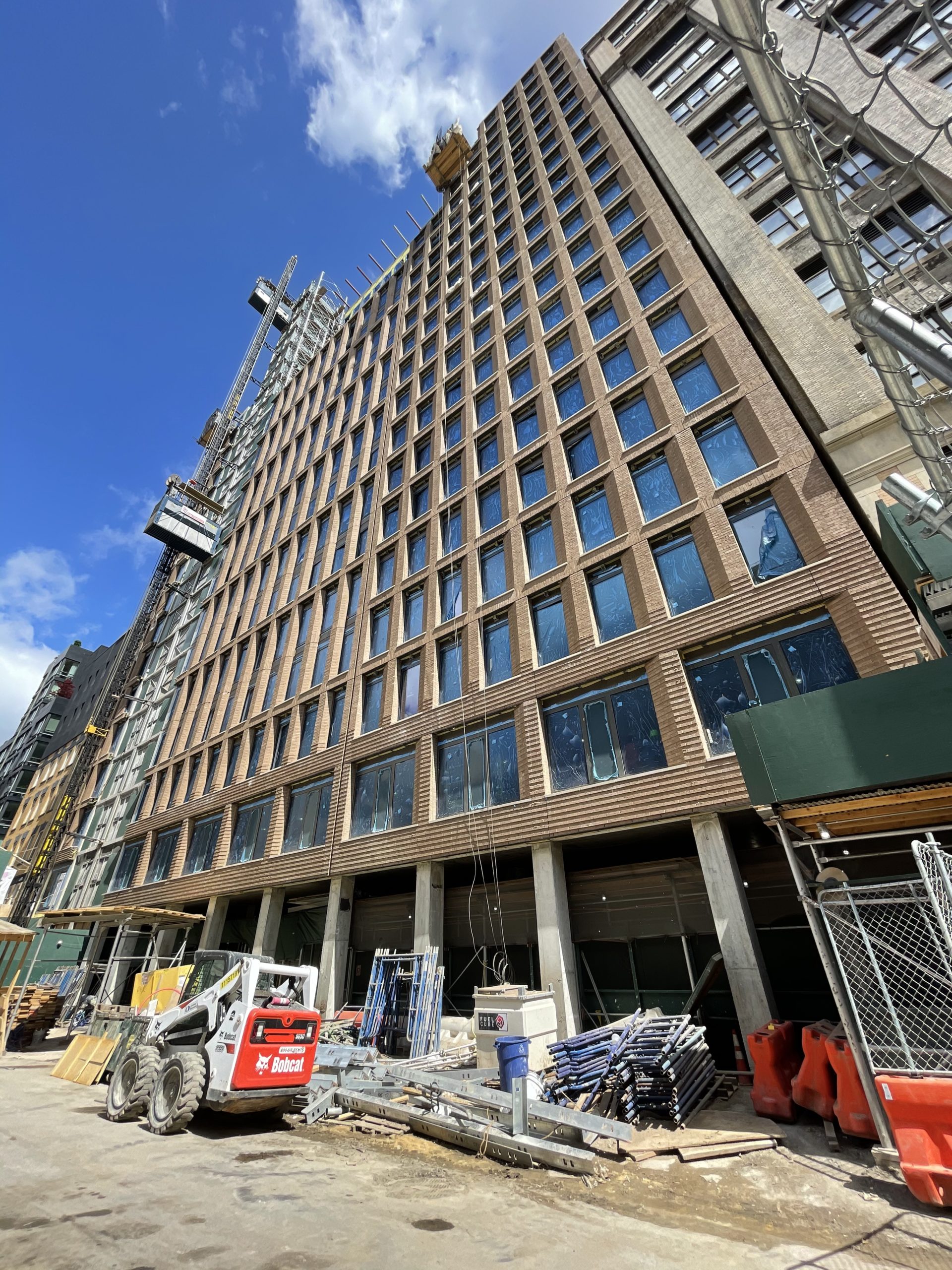
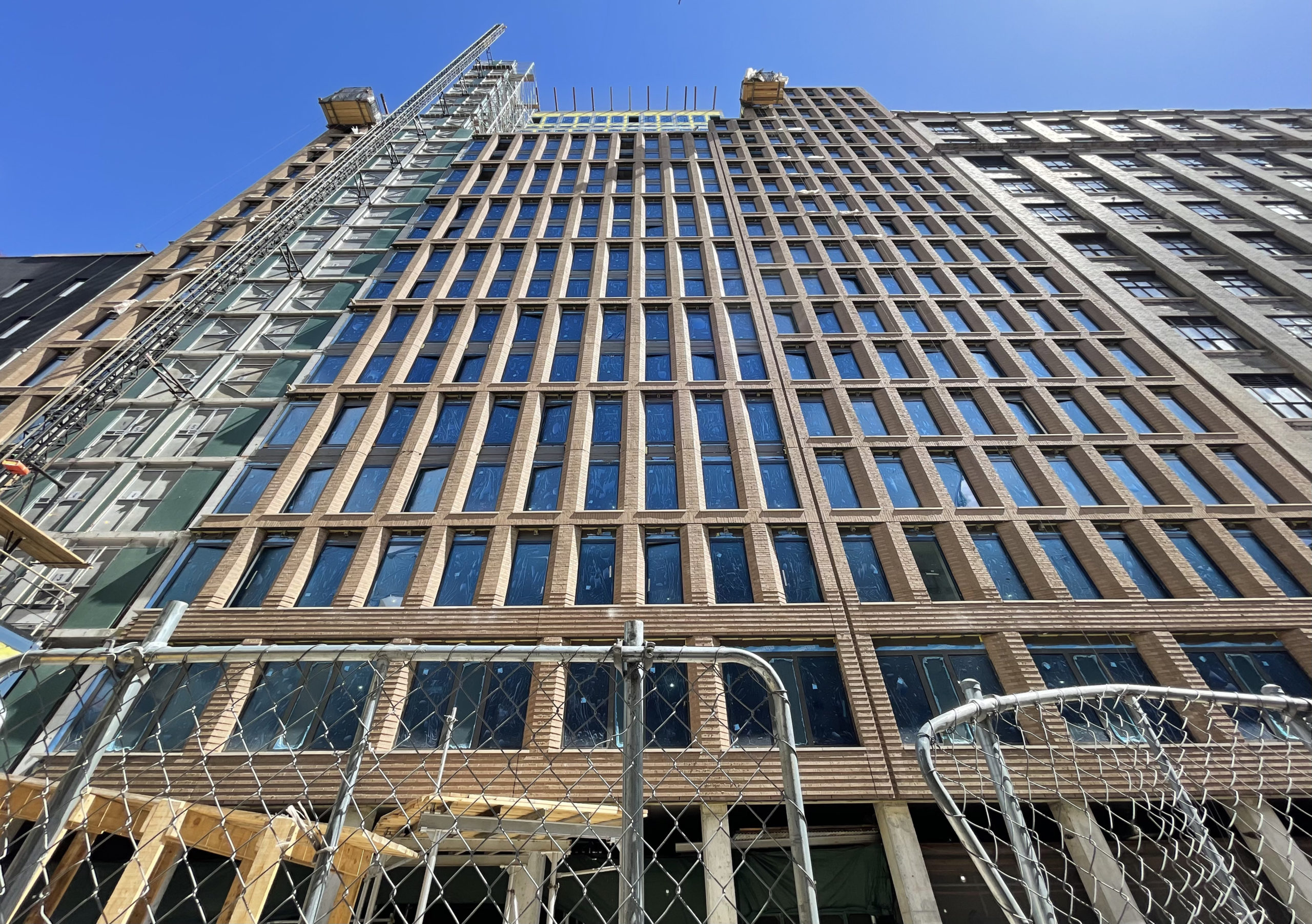
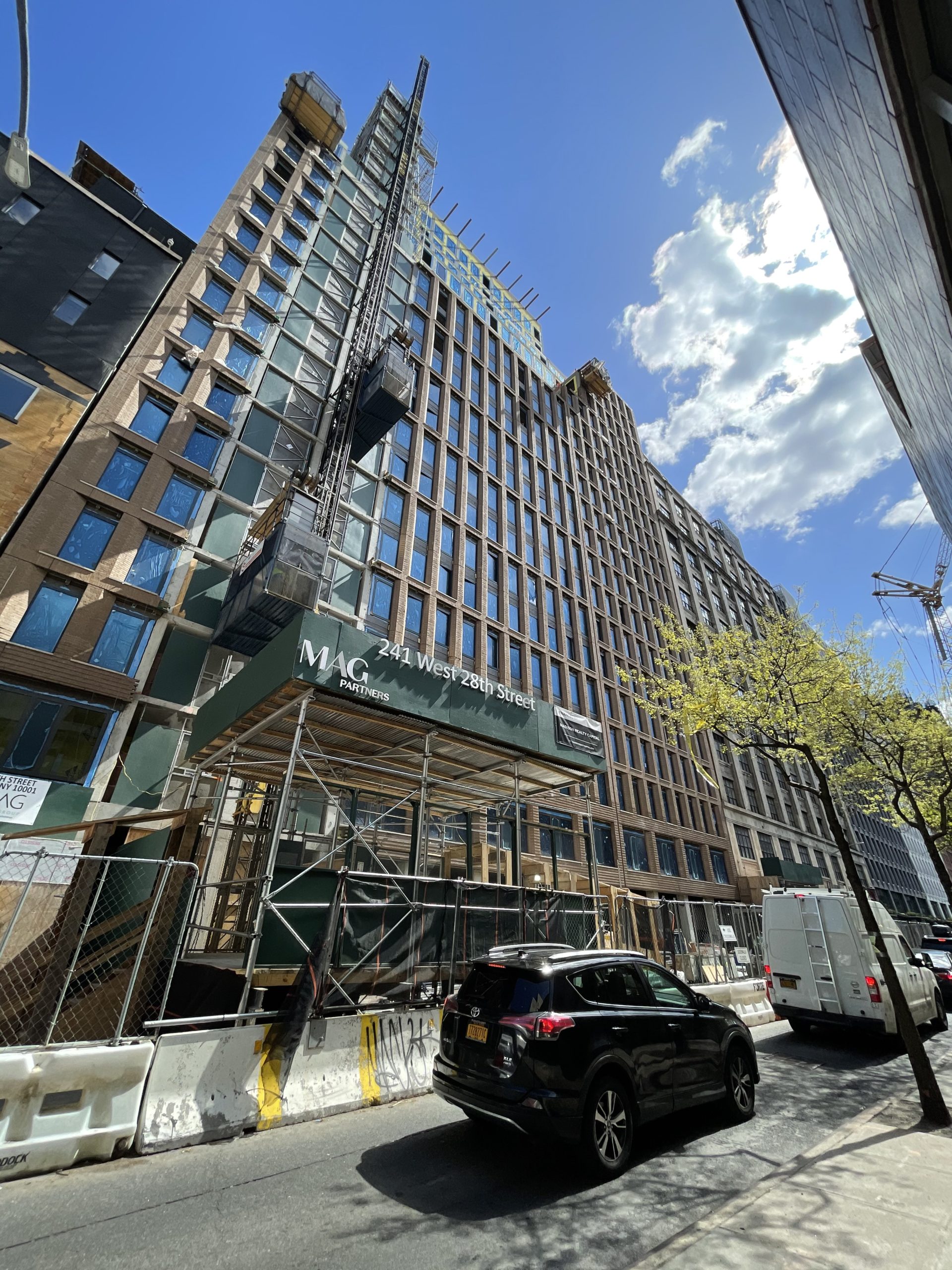
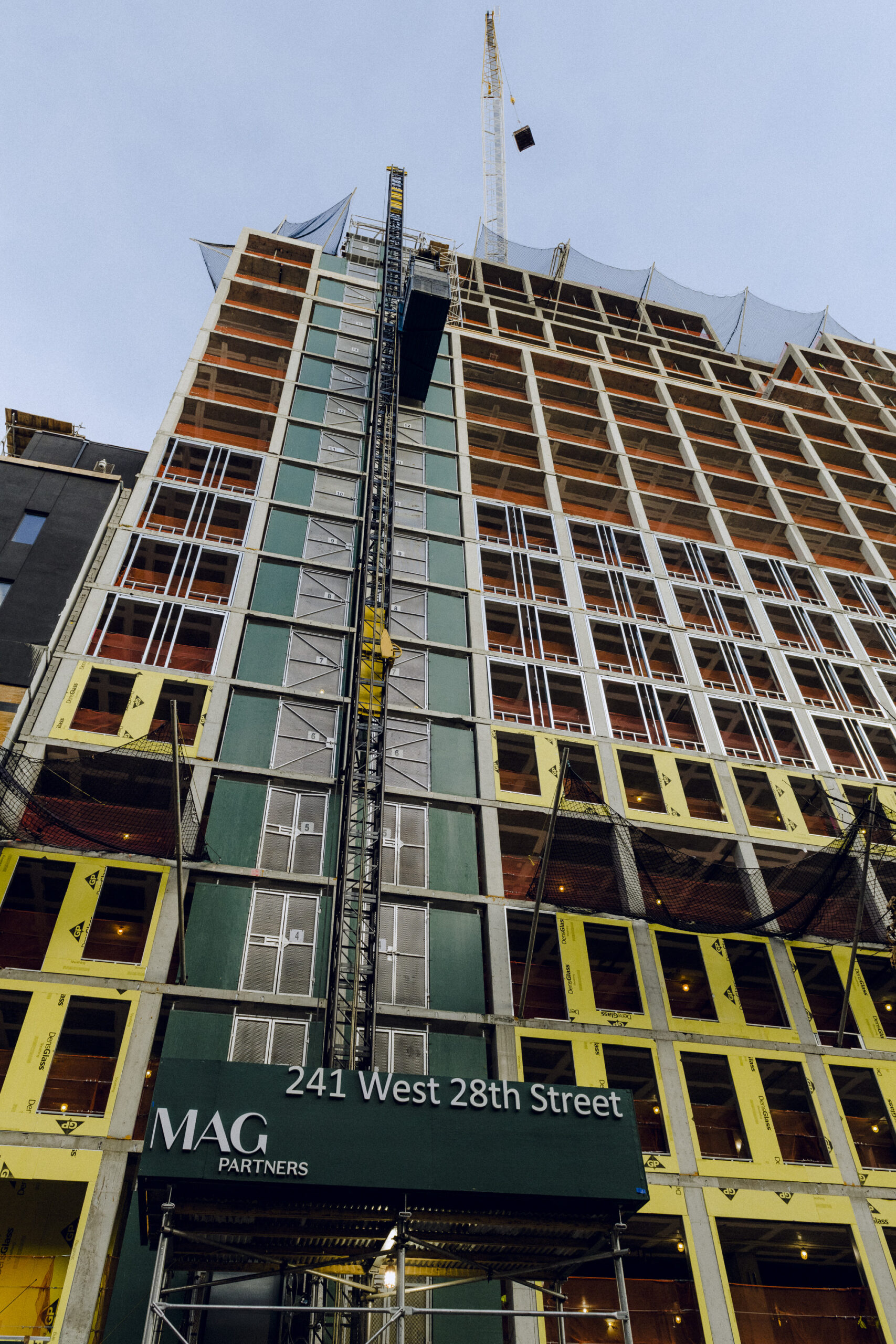
Façade work is shaping up at 241 West 28th Street, a pair of 22-story residential buildings in Chelsea. Designed by COOKFOX for MAG Partners, Atalaya, Safanad, and Qualitas, the 400,000-square-foot development will yield 480 units with 30 percent reserved for low- and middle-income households, as well as 8,500 square feet of ground-floor retail space. King Contracting Group is in charge of brickwork and Urban Atelier Group is the general contractor for the complex, which is located between Seventh and Eighth Avenues on what used to be an open-air parking lot that MAG Partners acquired in December 2018 under a 99-year ground lease with Edison Properties.
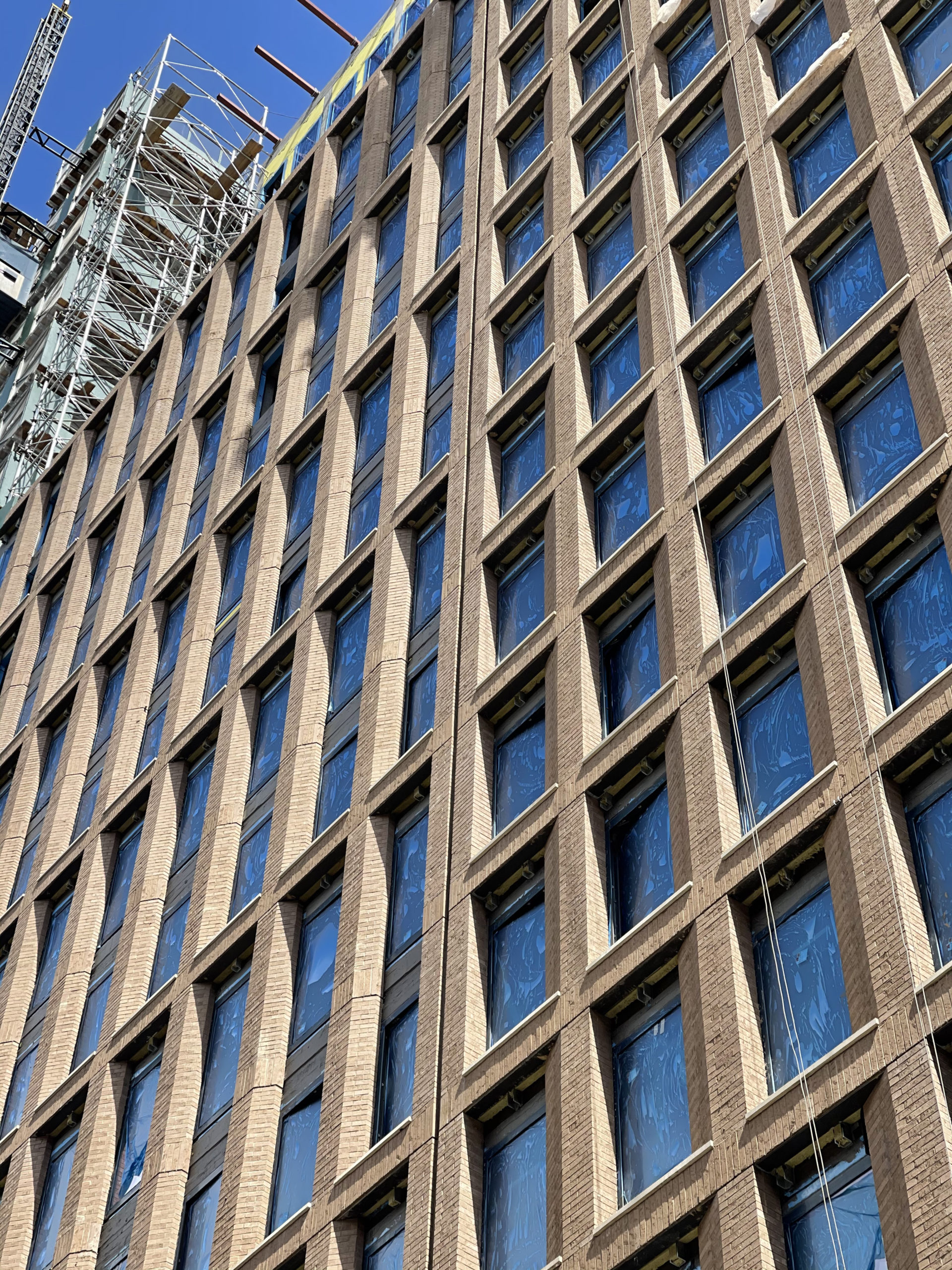
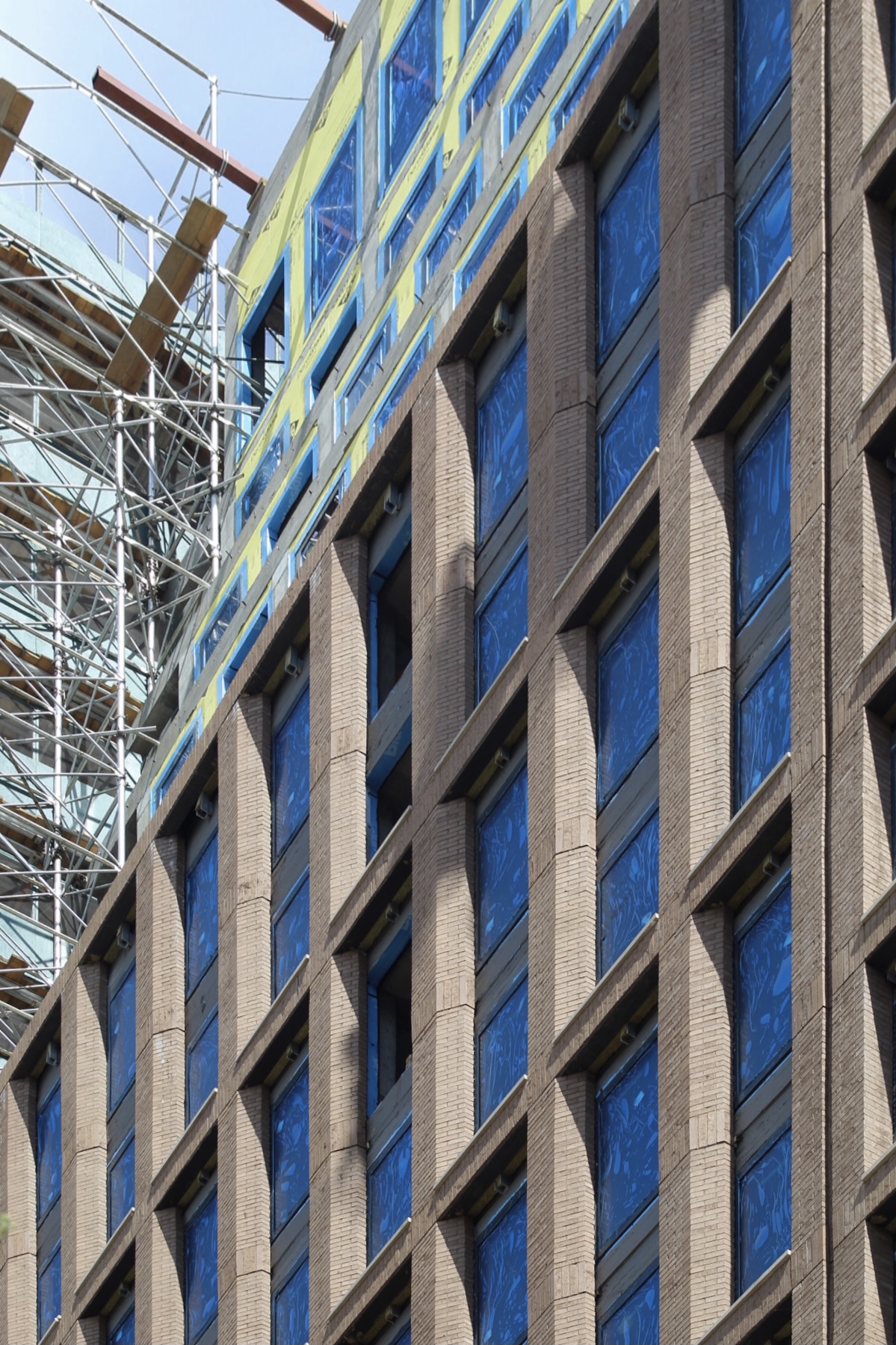
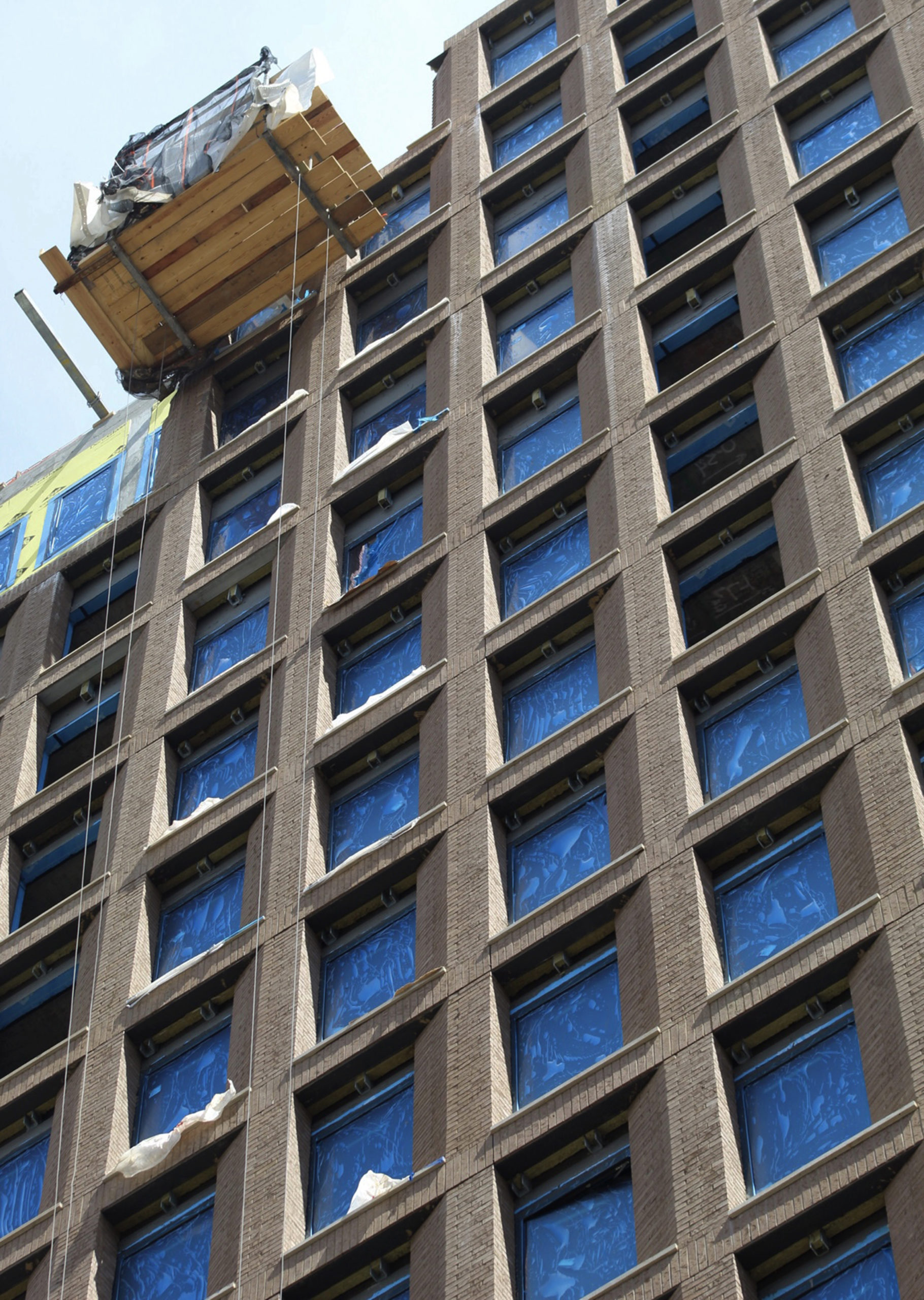
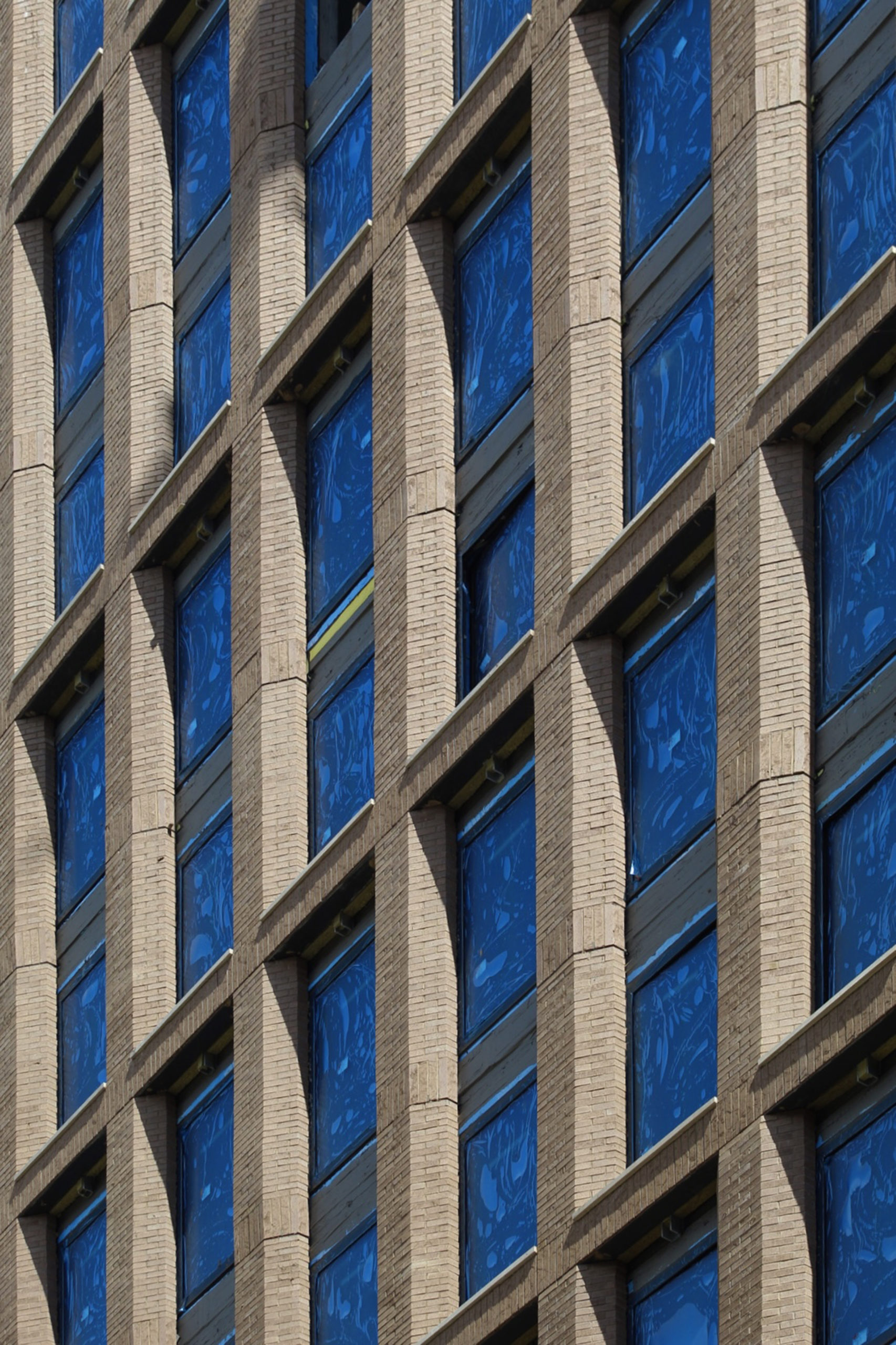
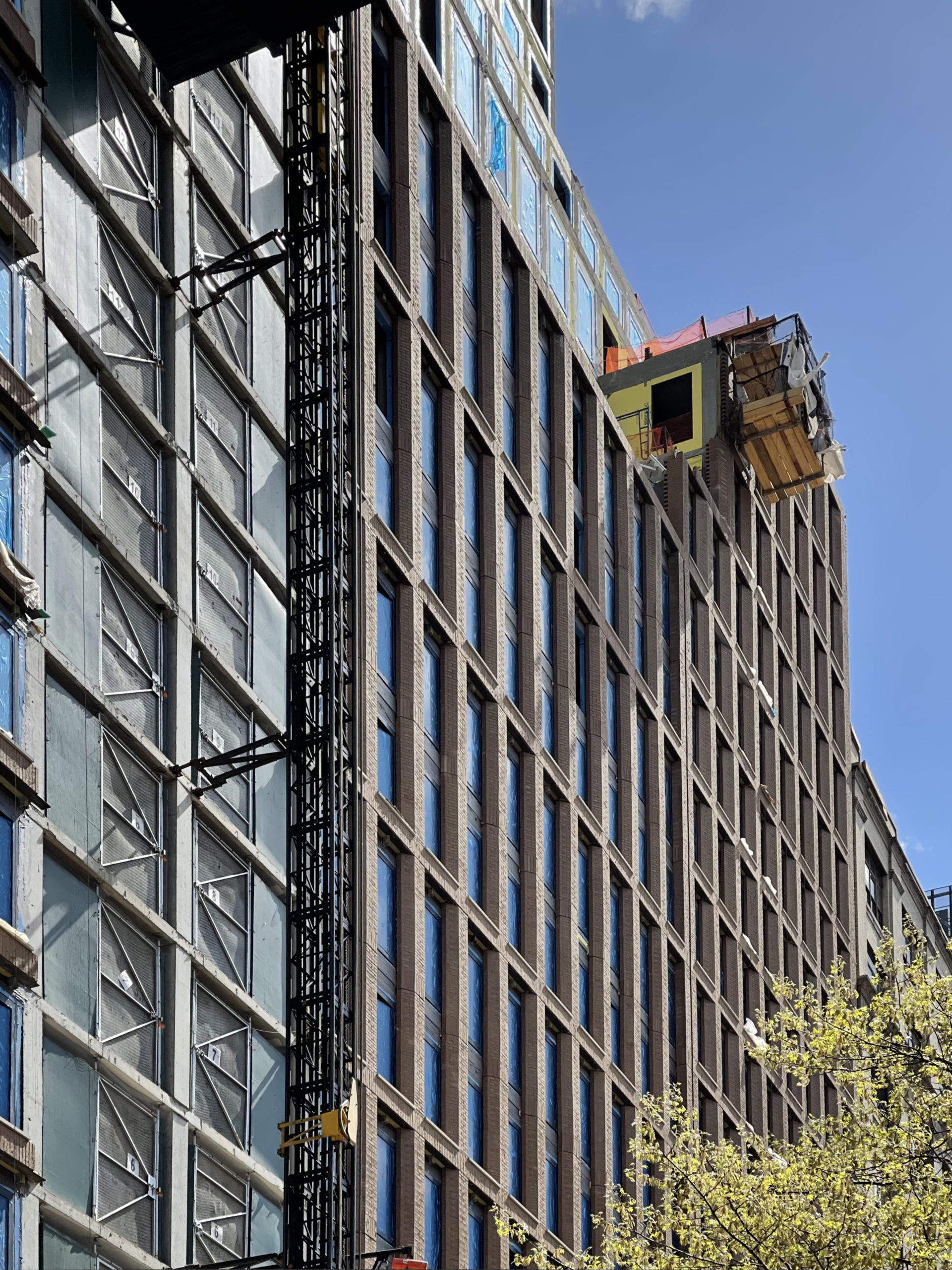
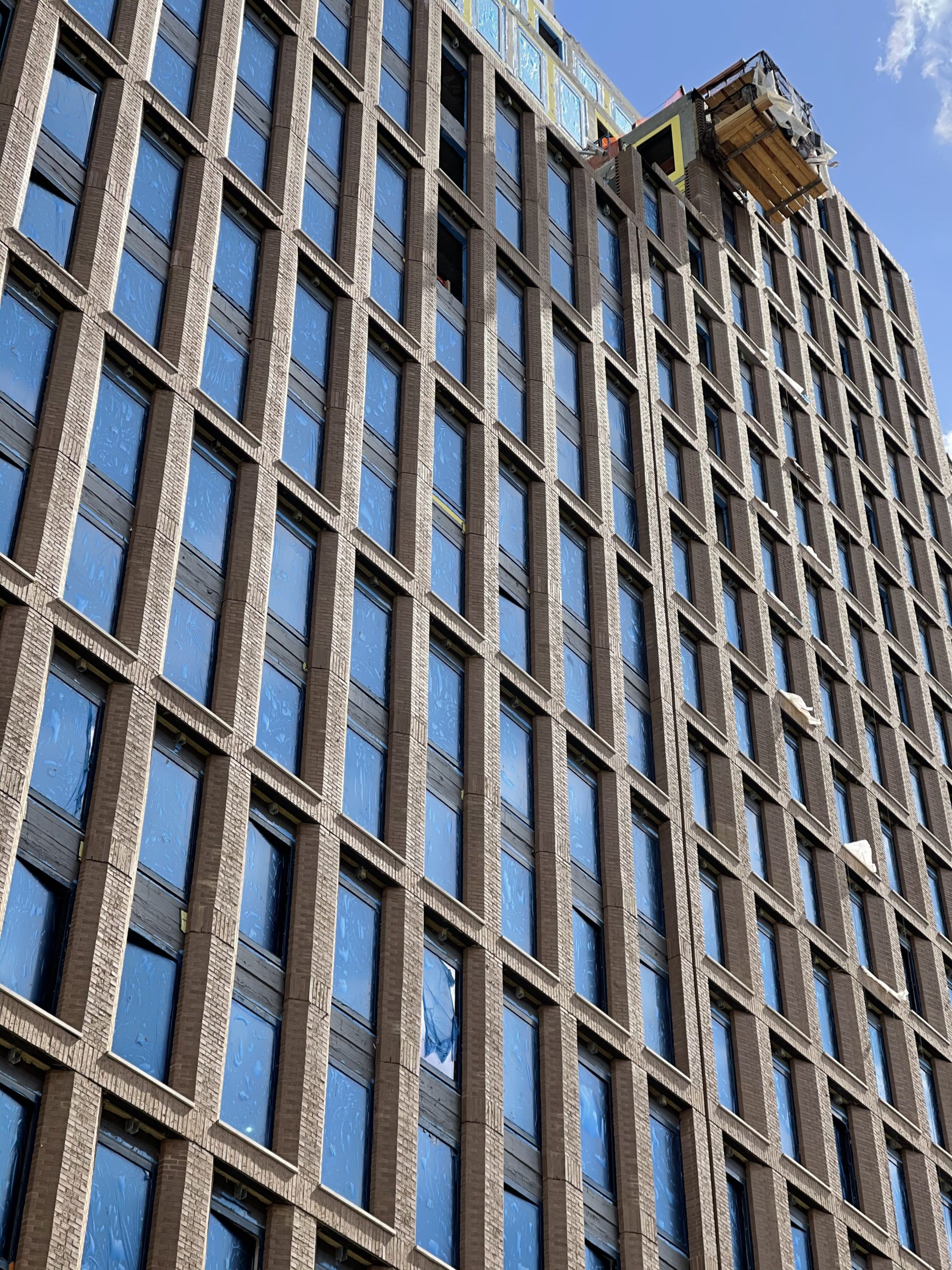
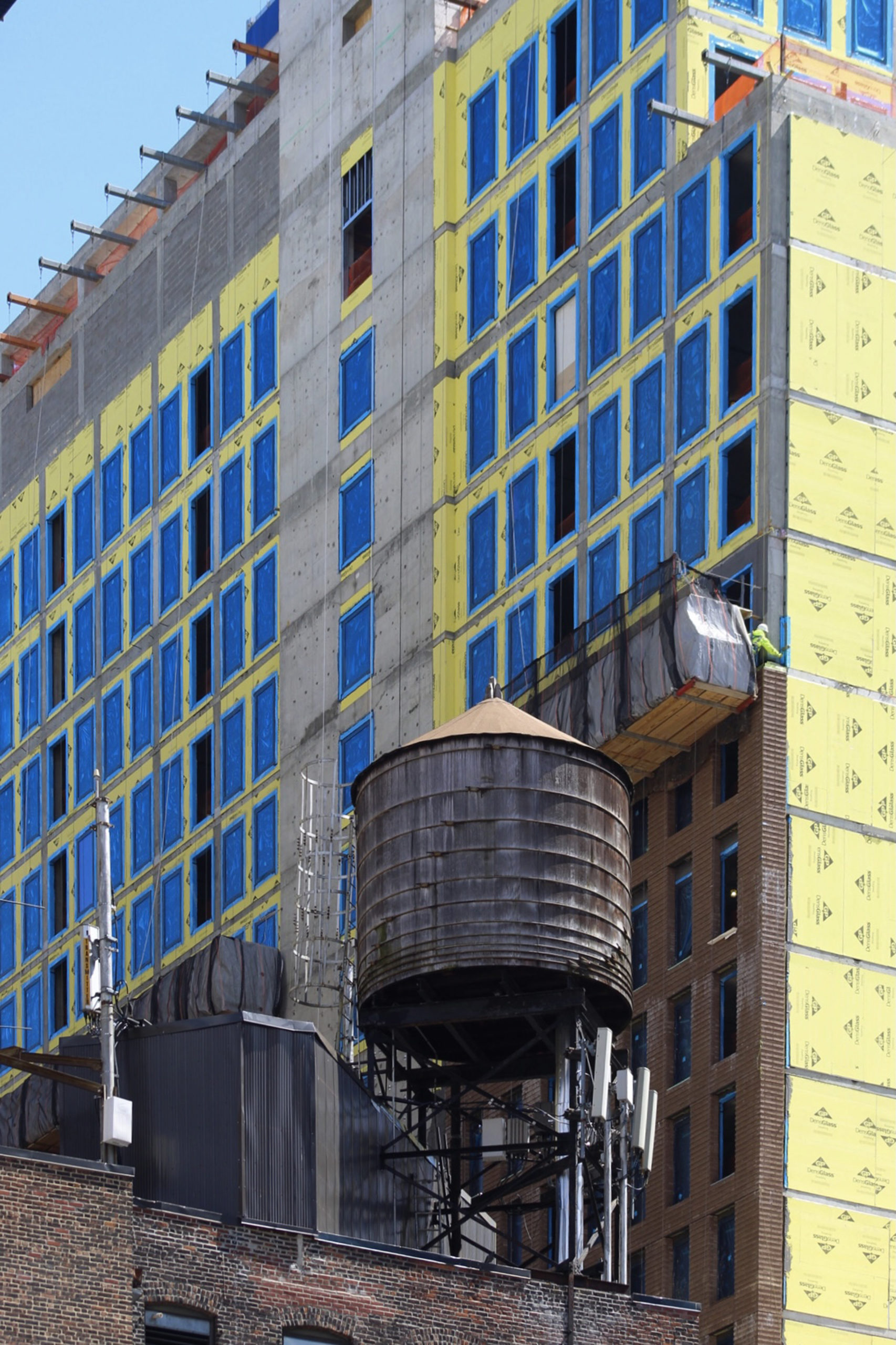
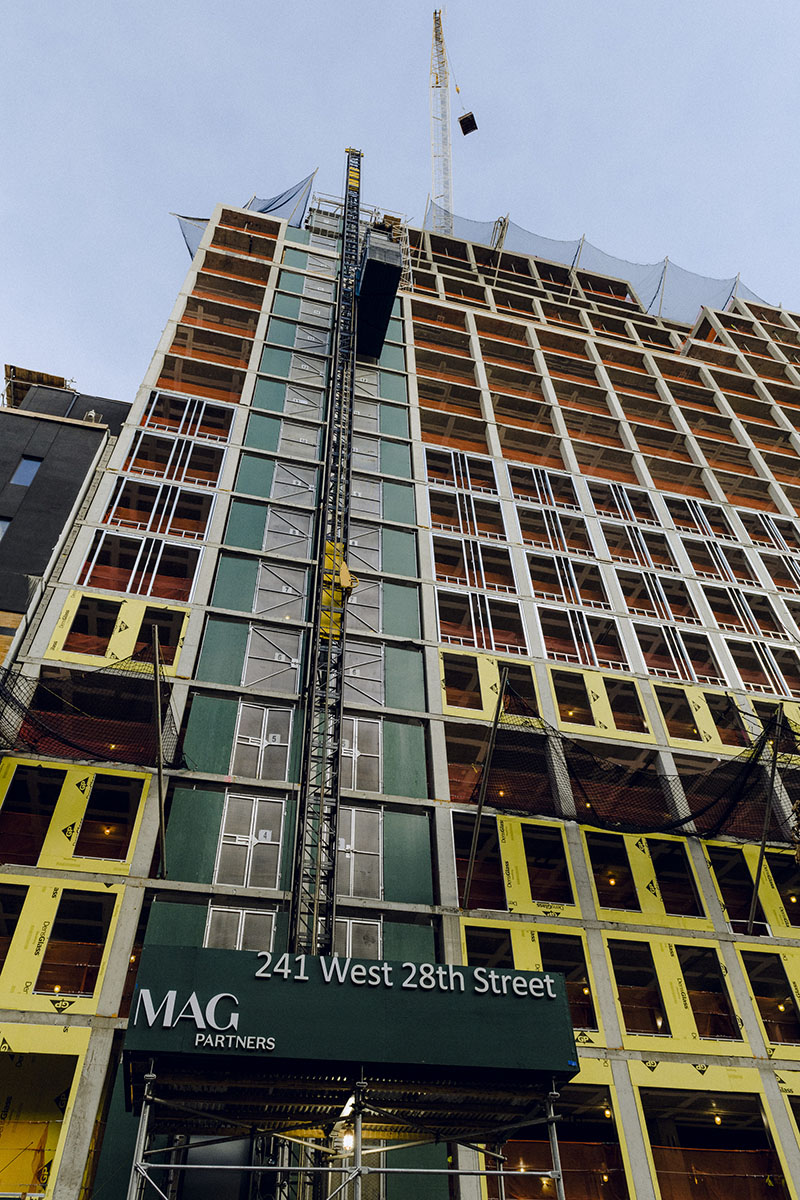
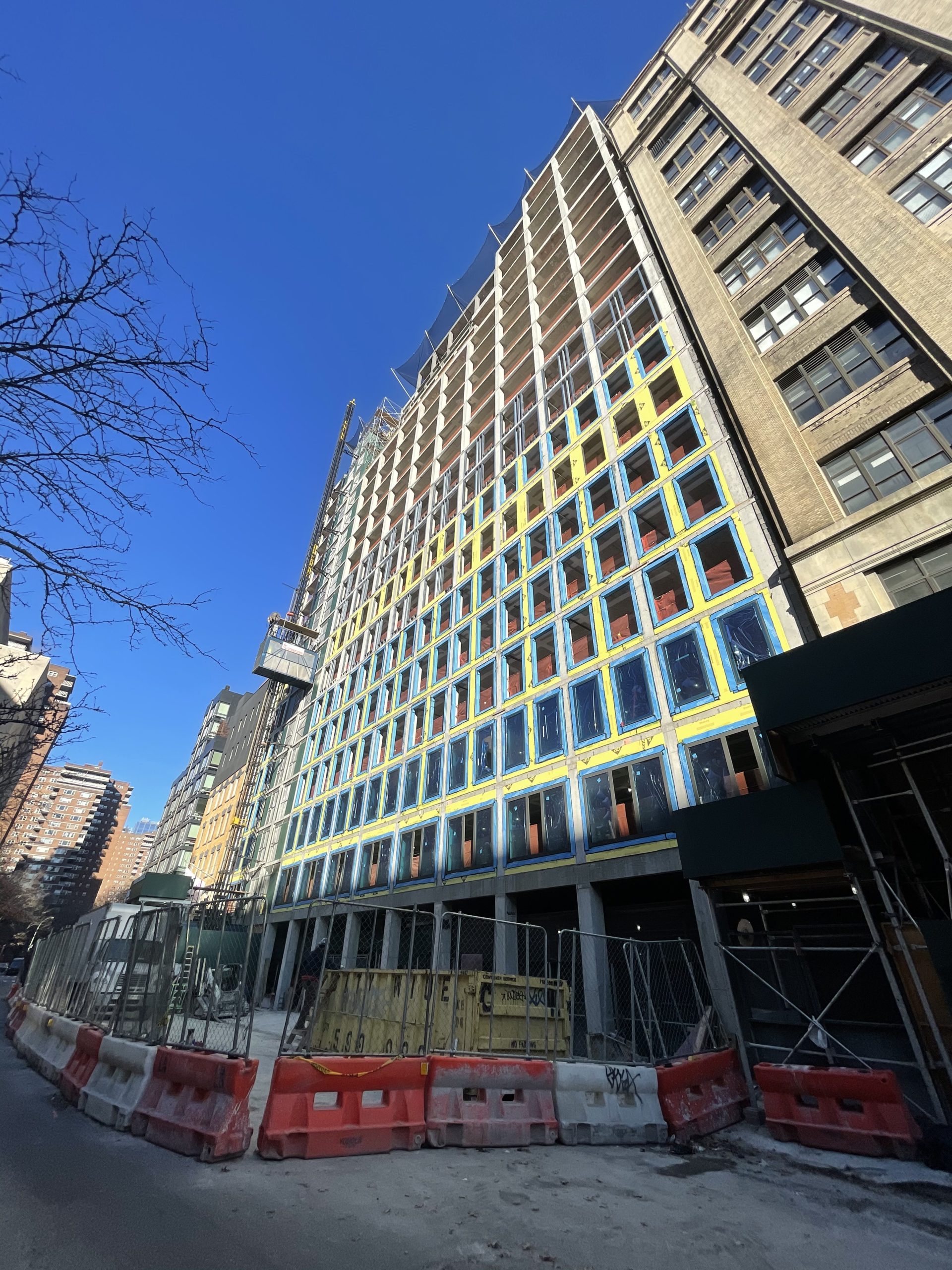
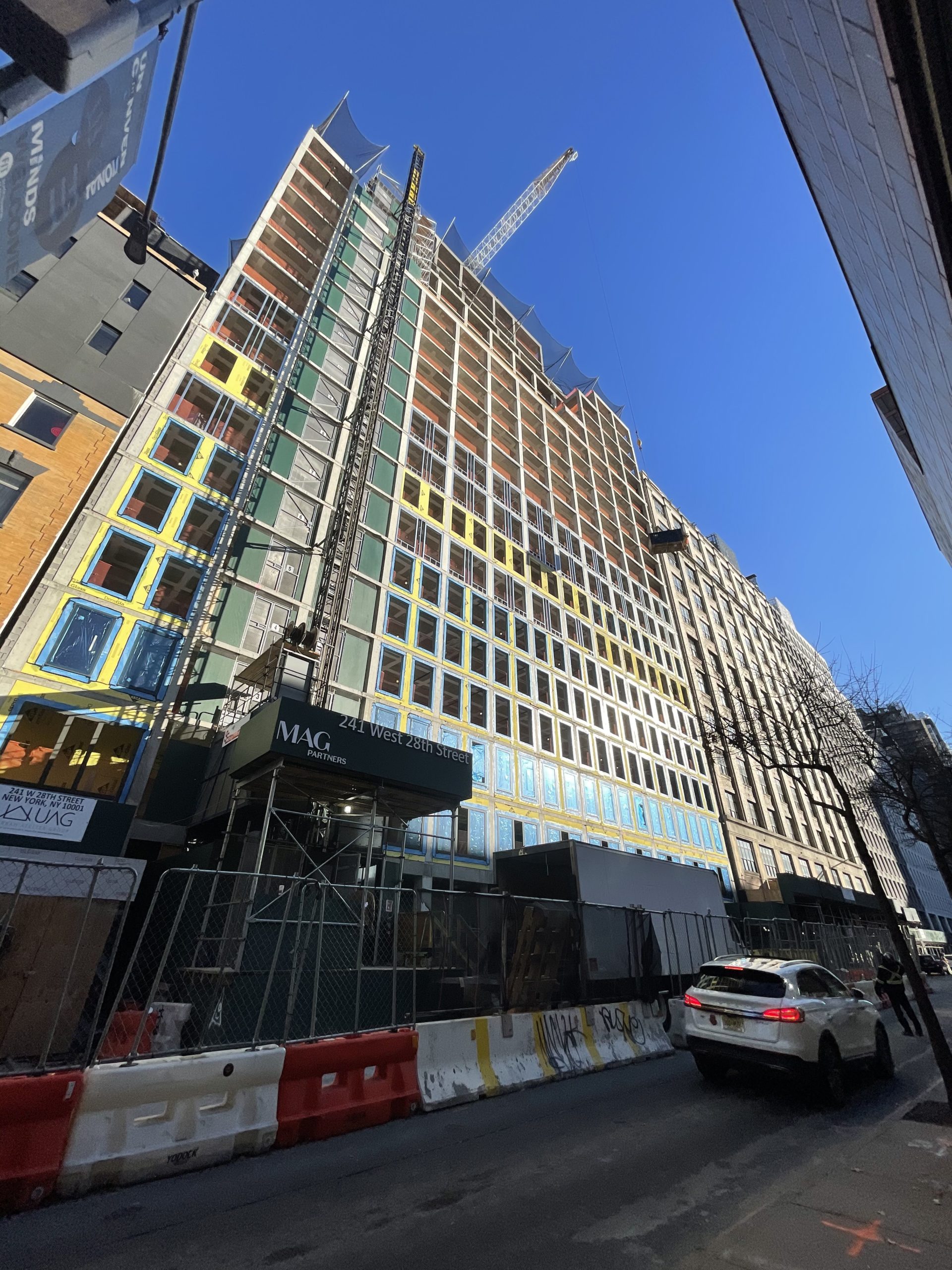
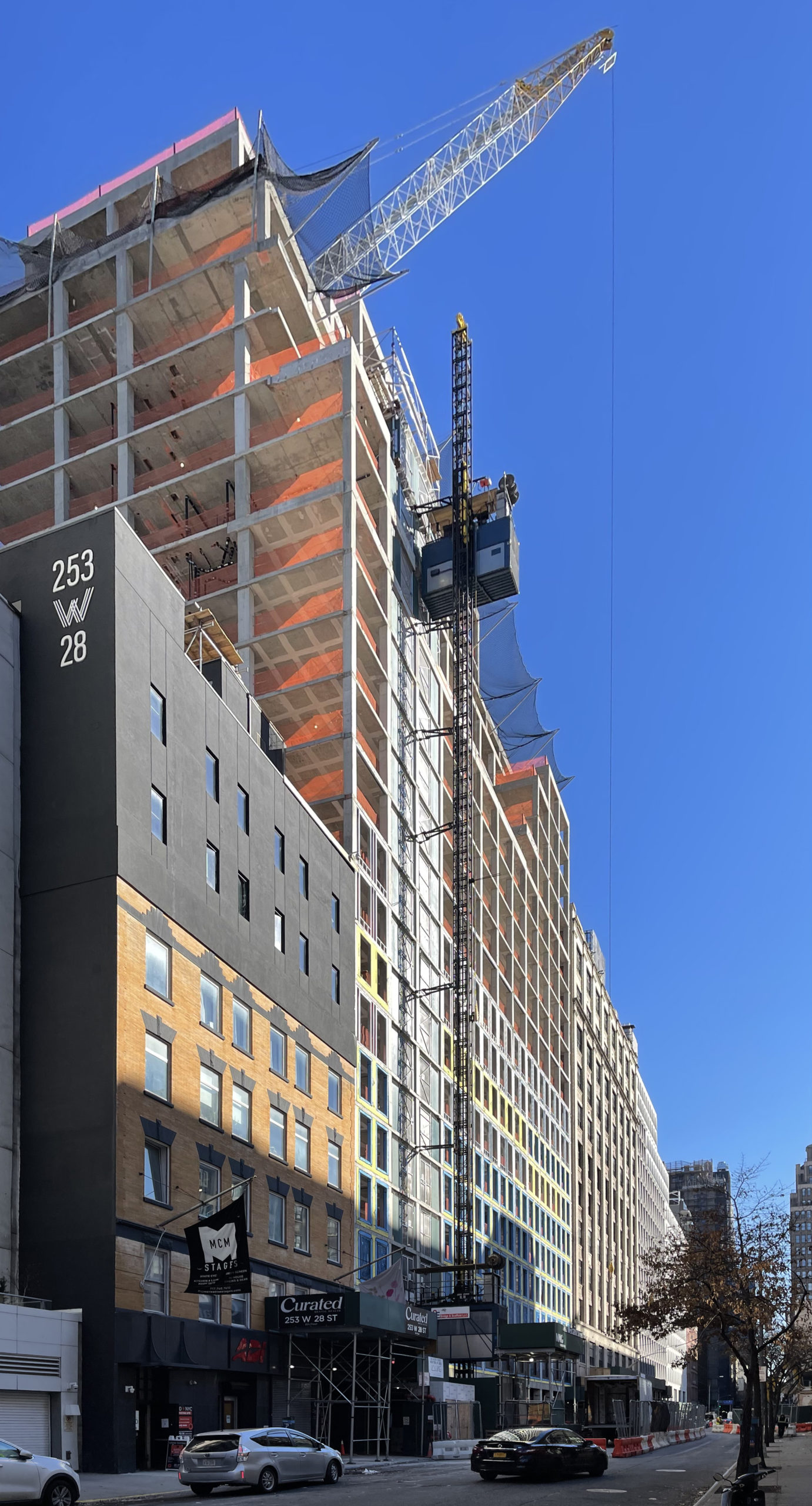
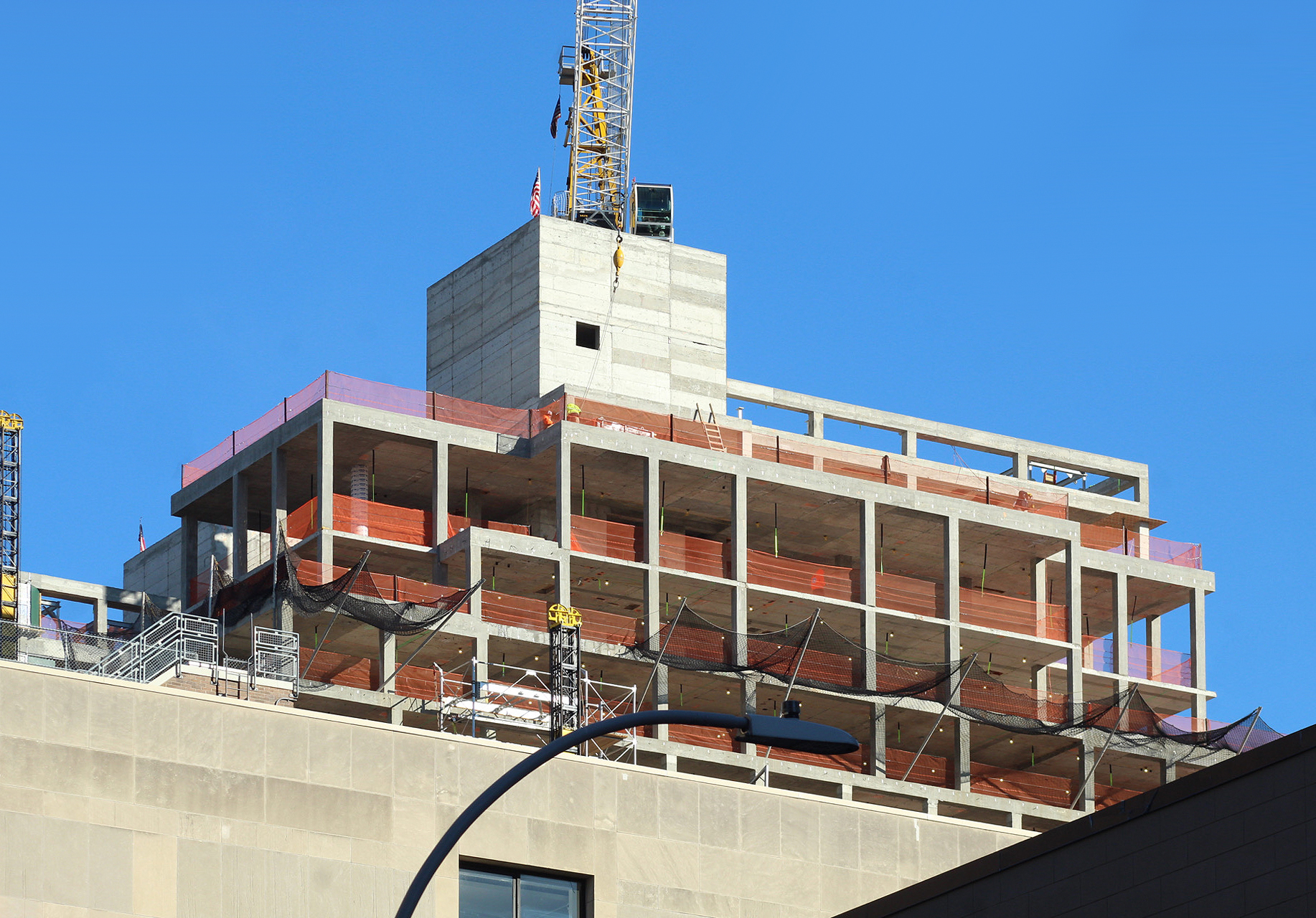
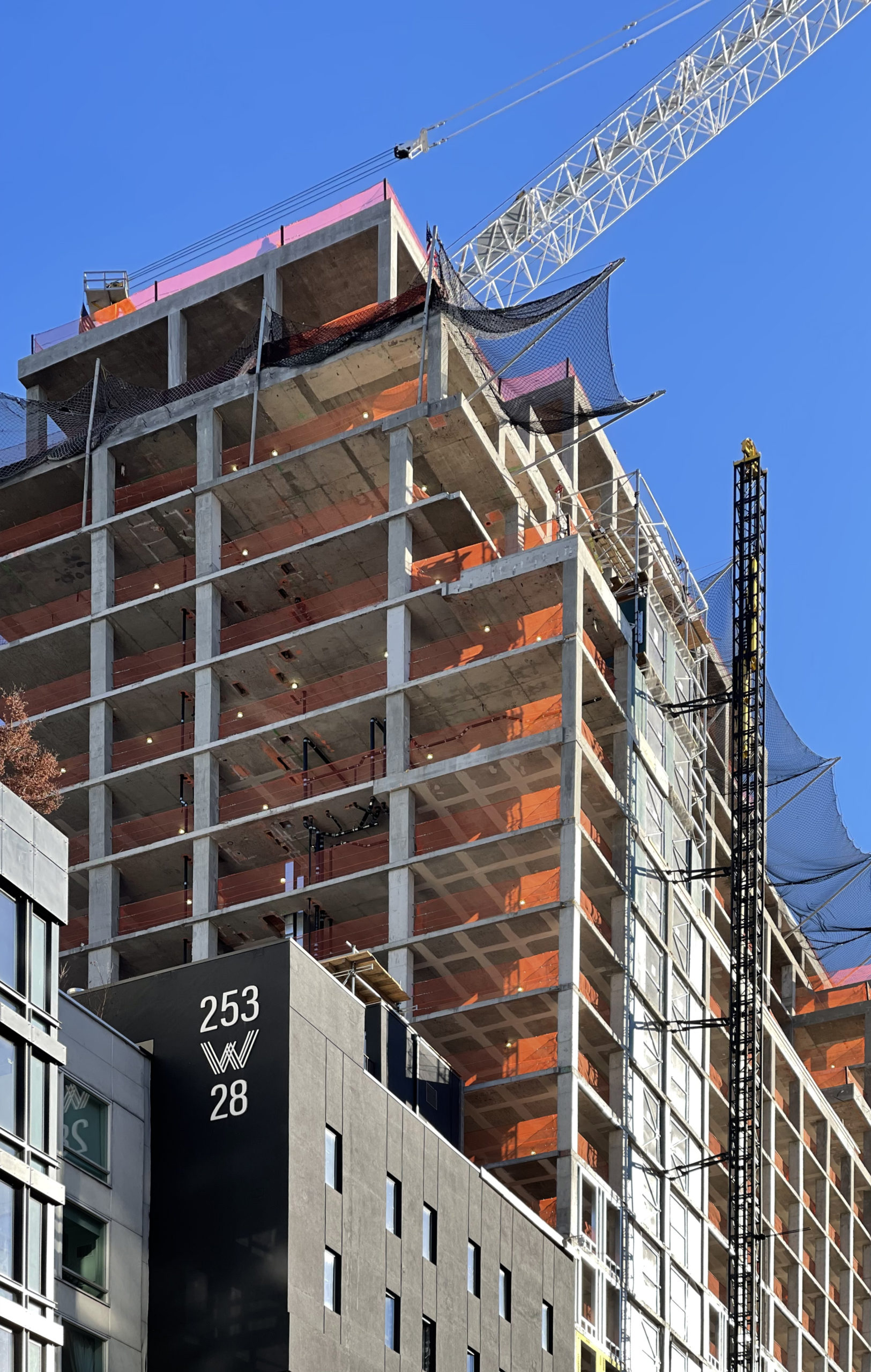
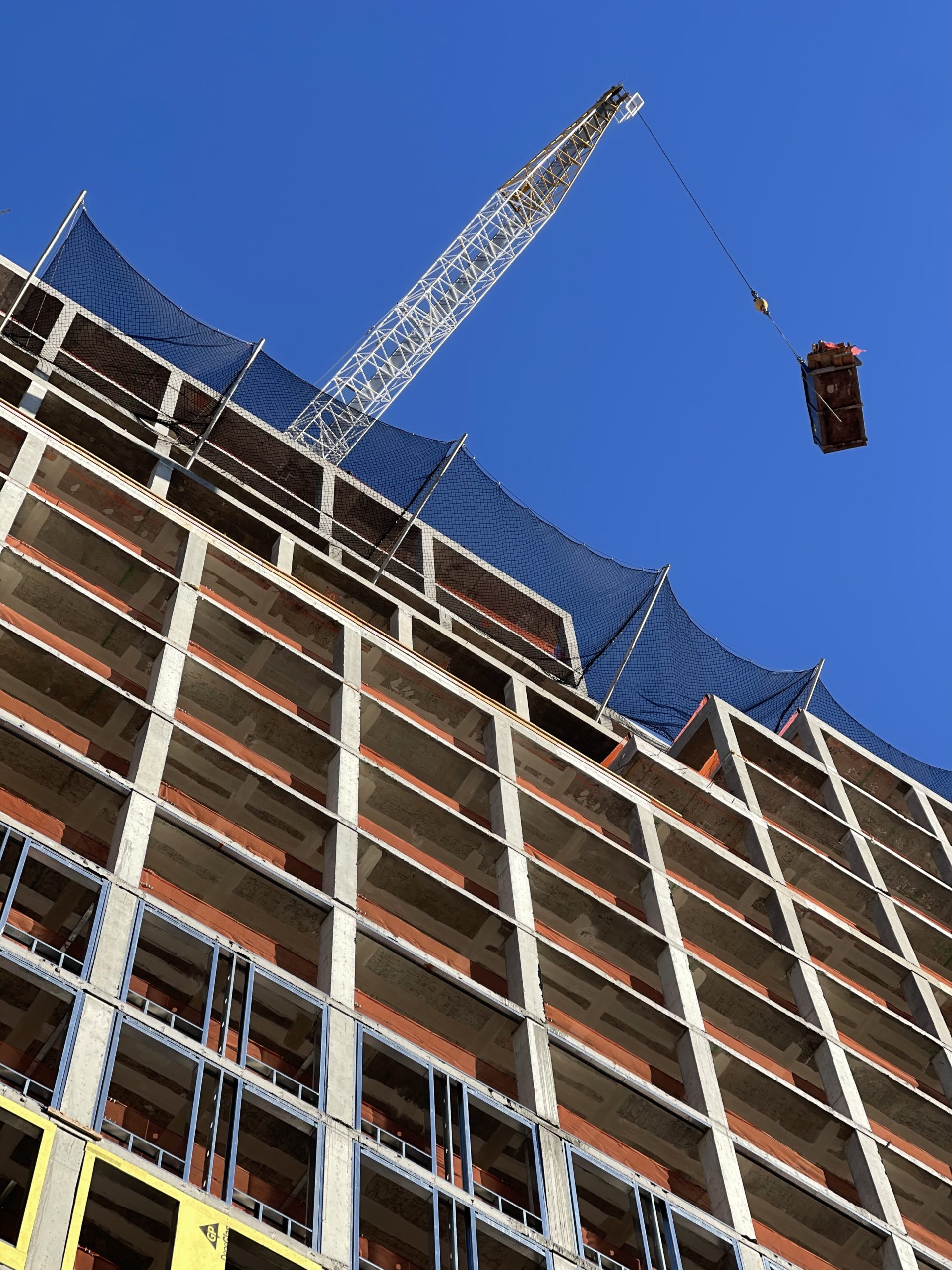
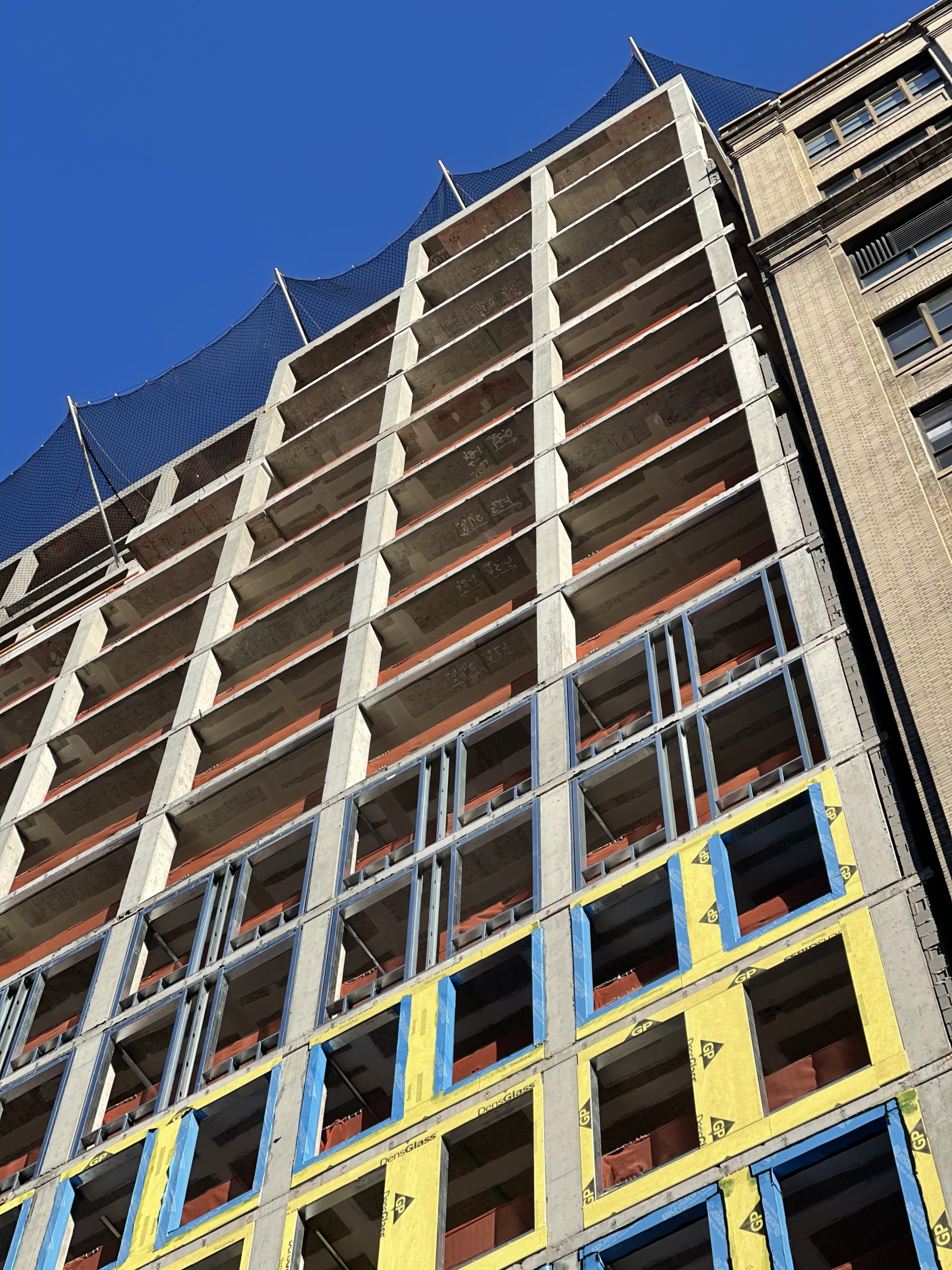
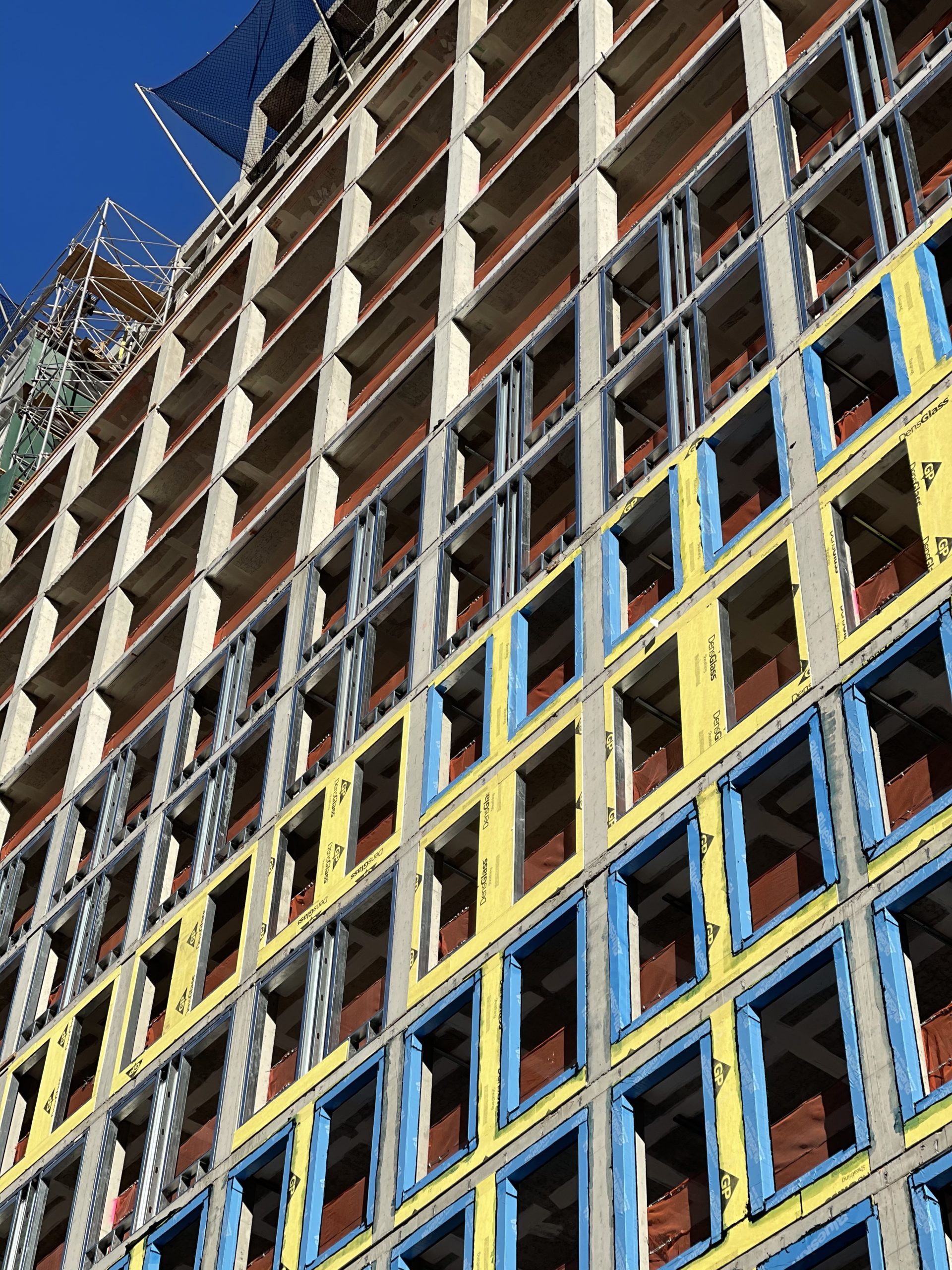
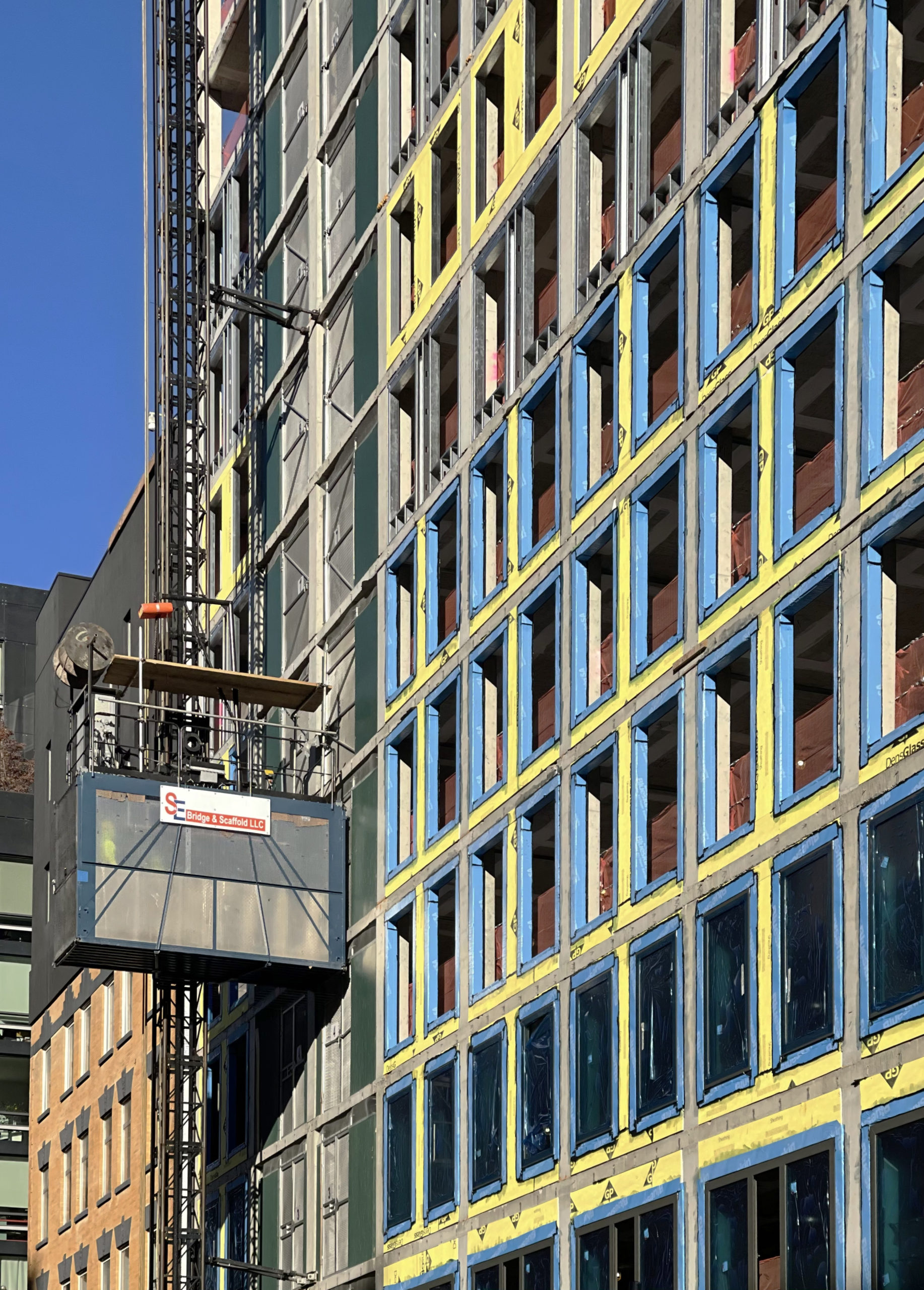
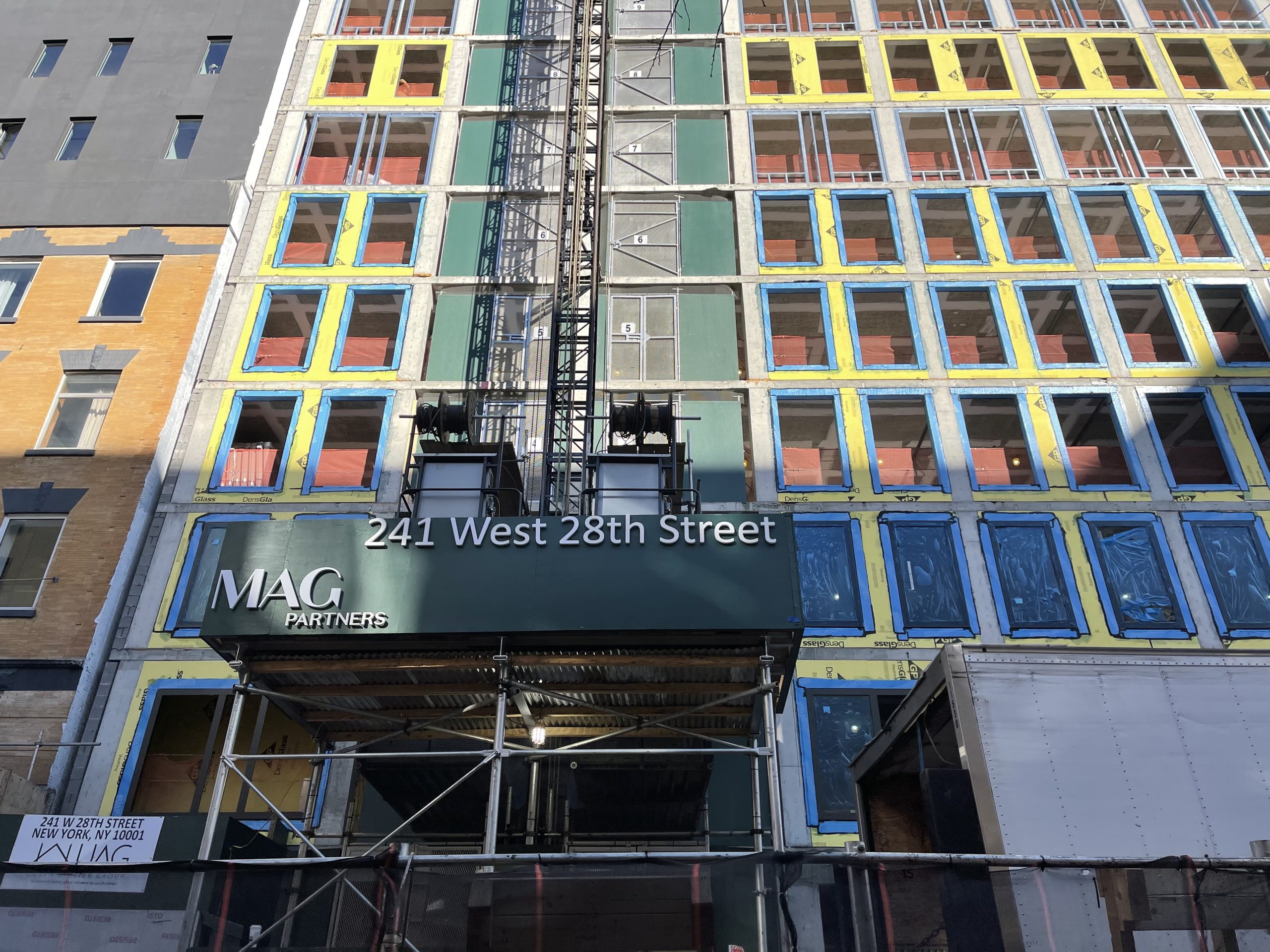
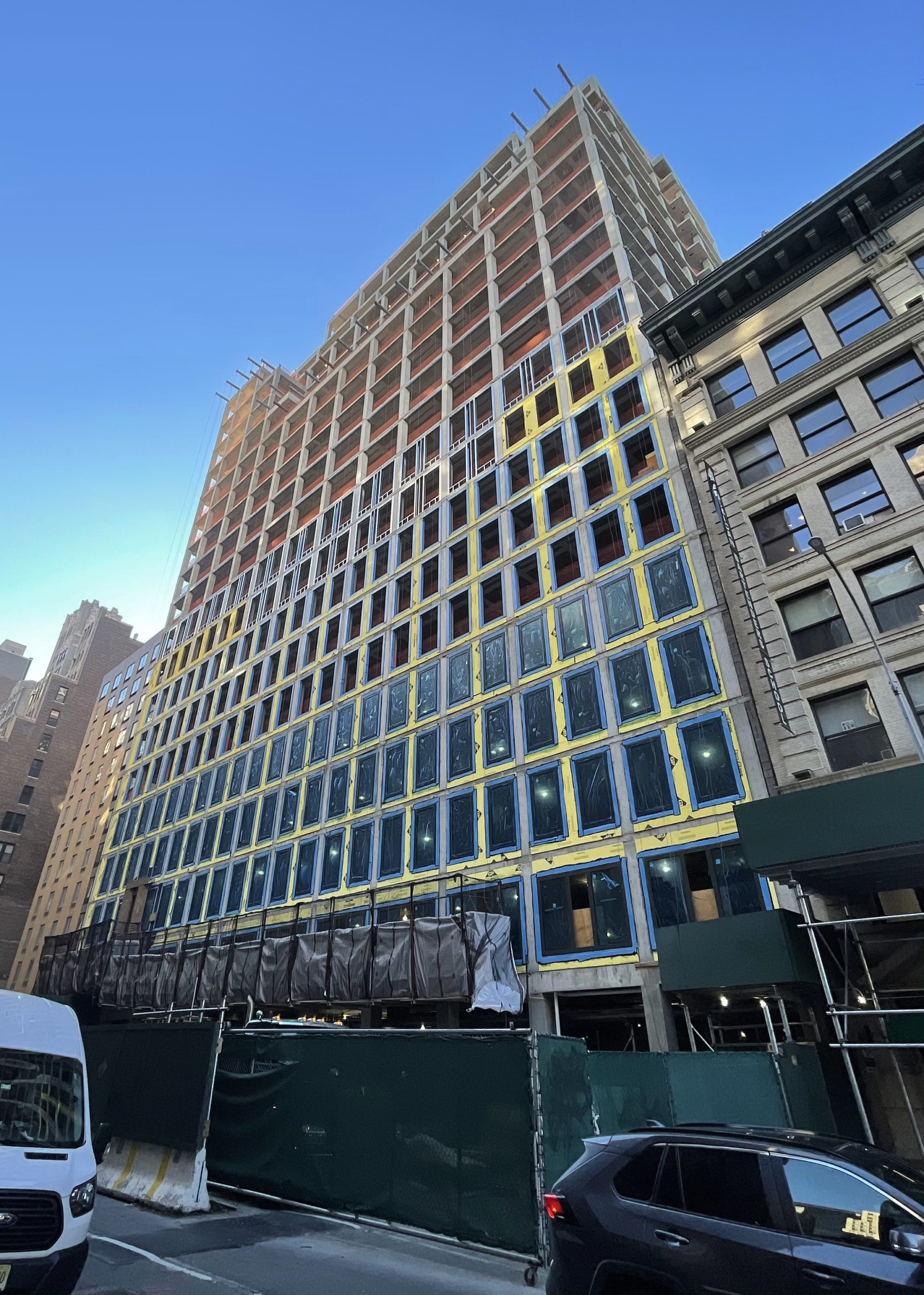
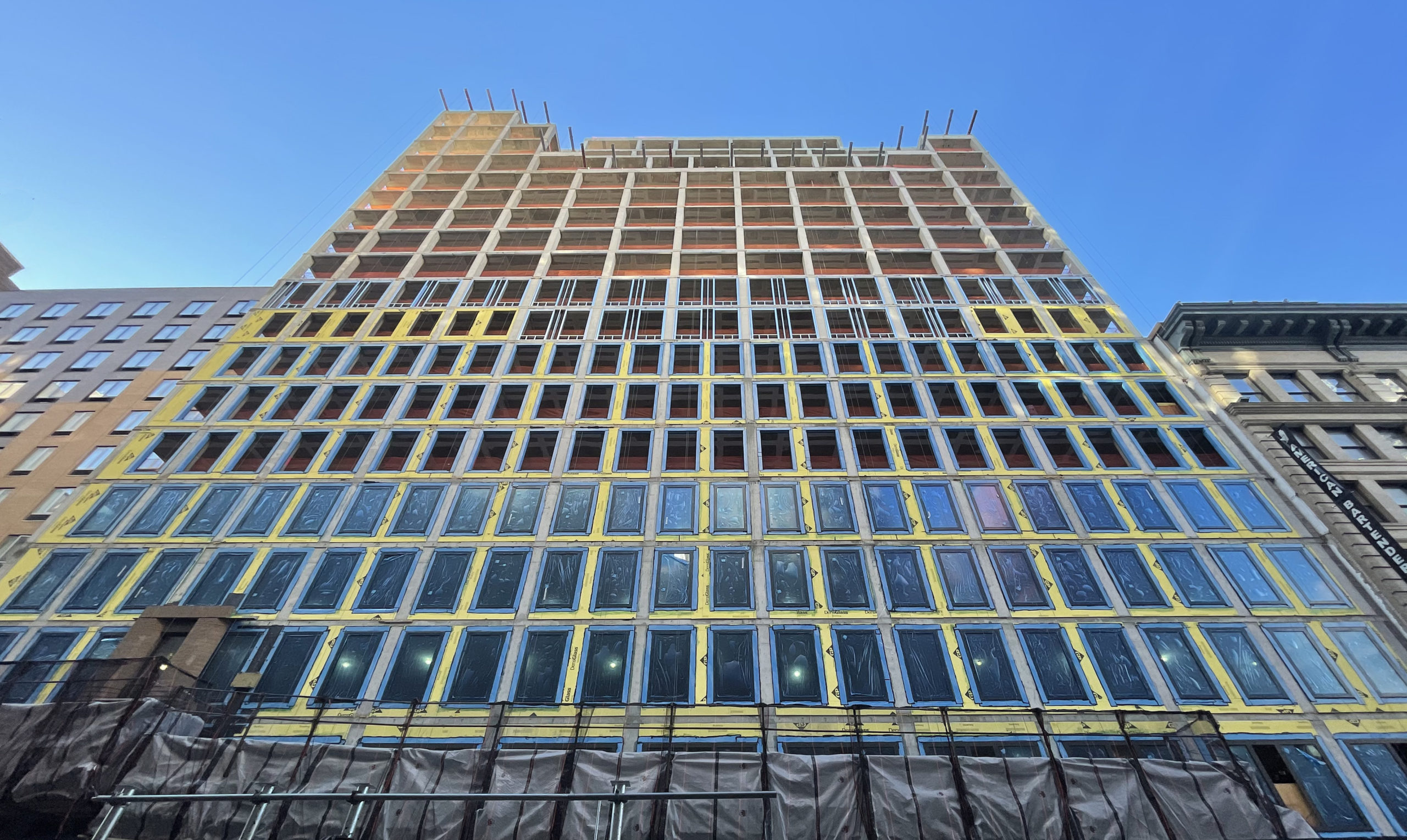
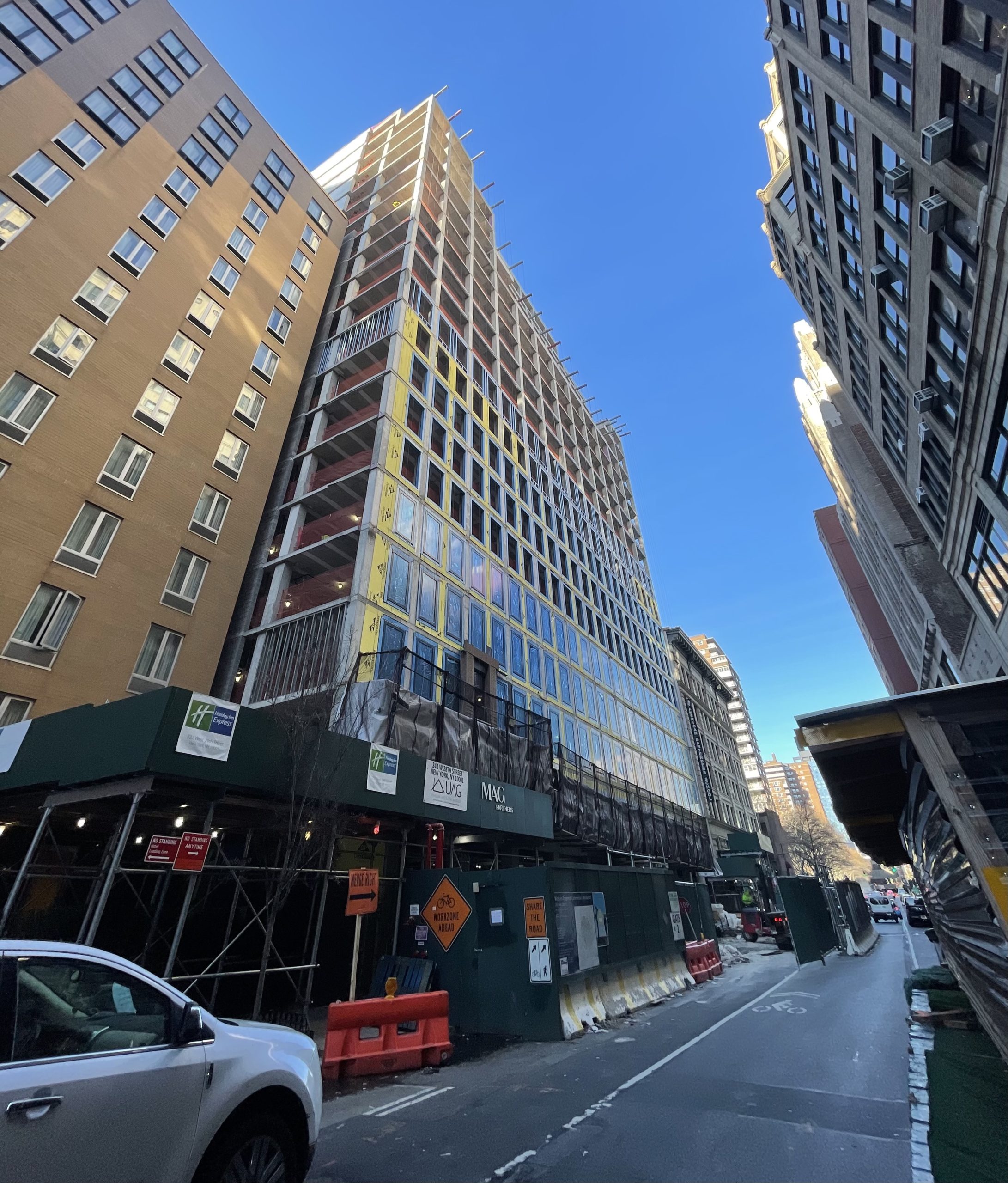
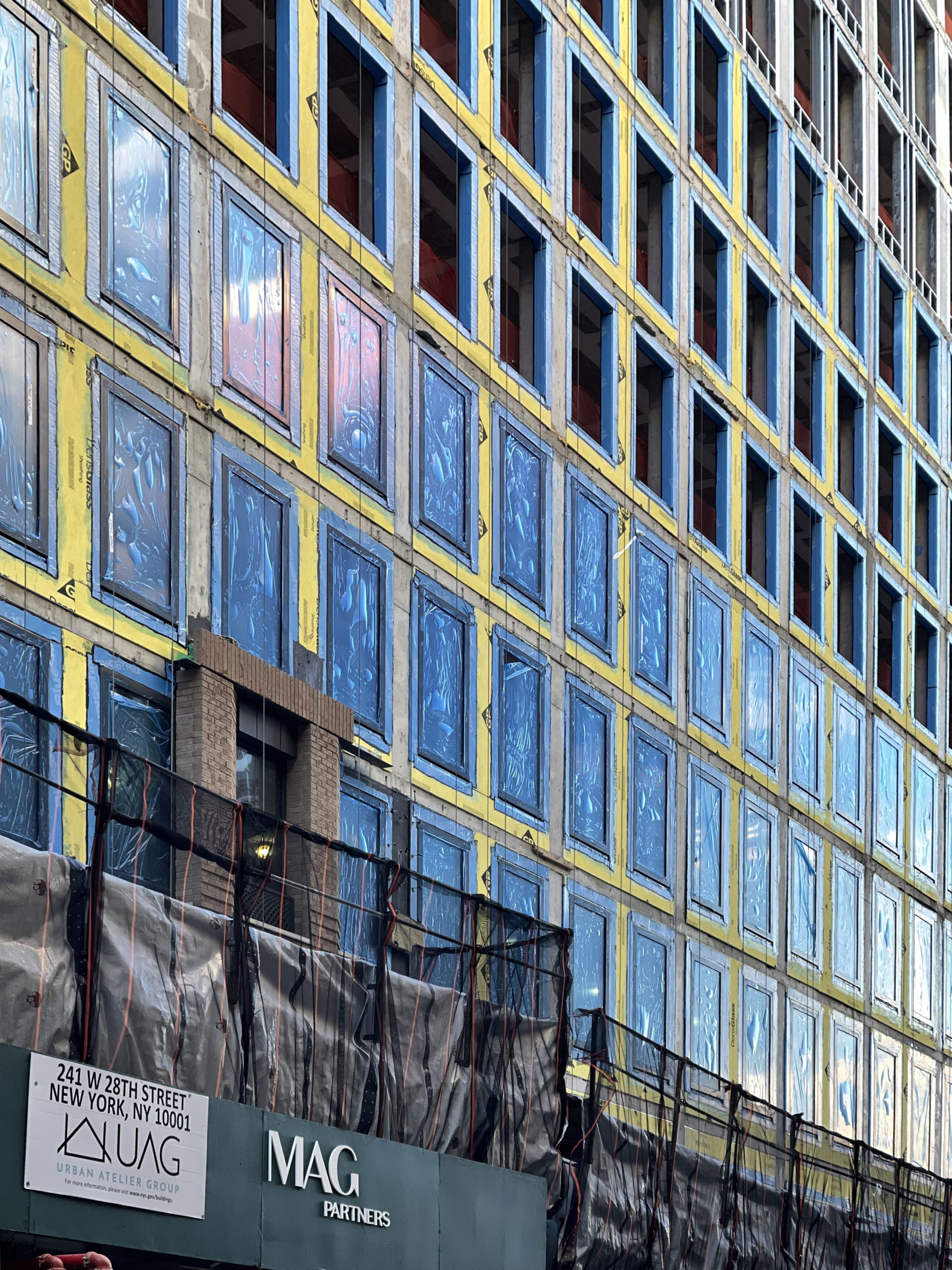
At the time of our last update in January, window installation was progressing and the first portions of the brick façade had just begun to be laid. Work has been steady since then, and the warm-colored masonry now covers more than half of both superstructures.
241 West 28th Street. Photo by Michael Young241 West 28th Street. Photo by Michael Young241 West 28th Street. Photo by Michael Young241 West 28th Street. Photo by Michael Young241 West 28th Street. Photo by Michael Young241 West 28th Street. Photo by Michael Young241 West 28th Street. Photo by Michael Young241 West 28th Street. Photo by Michael Young241 West 28th Street. Photo by Michael Young
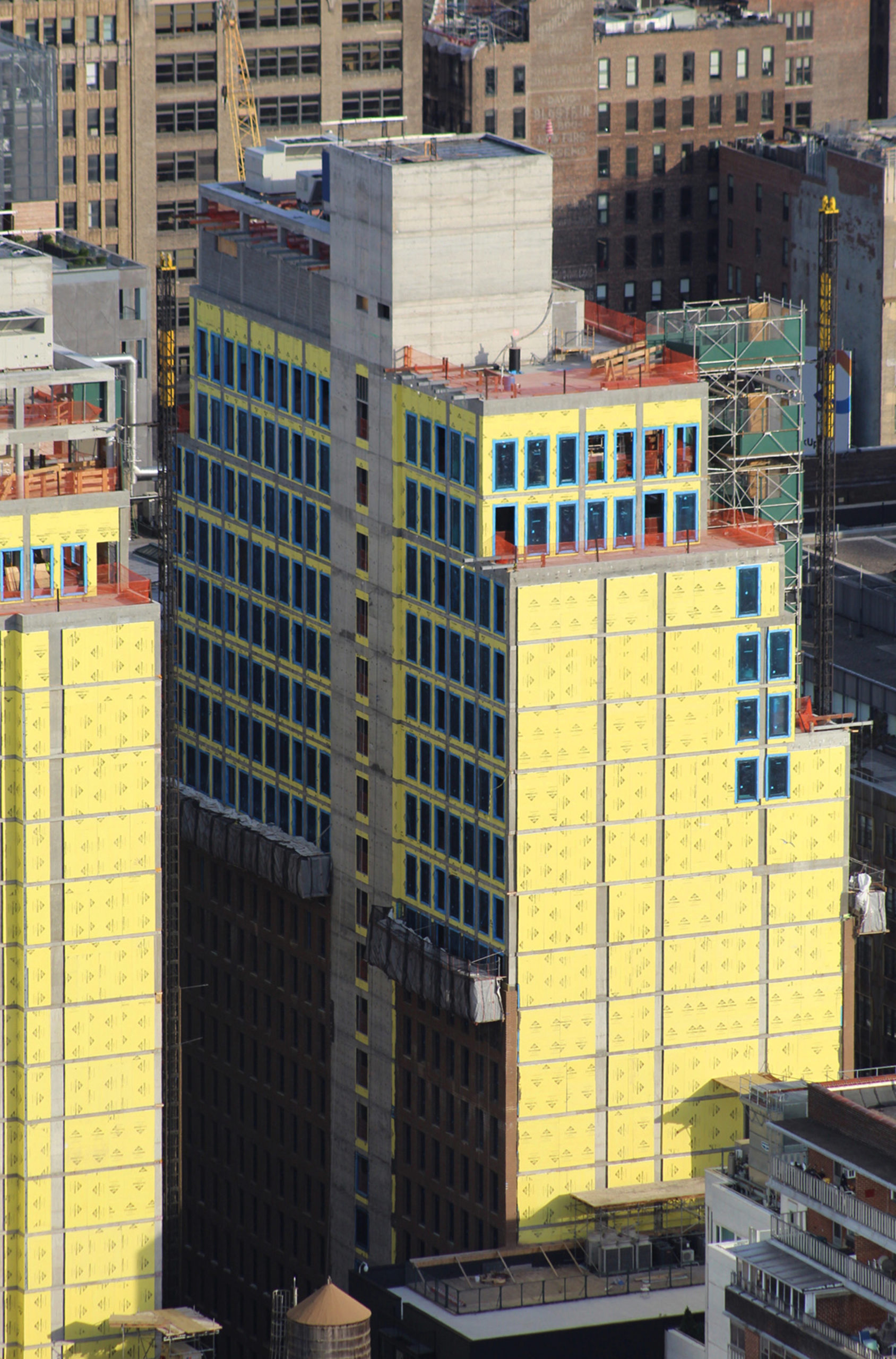
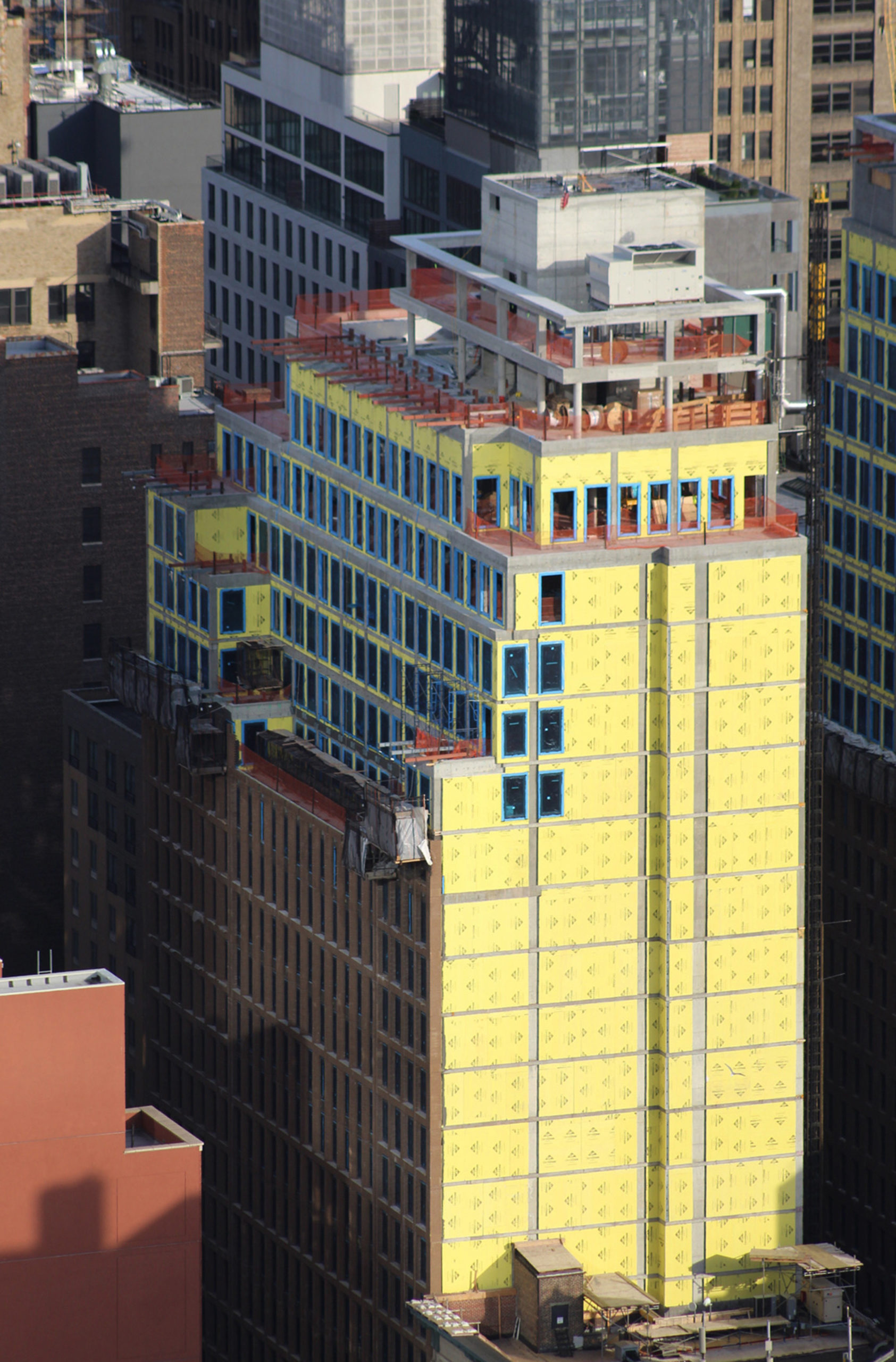
Only the top few floors above the setbacks are left to clad on the outer elevations, while the inner walls facing the central courtyard and the flat western elevations are further behind. The walls for the central cores that go up to the mechanical bulkheads above the last residential floors have yet to be enclosed in their dark gray metal paneling.
241 West 28th Street. Photo by Michael Young
241 West 28th Street. Photo by Michael Young241 West 28th Street. Photo by Michael Young241 West 28th Street. Photo by Michael Young241 West 28th Street. Photo by Michael Young241 West 28th Street. Photo by Michael Young241 West 28th Street. Photo by Michael Young241 West 28th Street. Photo by Michael Young241 West 28th Street. Photo by Michael Young
YIMBY last reported that 241 West 28th Street is aiming for LEED Silver certification. Amenities include multiple indoor lounges, a fitness center, a children’s playroom, and an outdoor lounge with a swimming pool and adjoining terrace. Approximately 144 residences are to be designated as permanent affordable housing.
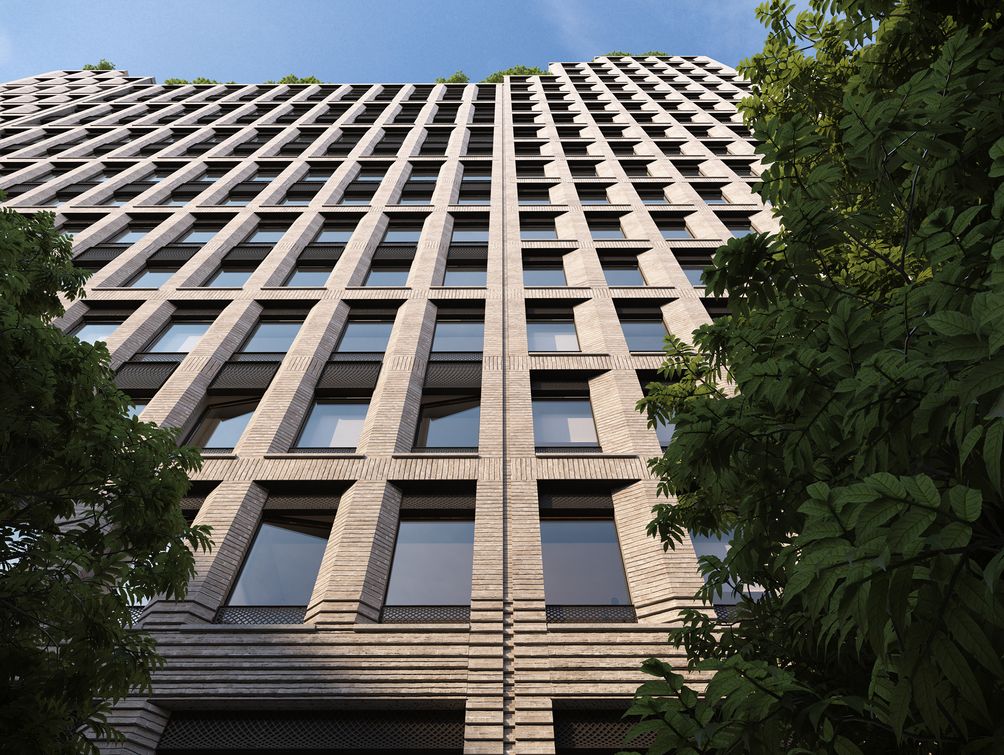
One noticeable change in the construction of 241 West 28th Street is the color of the brick, which appears to be more reddish brown than the lighter beige appearance in the renderings.
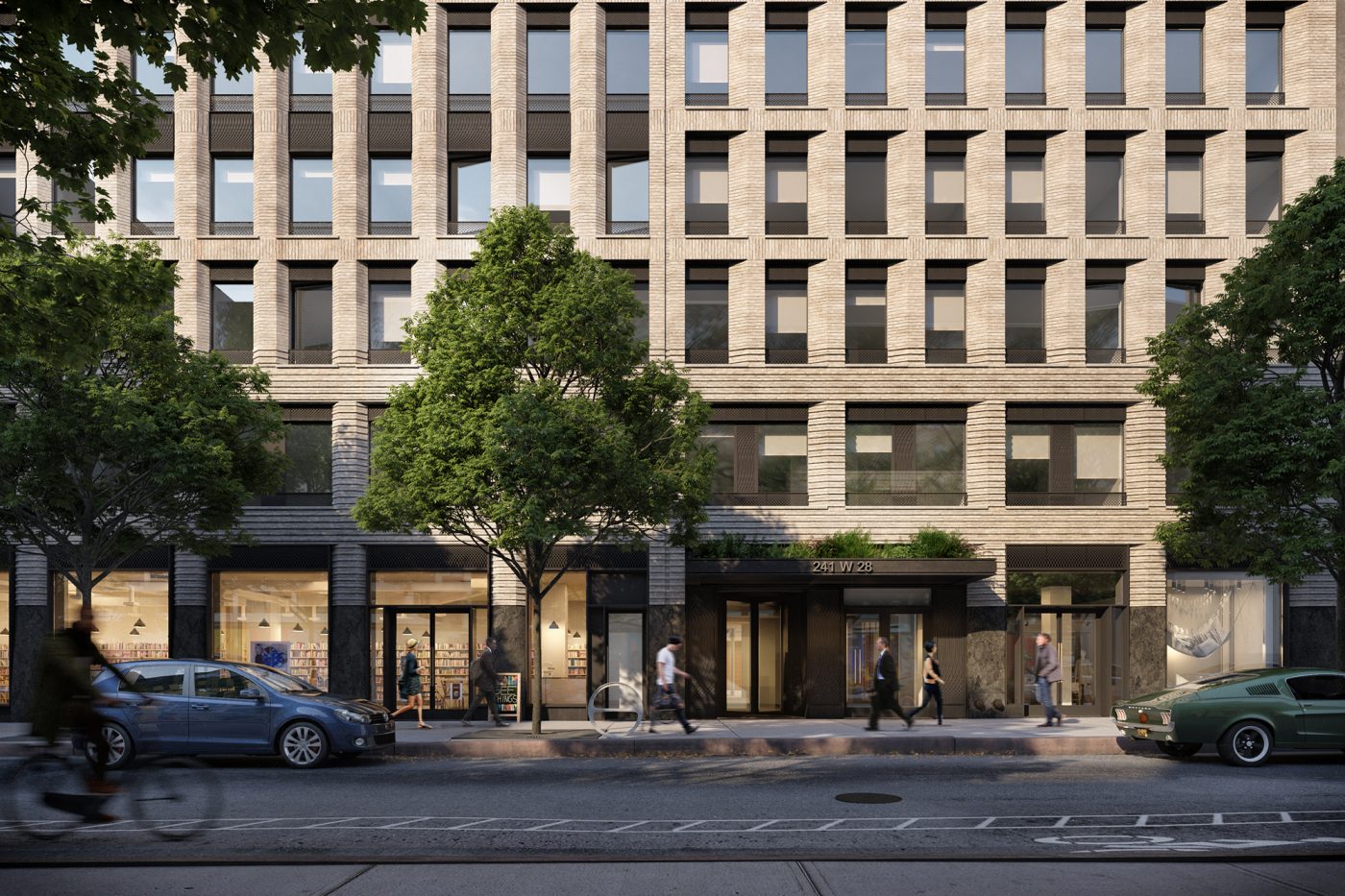
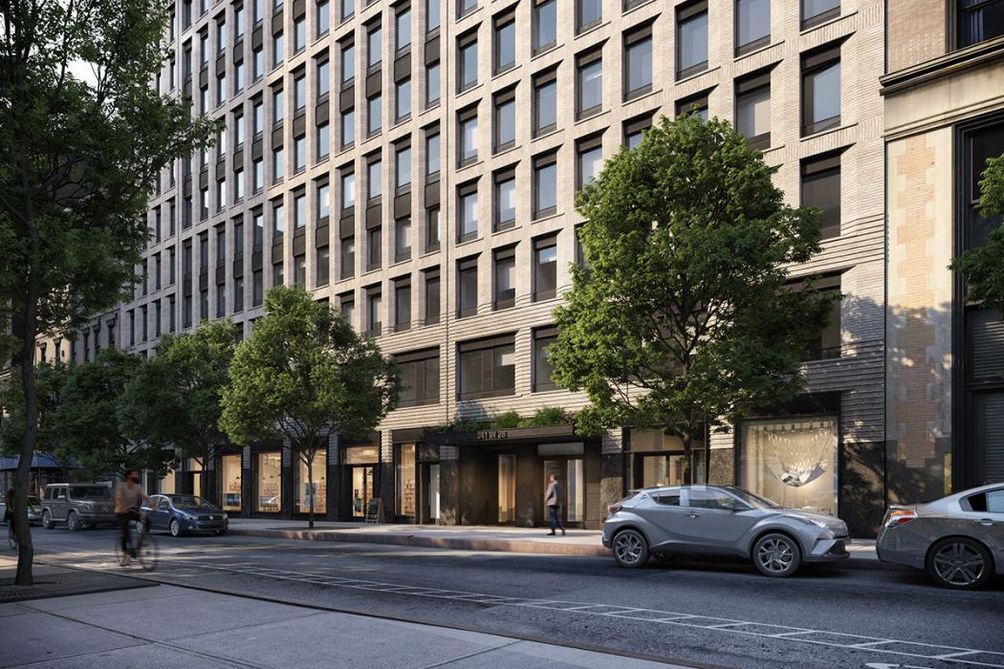
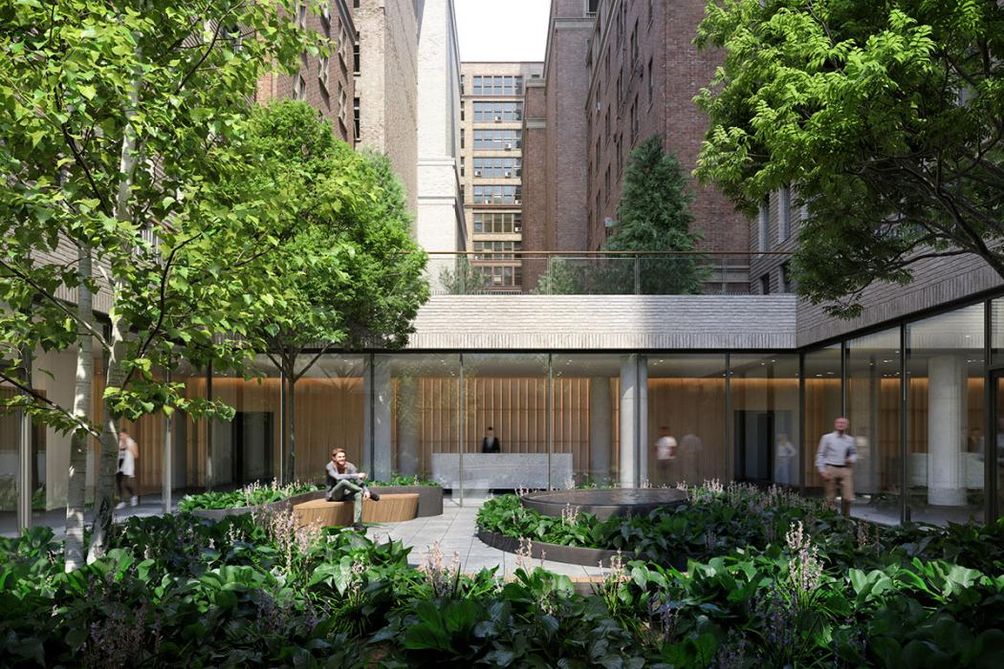
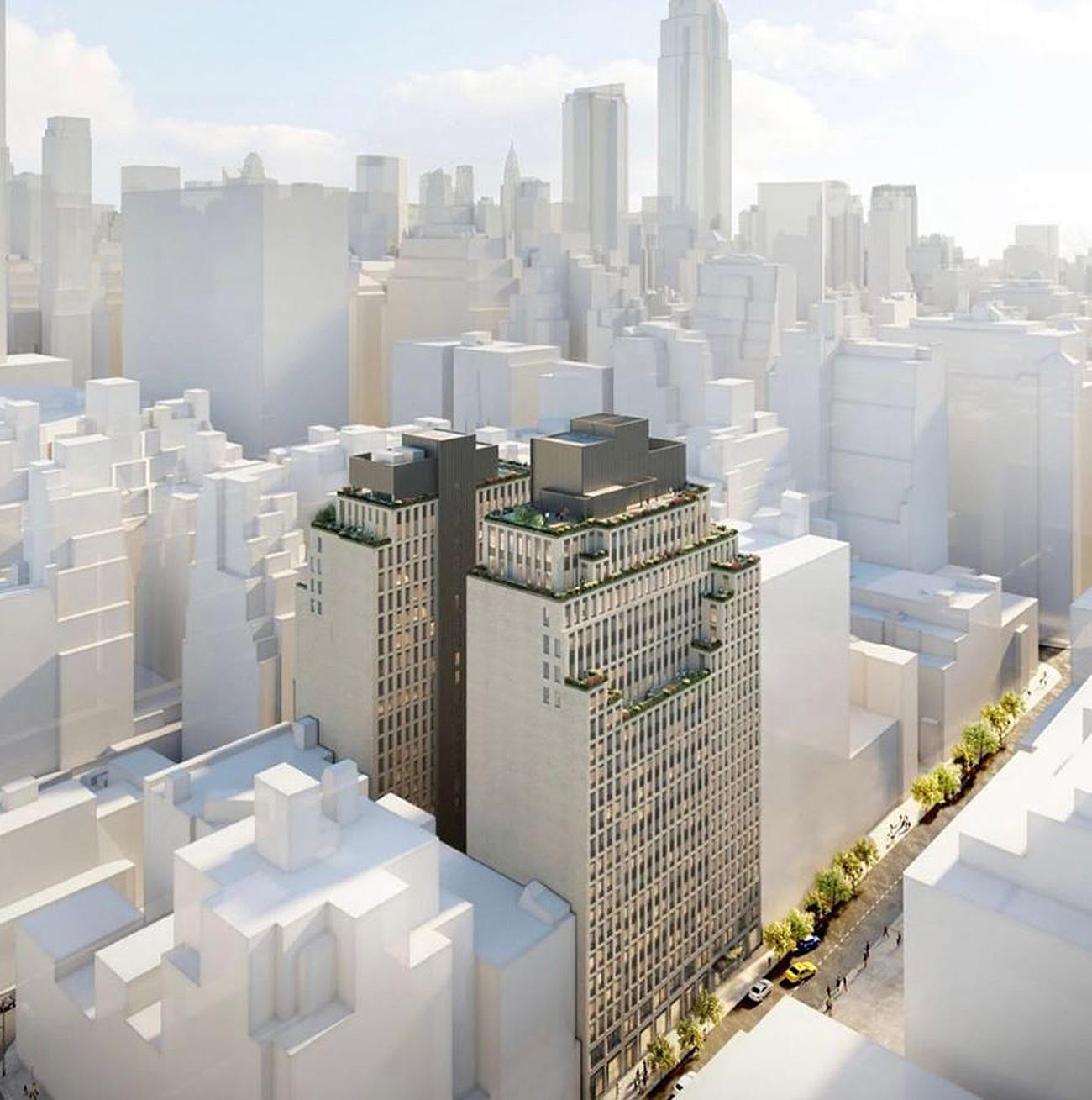
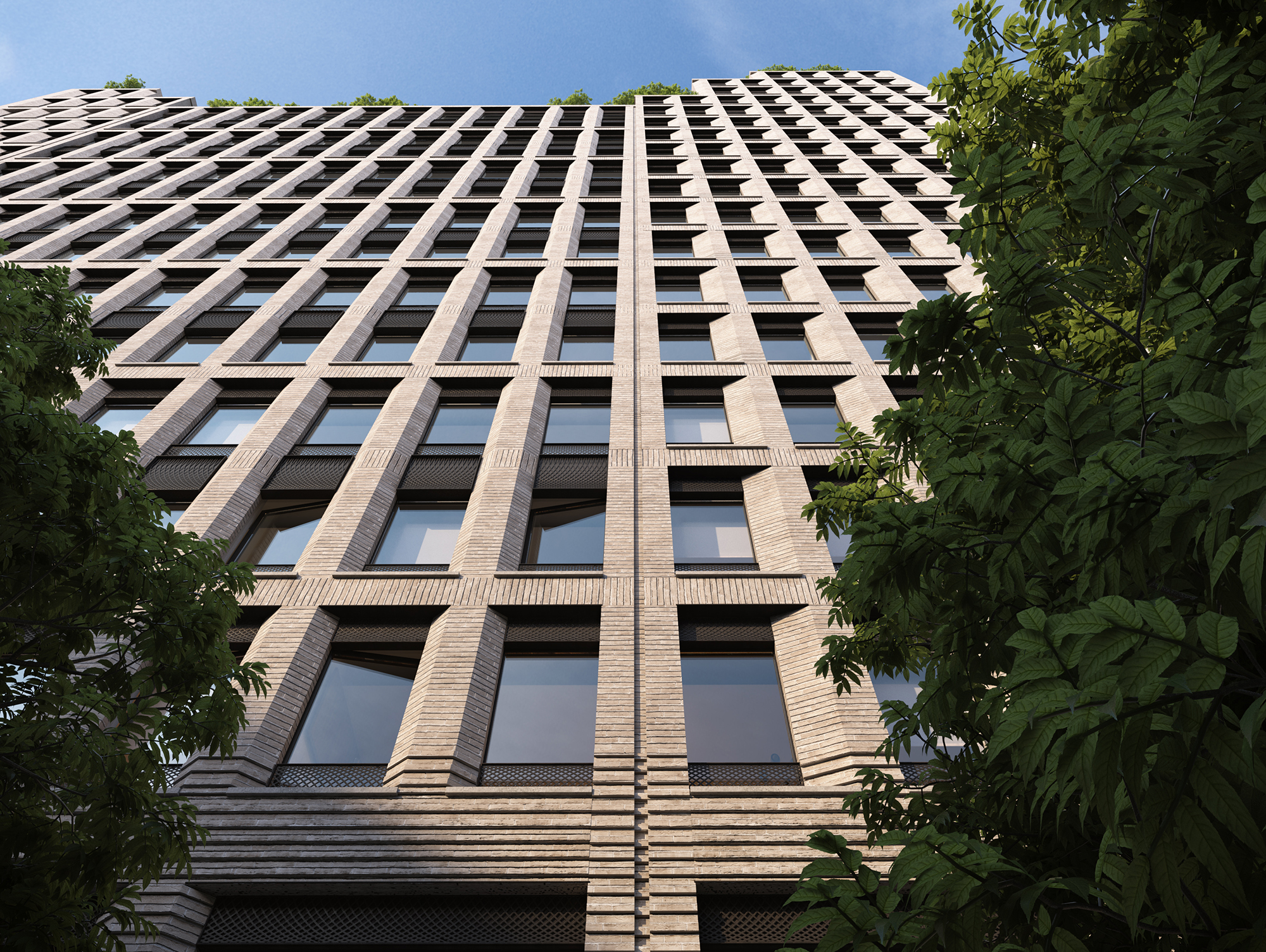
241 West 28th Street. Rendering by COOKFOX241 West 28th Street. Rendering by COOKFOXThe central courtyard of 241 West 28th Street. Rendering by COOKFOX241 West 28th Street. Rendering by COOKFOX
241 West 28th Street is slated for completion in July 2023.
N.Y. developer MAG Partners co-leads team pitching for Diamond District project
By: Jonathan Spiers
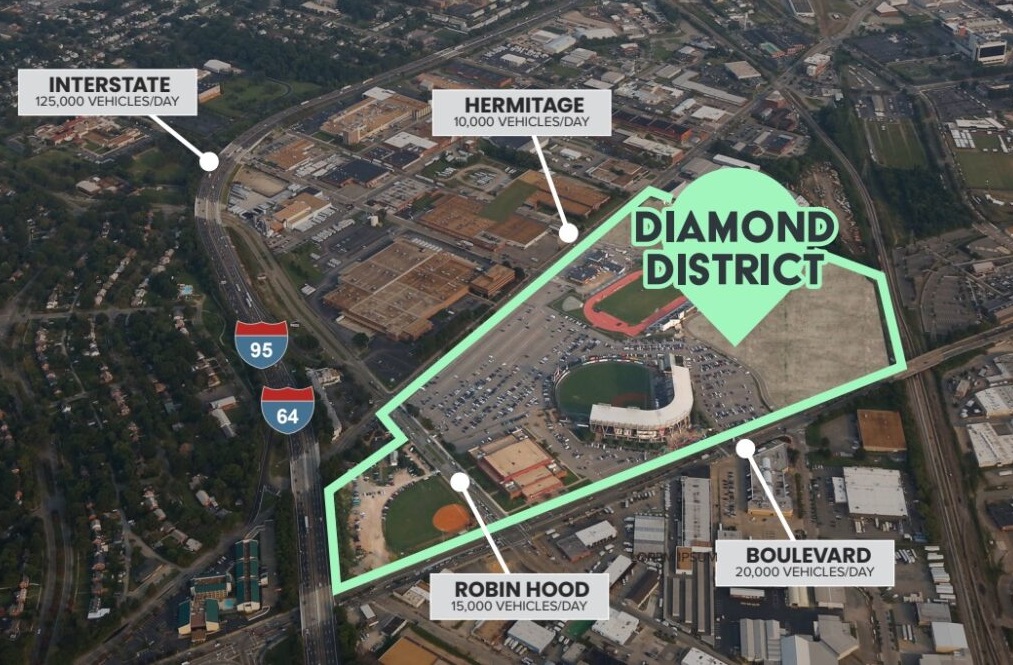
The 60-plus acres of the Diamond District are bordered by Arthur Ashe Boulevard, Hermitage Road, the interstate and the railroad tracks. (BizSense file images)
An East Coast developer and a West Coast peer are teaming up in a bid to score Richmond’s Diamond District project.
New York-based MAG Partners and Seattle-based MacFarlane Partners are driving one of the six teams that remain in contention for the mixed-use redevelopment of city-owned land that would include a replacement of The Diamond baseball stadium.
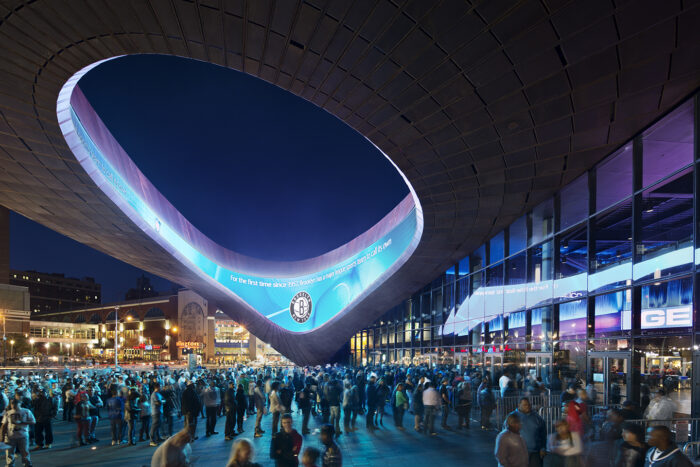
MAG is led by MaryAnne Gilmartin, whose development credits include Brooklyn’s Barclays Center arena and surrounding Pacific Park Brooklyn mixed-use development. Other projects include the New York Times headquarters building and the 76-story New York by Gehry skyscraper.
MaryAnne Gilmartin
Gilmartin, who founded MAG in 2020, helped drive those efforts during her years as an executive with Forest City Ratner Cos., the last five as its CEO. (Forest City worked on Barclays with David Carlock of Machete Group, a venue advisory firm that’s leading a separate Diamond District contender team).
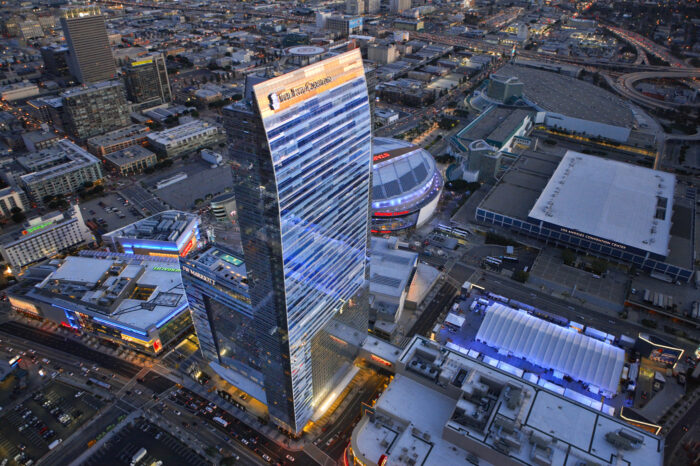
MacFarlane Partners – not to be confused with the similarly named Richmond firm led by local developer Charles Macfarlane – is a 35-year-old company whose development work includes a 54-story hotel and condo high-rise at L.A. Live, an entertainment complex in downtown Los Angeles.
Led by Victor MacFarlane, the company is one of the largest black-owned development firms in the country, according to Gilmartin, who said they’ve collaborated on other projects.
Also on the team is Jair Lynch Real Estate Partners, a D.C.-based development firm that was one of the 15 respondents to the Diamond District’s initial request-for-interest solicitation. Gilmartin said Jair Lynch joined their team in recent weeks after its RFI response didn’t make the latest cut. The company has a focus in multifamily residential development.
Another recent addition is MSquared, a real estate development and investment firm led by Alicia Glen, a former New York City deputy mayor under the Bill de Blasio administration.
Rounding out the team are architecture firms AtelierTek and Woods Bagot; engineering firm Kimley-Horn, which has an office in Richmond; sports venue developer CAA Icon, whose stadium-related work includes Chicago’s 1060 Project and Guaranteed Rate Field; placemaking and workforce firm C Space; and structural engineering firm Thornton Tomasetti.
With its team, Gilmartin said in an interview this week, “I would submit that we have to have among the most diverse group of talent in the mix for this RFP response, just because I know how hard it is to put a team like this together.
“We really like what the government’s done by way of organizing this RFP. It’s ambitious, it’s got scale, and as a result, we put together a team that goes far beyond just the resumes and credentials of MAG Partners,” she said.
Gilmartin said her firm had identified Richmond as an emerging market it wanted to do business in when the Diamond District RFI showed up on its radar, leading to discussions with MacFarlane and Jair Lynch. She said Richmond’s culture, food scene and evolving demographics make it ripe to become one of the country’s next hot spots.
“We have a lot still to learn, but what we do know about Richmond is super-exciting to us. We think it’s a city to watch, for sure,” she said.
“As my team particularly was part of the renaissance of Brooklyn – we spent a lot of time helping to create a place in Brooklyn at a time when it really didn’t have the halo effect that it has today – we learned a lot along the way, and what we see in Richmond really lines up with what we are doing in our careers.”
Brooklyn’s Barclays Center arena, which opened in 2012, anchors the larger Pacific Park Brooklyn mixed-use development that likewise involved MAG Partners’ MaryAnne Gilmartin. (Images courtesy MAG Partners)
While different in market and scale, Gilmartin said the 67-acre Diamond District project is similar to the 8-acre Pacific Park Brooklyn development that’s anchored by Barclays Center, home to the NBA’s Brooklyn Nets and WNBA’s New York Liberty.
“It really was the cornerstone to kick off the overall large-scale development, because it’s got public purpose and delivers a ton for the community. We see the Richmond RFP in a very similar way,” she said.
“It was a controversial project in its inception. One of the reasons why I think it’s been widely accepted by people in Brooklyn is that it is a very good neighbor, in terms of the way it’s been planned, the way it was constructed, the way that it operates. All of that was due to the work we put in for years and years.”
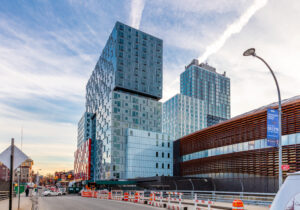
The 38th Sixth apartments beside Barclays Center.
Gilmartin said her team would take a similar approach to the Diamond District, bringing with it lessons they learned from over a decade working on Barclays and Pacific Park Brooklyn.
“The only way to really know how to do it is to have done it,” she said. “All of that experience will be brought to bear in Richmond. The public trust that underlies that commitment needs to be honored, and that’s something that I think we are uniquely capable of doing.”
MAG’s team is one of six that the city is considering for the next stage in the process: an invitation for development proposals. After getting picked among the initial 15 RFI respondents, the teams were asked to provide additional information about themselves and how they would approach the project. The deadline for those details is this Monday, April 25.
An evaluation panel would then select a shortlist of finalists, who would be invited to submit proposals by early June. A final selection is targeted later that month.
In addition to a new, 10,000-capacity stadium to replace the 37-year-old Diamond, which has been deemed unfeasible for renovation, the Diamond District project calls for a mix of development including office, residential, retail and a hotel, as well as upgrades to infrastructure such as water, sewer and roads. The residential component would consist of rental and for-sale homes that would include some units targeted to lower-income households.
While local efforts to position the site for redevelopment have ebbed and flowed for over a decade, Gilmartin said the project’s history gives her team confidence that this latest attempt will be seen through – as does Major League Baseball’s deadline for the Richmond Flying Squirrels to find a facility that meets new pro baseball standards by the start of the 2025 season.
“I have a joke that sometimes things have to die three times before they live,” Gilmartin said. “Part of what I like about this is the process has been super-thoughtful, and because it has certain built-in timelines, there’s a certain amount of commitment around this RFP, because of the needs of the Squirrels and some of the other requirements that make us pretty sure something’s going to happen here.”
She added, “It feels right, it feels ready, and it feels highly credentialed on the part of the government.”
Declining to discuss her team’s vision for the project in detail, Gilmartin said they’ve shared more with the city than just their qualifications, and are open to potentially expanding or modifying the team’s makeup as needed for the project. City administrators have said the final selection for the project could be one or more developers or teams for all of parts of the development.
Seattle-based MacFarlane Partners developed the 54-story hotel and condo high-rise at L.A. Live.
“While I can’t talk about the details, I can tell you that this submission that we’re doing is so much more than introductory,” Gilmartin said. “The level of work and the level of thinking that’s being asked of us is significant, and in my mind, while it’s a ton of work, it also speaks to the legitimacy of the planning organizations, the seriousness of the government to actually do something.”
Regarding arguments over whether the project should be awarded to primarily local or out-of-town teams, Gilmartin added, “We should be always thinking local, but there’s a certain amount of ideas and excitement that can come from opening the team up from beyond just the borders of Richmond and Virginia. It should be inclusive, and it should also have a local lineup.
“If our lineup is not local enough, because we need to bring in more local expertise, we’re completely open to that, and we’ve made that very clear,” she said. “But I also think, having run a company that had 26 offices around the country, we can all learn from each other.
“Obviously Richmond is not Brooklyn,” Gilmartin added, “but at the same time, we think we can contribute in a way that is highly beneficial to the process, and the ideas are probably going to be new. There has been a local effort on this district for quite some time now, and I think that there’s a desire for some new ideas and new thinking. But that doesn’t have to come at the expense of local expertise.”
The other five teams that remain in contention are:
• Diamond District Gateway Partners, consisting of local real estate investment firm Capital Square, D.C.-based developers Dantes Partners and Hoffman & Associates, Maryland-based real estate firm The Velocity Cos., local architecture firm Baskervill and Missouri-based architecture firm Pendulum.
• Richmond Community Development Partners, led by Houston-based Machete Group and consisting of developers JMA Ventures and Sterling Project Development, construction firm Gilbane, hotel management and advisory firm Retro Hospitality, architecture firm Hanbury, engineering firm VHB and planning nonprofit Storefront for Community Design.
• RVA Diamond Partners, team members unknown.
• Vision300 Partners LLC, includes developers Freehold Communities, Greenstone Properties, KDC and Spy Rock Real Estate Group; local building firm Hourigan; housing nonprofit Better Housing Coalition, construction firm Canterbury Enterprises, Shamin Hotels, YMCA of Greater Richmond, Brookfield Asset Management, and Richmond-based Sports United Ltd.
• Weller Development Co. and LMXD, consisting of Weller, a Baltimore-based developer, and LMXD, affiliated with New York-based L+M Development Partners.
Andrew Staniforth and MaryAnne Gilmartin Plotting a Modular Empire with Assembly OSM
By: Cathy Cunningham
Andrew Staniforth and MaryAnne Gilmartin first saw the potential for modular construction in Brooklyn years ago. Now, Staniforth, as CEO of Assembly OSM, is taking it to new heights coast to coast.
Assembly (n): A group gathered together in one place for a common purpose.
If there’s one thing the past two years have taught us, it’s that just because things were done in a certain way for a long time, it doesn’t necessarily mean the old way was the right way.
The commercial real estate industry has been a sometimes reluctant beneficiary of change and innovation. But, one firm is pushing the boundaries when it comes to an age-old process that was previously, quite literally, set in stone.
Modular construction startup Assembly OSM was founded by Chris Sharples and Bill Sharples, two of the founders of SHoP Architects, in 2019. While the Sharples brothers continue to oversee the company’s strategic direction, Andrew Staniforth took the reins as CEO late last year.
Its mission is clear: Assembly aims to turn the preconceived notion of modular construction on its head through the delivery of architecturally beautiful, high-rise buildings that are greener, cheaper and faster to construct.
The new modular
Think of modular construction and what comes to mind may be stock Lego pieces, put together in an impersonal manner. Right?
Wrong. Just ask MaryAnne Gilmartin, who serves as an adviser to Assembly.
“We don’t want to make people think about prisons and dormitories when we think modular,” Gilmartin, the founder and CEO of MAG Partners, said. “We want to go back to [architect, inventor and futurist] Buckminster Fuller, and recognize that when you have controlled environments, you can deliver unbelievable beauty.
ANDREW STAINFORTH AND MARYANNE GILMARTIN. PHOTO: SASHA MASLOV/FOR COMMERCIAL OBSERVER
Utilizing the technical know-how of former engineers from the automotive and aeronautics industries, Assembly utilizes cutting-edge technology in every step of its building delivery process, from digital twin manufacturing models — or, real-time virtual representations of the physical construction process — through to eventual on-site installation
Sustainability is a crucial part of its business plan. On the construction front, its buildings have 30 to 40 percent less embodied carbon and a reduction of 60 to 70 percent of on-site emissions. Assembly has also designed its properties to be upgradable and disassembled as markets change, or at the end of their useful life. Further, drawing from a preapproved supply chain allows developers to track the sustainability of each product.
“We feel that attacking this problem from all angles is the only way we will be successful at moving the industry forward,” Staniforth said.
In addition to its eco-friendly approach, Gilmartin said the key void Assembly is filling today centers around innovation.
“It’s a connect-the-dots void,” she said. “As developers, we accept the fact that the way we do things is inherently inefficient, and there has to be a better way. What Assembly is doing is pushing the bounds of that conversation to a place of saying, ‘We can do it better, we can deliver it cheaper, and we can make it beautiful.’ I don’t think that trifecta has been demystified by the development and building community, and I actually don’t think there are many competitors trying to solve that same problem.”
The apartment
As this article was going to press, Staniforth was focused on getting Assembly’s first deal locked down, a 130,000-square-foot multifamily building in Manhattan. Details on the property are still under wraps but — to give eager eyes a taste of what automated architecture can look like — the company put a prototype of a completed one-bedroom unit on display in Harrison, N.J., in late October 2021.
“We’re at a point where what Bill and Chris have built over the last three years at Assembly is now ready to release into the world,” Staniforth said. “Over the last few weeks, we’ve had people come out to our facility in Harrison and see our first units being built. MaryAnne was one of them, and I jokingly said we need one of those roller-coaster flashes that go off when you walk into the unit because everyone’s reaction is, ‘This is amazing,’ because the preconceived notions of modular and prefab just aren’t applicable to that first unit — at all.”
Gilmartin described the apartment as “stunningly beautiful.” She added: “What hit me was the absolute upgrade in every way to the original thought of a ‘modular unit.’ It has evolved significantly in its application to high-end, luxury condominiums, and you can now produce that luxury look and feel at a price point that allows renters at all price points to experience a level of luxury. That’s very, very difficult to achieve presently in construction.”
Assembly buildings are delivered in about half the time and allow developers to reduce both interest and carrying costs, and hold less contingencies, all of which result in an overall less expensive building. Thanks to the cutting-edge technology utilized in their prefabrication, Assembly buildings are also higher quality and more sustainable, making it a win-win for both the developer and the end user.
Technology is the backbone of Assembly, and the company has added engineers from Boeing, SpaceX and Tesla to its team, including Boeing’s former chief technology officer, John Tracy.
Those engineers know how the advanced manufacturing industry has operated most efficiently within the aeronautics and automotive industries, and have helped Assembly implement two fundamental concepts applicable to real estate construction: a single source of product information (or digital twin) and a widely distributed supply chain, where subcomponents — for example bathrooms and kitchens — are manufactured by different suppliers across the country and are ready to roll without delays when it comes time to deliver the building.
Bringing all of these capabilities together, Assembly has also built its own software and combined it with products like Catia, used for computer-aided engineering, and 3D technology so that custom-made buildings can be digitally modeled and manufactured like cars and airplanes have been for decades.
As a developer, “My end of the business is never really going to be on the forefront of innovation,” Gilmartin said. “I think that in some ways this discussion around modular and process innovation and delivering quality in a more efficient way is like a war cry for intelligence in real estate.”
And those who understand the true benefits of that intelligence are the ones who’ve been watching the construction space for a very long time, Gilmartin said.
It started deep in the Forest
Modular construction isn’t a new concept to Gilmartin or Staniforth. In fact, the construction of Brooklyn’s Pacific Park, which included Barclays Center as well as the erection of a high-rise modular tower, was a bonding moment for the two at Forest City when the young Staniforth joined the firm as an intern in 2011, his first job out of the University of Pennsylvania.
On Staniforth’s very first day, Gilmartin handed him a set of plans for Tower B2, now known as 461 Dean Street, the first modular tower next to the arena, and said, “We’re trying to figure this out. Can you take a look at it?” He’d never received a set of plans, let alone looked at anything like it.
“I think that the baptism by fire that we had at Forest City really allowed me to be involved in things that most 20 year olds wouldn’t have exposure to,” he said.
Staniforth wasn’t the only one thrown into the deep end when it came to the project, though.
“None of us had ever built an arena before,” Gilmartin said. “It was about getting the best and the brightest people around the table, including the architects, and figuring out how to do this in a way that was different and lasting. Andrew was a big part of that. The arena process confirmed that he’s a superstar, and then he just needed additional time and exposure.”
Gilmartin described herself as an “episodic mentor” in Staniforth’s career since then, available for counsel when big moments or career opportunities have come his way. Or, from Staniforth’s perspective, “at every pivotal moment.”
A pull toward technology and innovation during his time at Forest City presaged his next move — to urban infrastructure, planning and innovation firm Sidewalk Labs (a subsidiary of Google) — and, after Gilmartin created L&L Mag in 2017, she brought Staniforth over there, where he began working on Terminal Warehouse, the firm’s reimagined former shipping warehouse in West Chelsea. (It should be noted that while Staniforth was working on that project, Commercial Observer named him to its Top Young Professionals in commercial real estate list.)
Staniforth credited Gilmartin with steering him to the places that held learning opportunities. “Sidewalk was a big shift,” he said. “But MaryAnne has always been this force of, ‘Find things that challenge you professionally, and find where you can add value to the industry, to the company, to the ecosystem,’ and for the past 10 years, that’s the way I’ve approached everything.”
Looking back in the context of what Staniforth is now doing at Assembly, Gilmartin described their Forest City modular accomplishments as “important, but not enough. We demonstrated that a building could stand up if 60-plus percent of it was built in a factory — and that’s not an insignificant contribution. What’s now been taken to a much more sophisticated level, is that you can build modules and not sacrifice aesthetics and architecture.
It’s a new dawn
Staniforth’s new role requires many problem-solving skills in an industry resistant to change.
“Understanding the benefits that stem from changing the way that we build buildings — for more affordable housing, and all of the benefits of having a much broader, inclusive workforce who participate in construction — and then being able to keep those benefits at the forefront as you do something that changes the way that stuff has happened for generations is a very clarifying process in terms of what I have to focus on,” he said.
As CEO, his first task was setting a very clear and concrete internal mission at the company. “Once you establish that North Star of values, everything centers around that,” he said.
One of his core leadership philosophies is being transparent with both his team and the broader real estate community to drive home the things for which Assembly stands. Cultivating a diverse and inclusive workforce at every stage of the construction process is one prime example.
“Transparency empowers people to make decisions, and I’m transparent about needing to have a more inclusive workforce and pull different pockets of populations into the construction field, because they’ve been traditionally cut out,” he said. “It’s really important to codify that internally, and then everyone, as they analyze the decisions in their own day, consent around that, and my leadership team doesn’t have to be involved in those decisions. Everyone knows what we’re optimizing for. And that’s part of what I’ve been doing over the past six weeks — getting those concepts just on the table and talking about them very openly.”
One of the big exercises as Assembly grows the team is hiring people that match its values and its mission, and can help it continue to achieve those goals.
Time is money
Developers may take some convincing along the way, but Gilmartin is confident the argument for modular is ready to be made.
“It’s a case of trust and verify in doing these early projects and taking a group of doubting Thomases and converting them,” she said. “You don’t have to be on the higher plane in the world of developers, you can actually be a bit of a lunkhead — and I say that affectionately. As developers we want to get the job done, and make money.”
The benefits should be easy enough for the lunkheads to grasp: Assembly’s building delivery methodology eliminates the potential for human error, shortens project timelines and removes the guesswork from construction costs, thanks to the prefabricated advance pipeline of materials involved.
“We all know that there’s a dire need for housing, and the market is there for it. But as a developer, you don’t know what it’s going to cost,” Gilmartin said. “The innovation that Andrew is working on is going to allow us to be much more certain about cost and time. Time is money and there are so many things that can go wrong when there’s a bigger human factor involved. And I think that this idea that Andrew is going to use the automotive industry and the aeronautics industry to do a better job of delivering for the built environment is something that’s just next level, and beyond anything we were thinking about when we built B2 as a modular building.”
What’s also key — perhaps especially in New York, where buildings’ outward appearances’ are judged like dogs at Crufts — is that design aesthetics won’t be sacrificed along the way.
“The ethos of our company comes from ShoP. And design is so important,” Staniforth said. “At the end of the day, people want to live in places that are beautiful and safe and healthy. When you put that at the forefront of how you approach a manufactured product, you get around some of the preconceived challenges of modular and prefabricated work.”
Breaking down those walls — no pun intended — the company is already in conversations with several of the industry’s starchitects.
“COOKFOX or Norman Foster will be able to design an Assembly building,” Staniforth said, adding that beauty will be one thing that differentiates his firm from others in the modular space. “You don’t have to pick out a building from an assembly line. On the back end, we’ll make it super efficient to execute. But on the front end, it’s going to look beautiful and custom-made with your architect’s stamp on it.”
Staniforth expects Assembly to complete three deals in the next year, likely in New York City and California, where the company has already completed a lot of the pre-approval processes and is ready to rock.
“We started at Forest City with an idea, and it was a hairy, crazy idea that was a jumpstart on this whole idea of doing things better, faster and more progressively in the built environment,” Gilmartin said. “For me, it’s deeply gratifying to see that very early idea turned into something as sophisticated and as promising as what Assembly has put together today.”
MAG Partners, Safanad, Atalaya Capital Management and Qualitas, with Urban Atelier Group, top out 241 W. 28th St.
By: Owners Developers & Managers
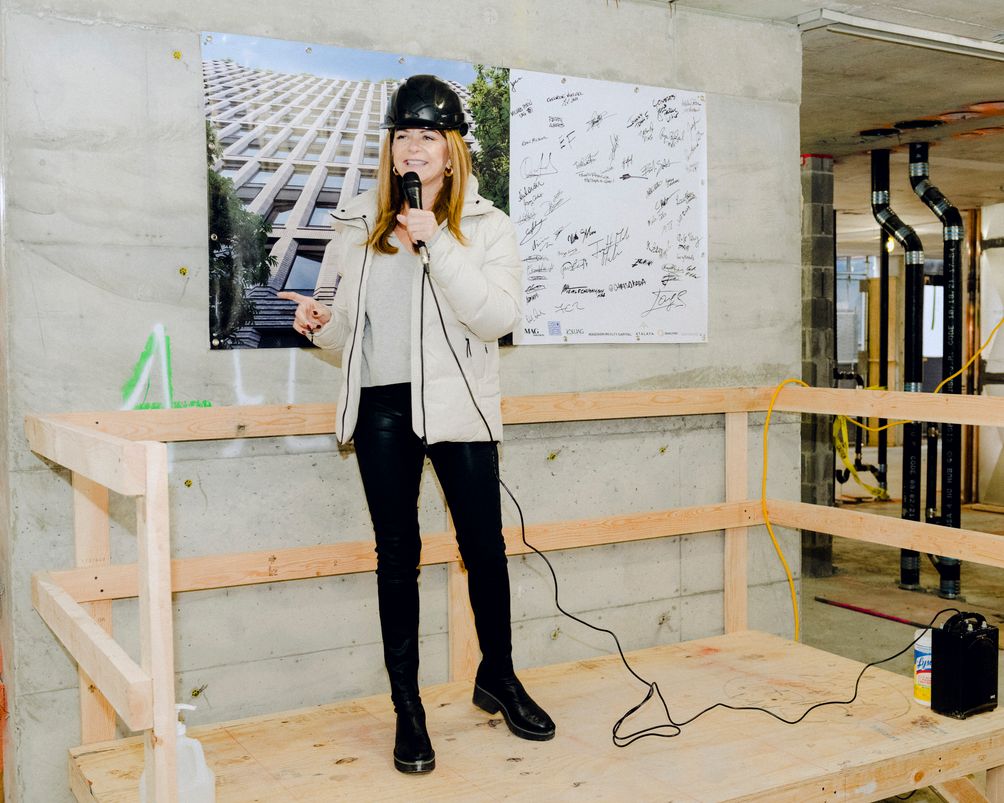
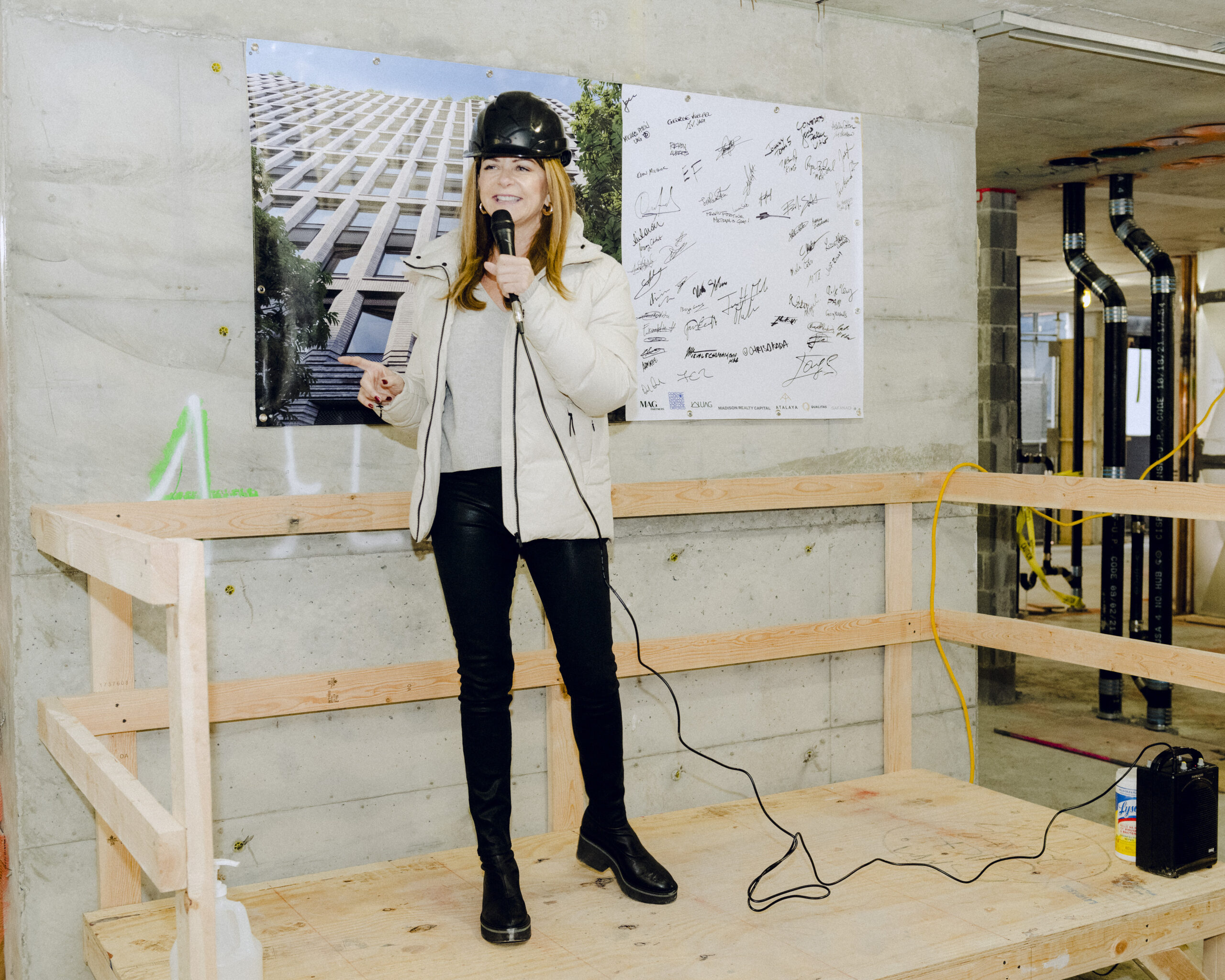
Shown (from left) are: Tom Alaimo, James Palace, Andy D’Amico, Rick Cook, MaryAnne Gilmartin, Jon Mechanic, Susi Yu, Brandon Specketer, and Jeff Rosen.
Manhattan, NY MAG Partners topped out construction on a 480-unit rental residential building at 241 W. 28th St. in Chelsea. The development is expected to be complete in late 2022.
The first development project of MAG Partners, founded by MaryAnne Gilmartin, is being designed by celebrated architects COOKFOX Architects. The building will include 8,000 s/f of ground floor retail. Developed under the Affordable NY program, 30% of the project’s units are reserved for low- and middle-income New Yorkers. Urban Atelier Group is the construction manager for the development.
The project is a joint venture between MAG Partners, Safanad, Atalaya Capital Management and Qualitas.
MAG Partners previously announced that it had secured a $173 million construction loan from Madison Realty Capital for the project.
The exterior of the building is designed with contextual masonry inspired by the historic architectural fabric of the neighborhood, while the residences will incorporate biophilic design strategies that connect its residents to nature. A landscaped canopy will welcome residents at the 28th St. entrance and a central courtyard and garden will unite the amenities and lobby areas. Above, alternating piers of hand-laid, angled brick and expansive windows allow light and shadow to dance across the façade. A series of outdoor terraces offer residents rooftop gardens and panoramic views of Midtown, Downtown, and the Hudson River.
241 West 28th Street’s Brick Façade Begins Installation In Chelsea, Manhattan
By: Michael Young
Construction has topped out on 241 West 28th Street, a 22-story two-tower residential project in Chelsea. Designed by COOKFOX for MAG Partners, Atalaya, Safanad, and Qualitas, the 235-foot-tall, 400,000-square-foot development will yield 480 residential units with 30 percent reserved for low- and middle-income households. King Contracting Group is in charge of brickwork and Urban Atelier Group is the general contractor for the complex, which is located between Seventh and Eighth Avenues. MAG Partners acquired the Midtown, Manhattan property in December 2018 when it was still an open-surface parking lot and established a 99-year ground lease with Edison Properties.
Work has progressed rapidly since our last update in October, when the superstructure was less than halfway to topping out. Now the reinforced concrete has reached its pinnacle and work has shifted to window installation and the assembly of the walls.
241 West 28th Street. Photo by Michael Young241 West 28th Street. Photo by Michael Young241 West 28th Street. Photo by Michael Young241 West 28th Street. Photo by Michael Young
The first lower levels on the main southern elevation are having the waterproof membrane installed around the tight grid of windows.
241 West 28th Street. Photo by Michael Young241 West 28th Street. Photo by Michael Young241 West 28th Street. Photo by Michael Young241 West 28th Street. Photo by Michael Young241 West 28th Street. Photo by Michael Young241 West 28th Street. Photo by Michael Young241 West 28th Street. Photo by Michael Young241 West 28th Street. Photo by Michael Young241 West 28th Street. Photo by Michael Young
The opposite northern side of 241 West 28th Street is at a comparable state of progress.
241 West 28th Street. Photo by Michael Young
241 West 28th Street. Photo by Michael Young241 West 28th Street. Photo by Michael Young241 West 28th Street. Photo by Michael Young241 West 28th Street. Photo by Michael Young
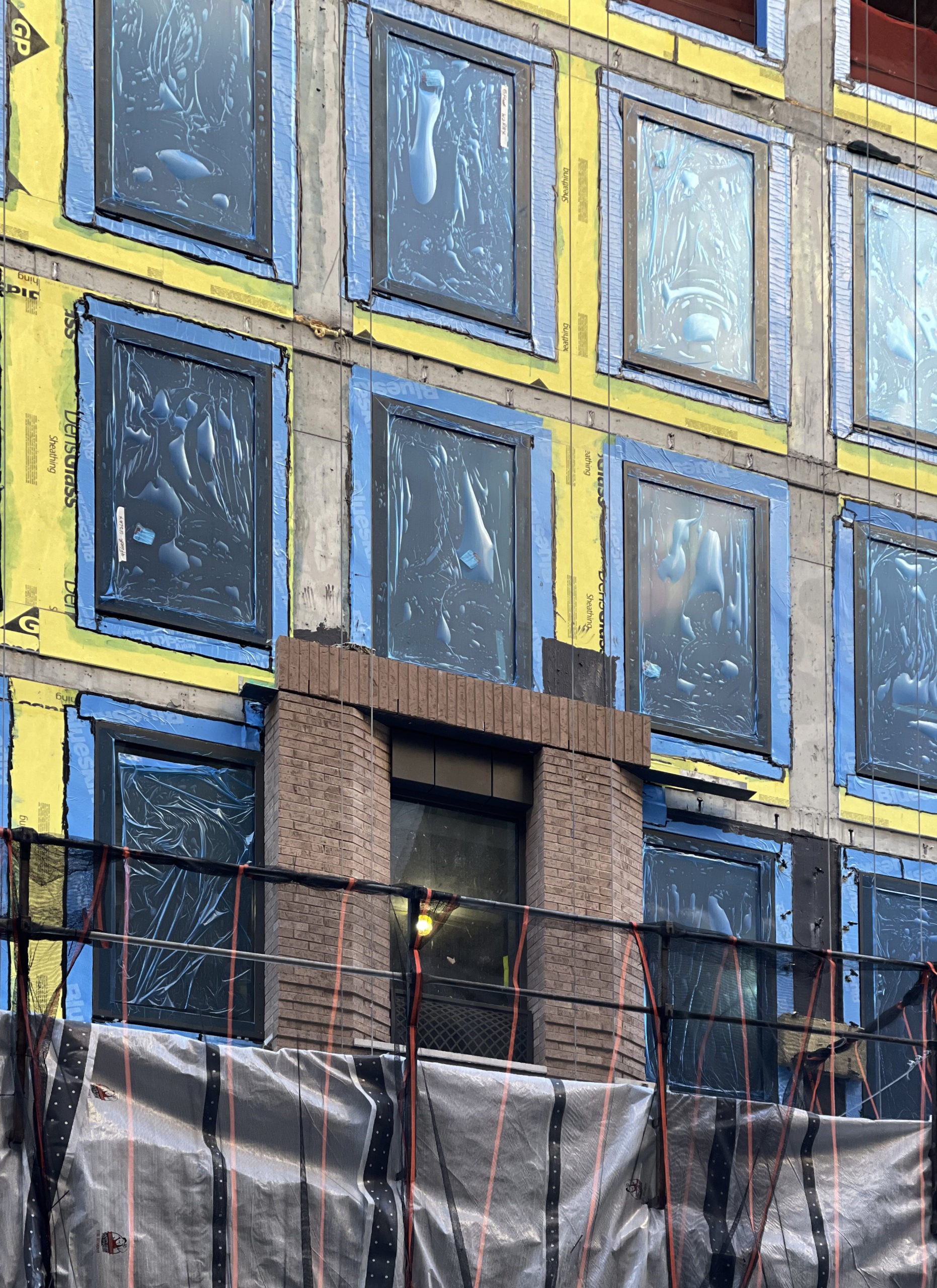
The start of the brick envelope can be spotted on one of the windows above the sidewalk scaffolding, providing a preview of the quality of the hand-laid craftsmanship. The surface of each stretcher is not a flat solid color, nor does it look too stale in its textural appearance, and thus makes it look more like a traditional brick façade with light and dark shades. On the lower part of the columns is a series of subtly protruding strips of bricks. This design feature will only be implemented on the first two levels of 241 West 28th Street. At the top is a rectangular spandrel divided into flat square panels and above that are bricks laid in soldier orientation. There is also a decorative dark metal screen with a symmetrical pattern of curving and intersecting lines that will be installed in front of every windowsill.
241 West 28th Street. Photo by Michael Young241 West 28th Street. Photo by Michael Young
241 West 28th Street is aiming for LEED Silver certification, and is expected to include about 8,500 square feet of ground-floor retail space. Residential amenities include lounges, a fitness center, a children’s playroom, and an outdoor lounge with a swimming pool and adjoining terrace. Thirty percent of the units, or approximately 144 residences, will be designated as permanently affordable housing.
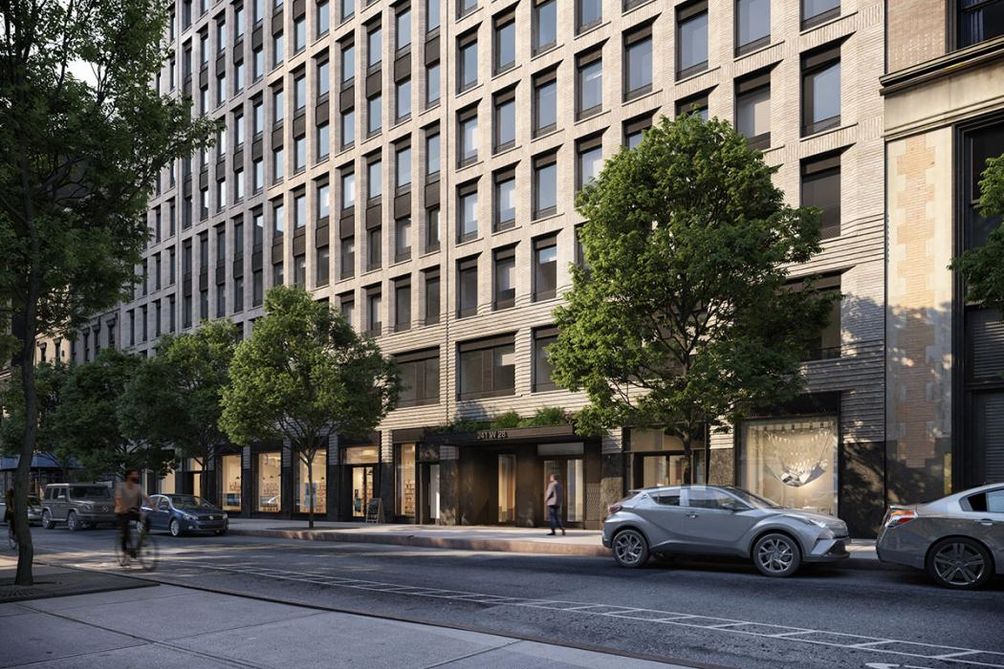
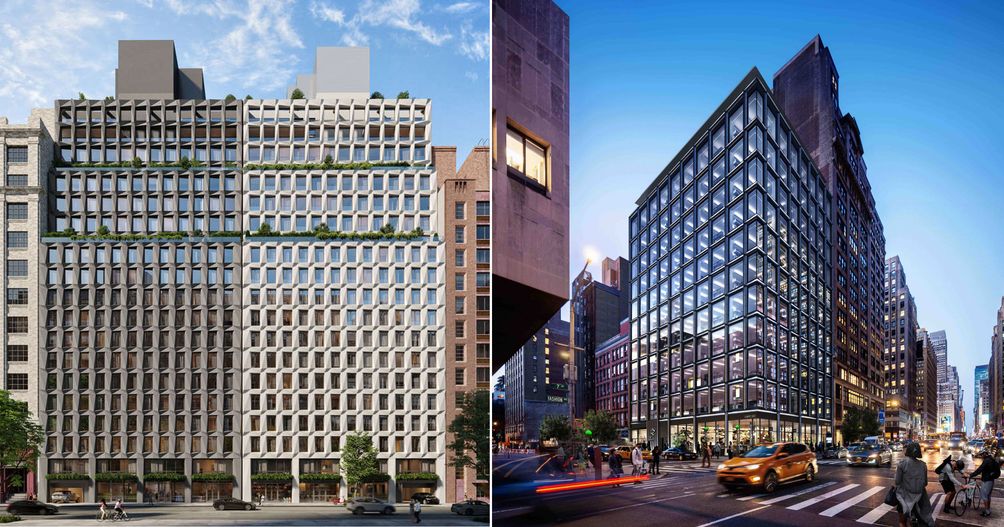
The following aerial and street-level rendering depict the two buildings, which will be separated from each other by a private central courtyard. On the upper setbacks are landscaped terraces reserved for a select number of units. Around the center of the walls facing the interior of the lot are flat walls lined with what seems to be a dark gray metal surface that would contrast with the overall construction. These external parts of the edifice rise and extend toward a pair of mechanical bulkheads that follow the pattern of upper setbacks.
241 West 28th Street. Rendering by COOKFOX241 West 28th Street. Rendering by COOKFOX241 West 28th Street. Rendering by COOKFOXThe central courtyard of 241 West 28th Street. Rendering by COOKFOX
241 West 28th Street. Rendering by COOKFOX
241 West 28th Street is slated for completion in July 2023.
MAG Partners Rings in 2022 With New Hires, Including Rob Willis From Mack-Cali
By: Andrew Coen
MaryAnne Gilmartin’s MAG Partners rang in 2022 with the addition of construction industry veteran Rob Willis, Commercial Observer can first report.
The hiring serves as a reunion for the two commercial real estate executives. Willis was most recently senior vice president of construction at Veris Residential (formerly Mack-Cali Realty Corporation), and first became acquainted with Gilmartin while working alongside her at Forest City Ratner Companies 19 years ago. The two also intersected briefly at Mack-Cali.
Gilmartin tapped Willis for the head of construction role at MAG as the developer gears up to tackle large-scale multifamily and office properties throughout Manhattan.
“When MaryAnne gave me the call I thought about it for about one second,” said Willis, who was vice president at Forest City Ratner from 1998 to 2004 and became senior vice president of construction at Mack-Cali in September 2020. “I admire her so much as she is so talented and has so much experience, and the rest of the team is really good at what they do.”
Gilmartin rose through the ranks at Forest City Ratner Companies to become president and CEO, before forming L&L MAG in 2018 with L&L Holding Company’s David Levinson and Robert Lapidus. She founded MAG in July 2020 while simultaneously spending nine months as an interim CEO at Mack-Cali on the heels of a leadership shakeup at the real estate investment trust, where she had served on its board.
During his time at Mack-Cali — which was rebranded as Veris Residential in late 2021 — Willis oversaw a construction department that was responsible for the $100 million repositioning of Harborside 1 in Jersey City, N.J., a 4.3 million-square-foot office campus. He previously led the design and construction team at HEI Hotels & Resorts and was managing director of the John Hardy Group’s New York City office.
At Forest City Ratner, Willis served as the day-to-day project manager on the 42nd Street Retail-Entertainment Complex and The New York Times building projects. After Forest City, he spent four years as vice president of design and construction at Starwood Hotels and Resorts, which included laying the groundwork for the building of the St. Regis Bal Harbour Resort in Miami Beach, Fla.
“When we started the company we knew that we were going to have to grow and grow strategically and lean on the life cycle of a ground-up development company where the construction piece is back ended and it takes sometimes years to put buildings together,” Gilmartin said. “Now that we are several years in, we are building things and because of that we can get a great talent to help us deliver the construction part of our business.”
A year and a half after completing the buyout of her L&L partners and launching MAG Partners, the firm is tackling four development projects in Manhattan including a 480-unit residential development at 241 West 28th Street slated for completion in late 2022. Another rental project with an affordable component that Willis will help spearhead is 335 Eighth Avenue, scheduled to break ground this spring, and a new boutique office development also slated to launch this year at 122 Varick Street.
In addition to the hire of Willis, Gilmartin added Lizzy Zevallos as assistant vice president of development. Zevallos arrives at MAG after serving as vice president of portfolio management at Maverick Real Estate Partners, where she helped underwrite more than $3 billion of CRE loans. Zevallos, who is also a professional dancer and choreographer, also interned under Gilmartin at L&L MAG from January 2020 to June 2020.
Gilmartin also hired Arion Alku as an accounting manager, bringing MAG’s staff up to 10. Alku previously worked as a senior accountant at Marx Realty, where he conducted audits and internal controls for some of the largest real estate owners in the New York City metropolitan area.
MAG’s expanded 10-person team now consists of six women and four men. Boosting diversity has been a core focus of Gilmartin since launching MAG in addition to constructing projects that intersect well with their neighborhoods.
“We’re building a different company where we’re creating a new model for development and we’re focusing on diversity,” Gilmartin said. “We want to bring the community into our process and do that while delivering the highest-quality buildings.”
MAG Partners celebrates topping out of first NYC project; COOKFOX-designed rental to bring 480 mixed-income apts to Chelsea
By: CityRealty Staff
Just south of the slow-as-molasses and desperately needed metamorphosis of Penn Station, the area once known as the ‘Fur District’ is transforming into a vibrant mixed-use community. 2021 began with the opening of Moynihan Train Hall, the transformation of Farley Post Office into an airy, welcoming train station. Plans are moving forward for the Penn District, the transformation of the area around the much-maligned Penn Station that will also bring aesthetic and infrastructure improvements to the station itself.
A few blocks south, construction has topped out at 235 feet high and 22 stories at 241 West 28th Street, a 400,000-square-foot through-block development between Seventh and Eighth Avenues. MaryAnne Gilmartin, Jeff Rosen, and Susi Yu of developer MAG Partners, as well as Rick Cook and Brandon Specketer of designer COOKFOX Architects, were on hand to mark this milestone, which puts the building well on its way towards its target completion of late 2022.
MaryAnne Gilmartin, Founder and CEO of MAG Partners
The project will comprise two 22-story towers, individually fronting West 28th and West 29th Streets, and a private courtyard in between. There will be approximately 8,500 square feet of retail space on the ground floor, and apartments on all floors above. As part of the Affordable NY program, 30 percent of the units (or approximately 144) will be permanently affordable to low- and middle-income New Yorkers. Permits filed in September 2019 show that amenities will include a children’s playroom, pet spa, fitness rooms, bike room, lounge, and pool.The project is targeting LEED Silver certification, and COOKFOX is well known for its work relating to sustainability and occupant wellness. Released renderings showing details of 214 West 28th Street’s facade show the building will have a planted canopy above the entrance, beautifully-articulated brickwork, and deeply-inset windows with chamfered surrounds to augment views. Additional outdoor offerings will include a central courtyard and garden, as well as a series of terraces and rooftop gardens with views of Midtown, Lower Manhattan, and the Hudson River. Examples of the firm’s commitment to biophilic design include 550 Vanderbilt Avenue, 150 Charles Street, Google’s expansion in Hudson Square, and a nearby condo development at 39 West 23rd Street.
Rick Cook of COOKFOX Architects via MAG PartnersRendering courtesy of MAG Partners and COOKFOX ArchitectsStreet-level rendering of 241 West 28th Street (MAG Partners/COOKFOX)
“We have never met a surface we haven’t wanted to plant green” — Brandon Specketer, COOKFOX
Resident landscaped courtyard located between the buildings
The new building is being developed in a joint venture between MAG Partners (led by Ms. Gilmartin), Safanad, Atalaya Capital Management and Qualitas. The lot was previously owned by major parking landlord Edison Properties and was acquired by MAG Partners in December 2018 by way of a 99-year ground lease.
The property had long been slated for development, and a 2011 rezoning allowed for new residential uses to breathe new life into the shrinking Fur District. Fast-forward nearly a decade later, the acquisition of a $173 million loan from Madison Realty Capital allowed construction to proceed.
Topping out ceremony photos via MAG PartnersNovember 2021March 2020
“As true believers in the future of New York City, we are thrilled to be able to begin construction on this innovative project that will bring mixed-income housing and hundreds of jobs at a critical time for the City.” — MaryAnne Gilmartin, Founder and CEO of MAG Partners
“This marquee 480-unit multifamily rental building, located within a few blocks of Hudson Yards and other prominent tech tenant expansions on the west side, will be one of the only new multifamily rental projects built in Manhattan in the next few years,” said Josh Zegen, Co-Founder and Managing Principal of Madison Realty Capital. “We were pleased to fill a void which would customarily be financed by conventional banks, and provide our flexibility, certainty, and conviction.”
Maverick Chelsea and office building 28&7 are also under construction on the block (Image credits: HAP Investments and GDSNY/Klovern)
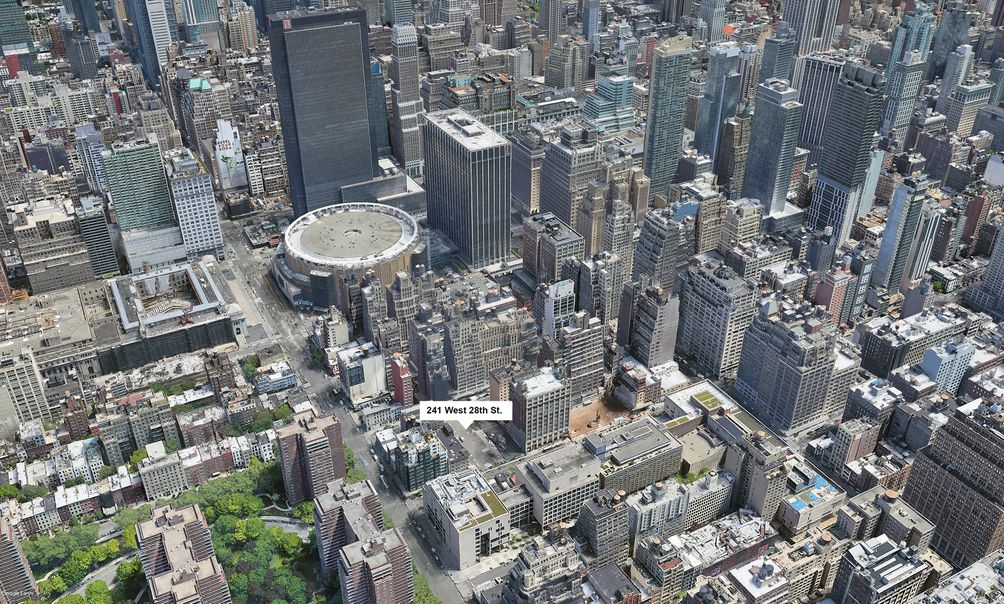
241 West 28th Street is taking shape in what is rapidly becoming a central live-work-play community. The site is a few doors west from Maverick Chelsea, an eye-catching new building where current availabilities start at $1.5 million. Around the corner, MAG Partners and COOKFOX have teamed up again to transform 335 Eighth Avenue, an affordable housing cooperative, into a 200-unit building with commercial space, including a grocery store.
These projects will provide much-needed affordable and market-rate apartments to a central Manhattan location within walking to distance to thousands of office tenants in Midtown, the Garment District, Chelsea, and Hudson Yards. Facebook is set to occupy the office space in the James A. Farley Building, and industry giants like Apple, Google, and Amazon are among the firms embarking on expansions nearby. The area has also seen a commercial building boom over the past few years with developers undaunted by the pandemic and growing work-from home arrangements. Around this building alone, Fashion Institute of Technology is planning a multi-layered glass academic building designed by SHoP Architects across the street, and construction is winding down on 28&7, a sleek new commercial tower designed by Skidmore Owings & Merrill.
Google Earth image showing the location of 241 West 28th Street
“As a firm, we continue to believe in the future of cities as places where the world’s most talented and creative minds congregate – we expect New York City to continue to lead the way on that front and the Chelsea neighborhood to strengthen its attributes as a highly desirable place to live, work and play. We are excited to commence building this project.” — Mark Fischer, Global Head of Real Estate at Qualitas
The site is also a stone’s throw from the new Penn District plan set to transform the decrepit Penn Station and the surrounding area. Andrew Cuomo called for a new business district of 10 skyscrapers to be built, and for using the money from those buildings to finance much-needed infrastructure upgrades. More recently, Governor Hochul has called for revisions of the plan, saying, “It’s time for a Penn Station that meets the needs of New Yorkers.” Her vision calls for the same number of buildings, but not as dizzyingly high as the supertalls previously proposed. It also calls for 540 permanently affordable housing units among the 1,800 new ones proposed in the plan, as well as eight acres of public space and a plaza that would limit car traffic.
It is unclear how Madison Square Garden would fit into all this. The arena was granted a 10-year permit in 2013 so the owners could find a new home; eight years later, ownership has not revealed plans for that, but did announce that they had signed a lease for a 428,000-square-foot corporate headquarters at Penn 2, one of the new office towers in the Penn District. Some critics say that moving Madison Square Garden would let natural light into Penn Station and improve conditions from a safety standpoint. Governor Hochul’s plan calls for keeping Madison Square Garden where it is, but requiring the Hulu Theater to be demolished to accommodate a grand entrance to Penn Station.
Q&A with MAG Partners’ head of development Susi Yu
By: Atticus O’Brien-Pappalardo
PincusCo connected with MAG Partners’ head of development, Susi Yu, to discuss MAG’s topping out at 241 West 28th Street, their recent new development plans just around the corner at 335 Eighth Avenue, and more.
MAG Partners is a woman-owned, urban real estate company whose principals have designed, built, and operated over seven million square feet of office, residential and mixed-use projects, including over 2,000 units of housing. On December 7, the firm topped out their project at 241 West 28th Street and provided PincusCo Media with the following photos of the event.
This interview is part of a new series of Q&As with industry thought leaders who invest, develop, broker, or provide professional advice related to New York City real estate.
Atticus: Just this week MAG topped out their project at 241 West 28th Street, could you tell us a bit about the development?
Susi: This is our first ground-up development. It is a 480-unit multifamily rental unit project and 30 percent of the units are affordable. We closed on the site in 2019 and started working with COOKFOX as the architect. We’ve been working on this now for close to two and a half years. We closed on the project financing in November of 2020 and started the foundation shortly thereafter and topped out December 7th. We will bring the project online in January of 2023, and are currently on schedule to meet those deadlines, so we are super excited.
Were there any unexpected elements that facilitated development, or others that slowed it down?
COVID was a huge curveball. We had to close on our construction financing in order to start construction and the pandemic made us take a different route to get that done. Before the shutdown we were speaking to traditional banks about getting a construction loan and after the shutdown we had to pivot and look at different sources of capital. It took us about four or five months to find the right partner, which ended up being Madison Realty. Interestingly, because of the pandemic we were able to buy the project with favorable economics. We had awarded 60 percent of the project when the market was very competitive and relied on local sourcing to avoid supply chain issues.
Earlier this fall MAG filed plans for another Chelsea project, a 128-unit mixed-use development at 335 Eighth Avenue, could you talk a little about the project and how the deal with Penn South to develop it came to be?
MAG Partners was fortunate to be on a list of selected developers that Penn South asked for proposals from in early 2020. We submitted a residential building, designed very contextually by COOKFOX, and at the end of 2020 we were selected. We worked through the business issues with Penn South and executed the LOI earlier this year and we are now working on the ground lease and designing the building. Penn South is one of the few thriving NORCs (naturally occurring retirement communities) in NYC and it is an affordable cooperative housing with a long list of people wanting to live in the development. The revenue produced by commercial buildings, including our site, offsets the operating expenses and is critical for Penn South’s ability to keep the co-ops affordable.
According to an analysis of DOB filings since the start of 2018, Chelsea was among the most active neighborhoods in Manhattan for new development both in terms of number of new building plans filed and total dwelling units filed for. What has made this neighborhood so appealing for new development in recent years?
I think it depends on what your boundaries are of Chelsea. A lot of people push it far west, more than I would, and much further north than I would. But what I think is interesting about Chelsea is there are very few sites and I think a lot of the projects that were filed since 2018 were probably for condominiums, not multifamily rentals, given where the market was in terms of land value, like the Edison projects sold to HFZ. Companies like Facebook relocating to, I’d call it Penn Station west area, and Google literally taking over Chelsea Market, I think it makes the existing neighborhood fabric of Chelsea that much more attractive to potential tenants or condo buyers. The neighborhood also has fairly contextual zoning, so you can’t really build a tall building. So it’s an interesting neighborhood with very few available sites and then what you build has to fit in the zoning of the neighborhood. You can also walk everywhere, to Union Square, Madison Square, Meatpacking, Hudson Square, it’s very accessible but still feels like a neighborhood.
MAG’s website states that construction on the new project at 335 Eighth Avenue is expected to begin in 2022, do you have an estimated completion date?
Likely the beginning of 2026 or the end of 2025.
Do you have any other projects lined up? How are factors such as Covid-19 and the expiration of 421-a impacting development decisions?
We have another residential project that we’re working on to beat the 421-a deadline, it’s a 200-unit, multifamily rental building with 30 percent affordable. We also have a boutique office building that we have been working on for the past year and a half or so. It is about 200,000 square feet and it’s in a very strong location. We are also looking at other projects outside of New York City in order to increase our footprint. New York City is becoming a harder and harder place to develop so we are looking elsewhere, some are pretty large scale projects.
Looking even further into the future, what is the biggest change you anticipate in NYC’s development market by 2031?
I think what you’re going to see is a market where there is a dearth of rental housing because of expiring 421-a. You’re going to start to see a shortage of housing. I hope the city really focuses on how to deal with the homeless situation, in terms of providing supportive housing for the homeless population. As the city gets wealthier and wealthier, those at the bottom of the economic ladder continue to suffer because of the lack of good and safe affordable housing.
MAG Partners is a woman-owned firm, do you want to speak about the significance of that?
70 percent of our firm is made up by women, which we are very proud of. We are very committed to diversity and it is something we practice not just with our team but also with other partners we deal with. For example, we demand with our consultants that there are women who are interfacing with ownership representing their firms. You know they’re at the office doing all the work but they’re not getting the opportunity to interface with ownership or developers, and that’s how you grow business, so that is something that we do demand of our consultants. It is the same with our equity partners, our LP partner out of Australia, Qualitas, is an investment firm that was started by a woman named Carol Schwartz. We want to make sure that everyone who we work with understands what our goals and values are. That’s something that is really important for us.
MAG Partners has topped out construction on a 480-unit rental residential building at 241 West 28th Street in Chelsea. The development is expected to be complete in late 2022.
The first development project of MAG Partners, founded by MaryAnne Gilmartin, is being designed by celebrated architects COOKFOX Architects. The building will include approximately 8,000 s/f of ground floor retail.
Developed under the Affordable NY program, 30 percent of the project’s units are reserved for low- and middle-income New Yorkers. Urban Atelier Group is the construction manager for the development.
MARYANNE GILMARTIN
The exterior of the building is designed with contextual masonry inspired by the rich historic architectural fabric of the neighborhood, while the residences will incorporate biophilic design strategies that connect its residents to nature. A landscaped canopy will welcome residents at the 28th street entrance and a central courtyard and garden will unite the amenities and lobby areas. Above, alternating piers of hand-laid, angled brick and expansive windows allow light and shadow to dance across the façade. A series of outdoor terraces offer residents rooftop gardens and panoramic views of midtown, downtown, and the Hudson River.
The project is a joint venture between MAG Partners, Safanad, Atalaya Capital Management and Qualitas.
MAG Partners previously announced that it has secured a $173 million construction loan from Madison Realty Capital for the project.
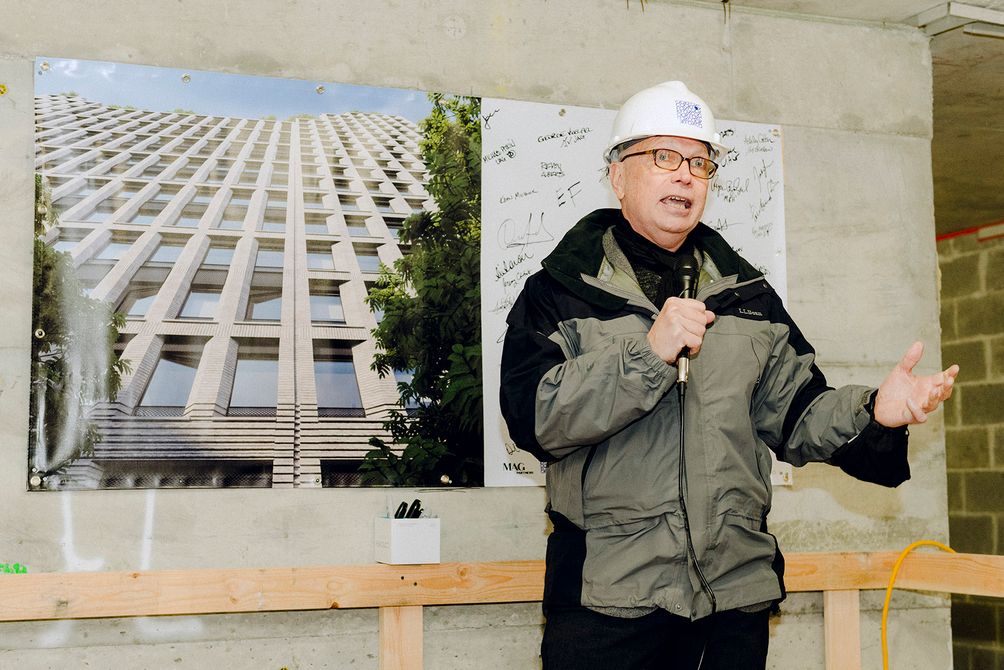
Pictured top are project team members MaryAnne Gilmartin, Jeff Rosen and Susi Yu of MAG Partners, Rick Cook and Brandon Specketer of COOKFOX, Andy D’Amico, James Palace, and Tom Alaimo of Urban Atelier Group, and Jon Mechanic of Fried Frank.
IMPACTGilmartin is chairwoman emeritus of the Downtown Brooklyn Partnership, an executive committee member of BAM, a board member of New York Public Radio and an executive committee and board member of the Real Estate Board of New York.
ONCE, TWICE, four times a CEO.
At 56, MaryAnne Gilmartin has already been at the helm of four high-profile development firms in the city. She bought out her partners at L+L MAG to start MAG Partners in 2019. The company now controls a pipeline of three residential ground-up developments, as well as one commercial, in New York City.
While working on the new company, she was tapped to serve as the interim chief executive of New Jersey–based real estate investment trust Mack-Cali after investment group Bow Street partners ousted its previous leader, Michael DeMarco. Gilmartin has since relinquished the role and is back at her firm.
When she served as chief executive of Forest City Ratner Cos., she was a driving force behind some of the city’s most important developments including the Barclays Center and Pacific Park, which transformed Brooklyn, as well as the New York Times Building.