Baltimore Peninsula is about to get Slutty (Vegan)
By: Christina Tkacik
On Tuesday morning, Aisha “Pinky” Cole drove past a few of the schools she attended in Baltimore — Western and City, as well as Hazelwood Elementary and Middle School. “I actually cried,” she said. “I’m really here, I’m back home.”
Cole’s next stop: Baltimore Peninsula, where she is preparing to open her 15th Slutty Vegan restaurant and the first in her hometown of Charm City.
“This is the city that raised me,” she said, seated in the back of her black SUV outside the eatery, which finally opens Saturday. “I just feel good. I’m anxious for the right reasons, but I know it’s going to be successful.”
Inside 2424 Distillery St., staff members were stacking merchandise and preparing for the crowd that will inevitably be hungry for One Night Stands and other naughtily named plant-based fare. Outside, a sandwich board served as a job notice: “DO YOU HAVE BIG SLUT ENERGY?” it asked in all-caps letters.
Director of operations Taaj Parks said she anticipated approximately 1,000 people will come out the first day, so there’s much to do before then. “Pinky’s not new to Baltimore, but we’re new to Baltimore,” Parks said.
Slutty Vegan’s Sloppy Toppy burger comes with jalapeños, vegan cheese, onions, lettuce, tomato and “Slut Sauce.” (Kylie Cooper/The Baltimore Banner)
The quick-service restaurant sits next to sister concept Bar Vegan, a sit-down lounge and eatery that Cole said is set to open Jan. 7. “It is really a vibe,” Cole said, calling it “Slutty Vegan 2.0″ and a “place where people can have a safe space to relax, have really good food, really good music and just let their hair down.” There is an existing location of the bar in Atlanta, where the Slutty Vegan company is headquartered.
Cole isn’t just a tenant in Baltimore Peninsula, the mini-city built by Under Armour founder Kevin Plank, but is also a partner in the Rye Street Market development, which is overseen by developer MAG Partners and will eventually include Jersey Mike’s, BK Lobster and Urbano Tex-Mex. “It’s a beautiful risk to take with a brand like mine,” Cole said of the project. “I’m confident that people are going to come and show up, and they’re going to be excited about it.”
Cole, a former TV producer, started Slutty Vegan in Atlanta in 2018, buildng a cult following that includes celebrities like Snoop Dogg and Tyler Perry. Additional branches have since opened, primarily in Georgia, but also in New York, Texas and Alabama.
The Baltimore location has been years in the making. In 2022, Cole told radio station 92Q, “I gotta come back home.” Northwood Commons later announced she would be opening a branch there; Parks declined to comment on that location.
Cole said her own success and return to the city offer a lesson to others. “I want people from Baltimore to know that you can leave and come back,” she said. “A lot of people who, quote, unquote, “make it” in Baltimore, they leave and they don’t come back.”
Pet Store, Wellness Company Ink Deals at MAG Partners’ Chelsea Development
By: Isabelle Durso
MaryAnne Gilmartin, CEO of MAG Partners, and an aerial shot of Ruby at 243 West 28th Street.
Pet store Pet Evolutionand wellness company Saint are moving into MAG Partners’ newly built luxury apartment development, called Ruby, at 243 West 28th Street in Chelsea.
In the larger deal, Pet Evolution, which has more than 10 locations across the U.S. and offers high-quality pet products, signed a 10-year lease for 2,000 square feet of retail space on the ground floor of the 480-unit building, according to landlord broker Cushman & Wakefield (CWK). The asking rent was $150 per square foot, tenant broker KSR said.
Meanwhile, Saint, which will offer customers private saunas and cold-plunge rooms, is taking 1,100 square feet on the ground floor for its debut location, C&W said. The lease is for 10 years, while the asking rent was not provided.
“With the addition of Pet Evolution and Saint to Ruby, our vision for a residence that promotes health and well-being is further advanced,” MAG Partners CEO MaryAnne Gilmartin said in a statement. “Their services will be valuable additions to the Chelsea community and an ideal amenity to Ruby residents and pets.”
Both businesses are set to move into Ruby in late 2025, according to the landlord.
C&W’s Alan Schmerzler, Sean Moran, Pat O’Rourke and Catherine Merck brokered the deals for the landlord, while KSR’s George Skaliarinis represented Pet Evolution and CBRE’s Kristen Crossman-Fox represented Saint.
A spokesperson for Pet Evolution did not immediately respond to a request for comment, while a spokesperson for Saint could not be reached for comment.
Ruby, located between Seventh and Eighth avenues, was designed by CookFox Architects and includes approximately 8,500 square feet of ground-floor retail space, according to the landlord’s website.
MAG Partners secured a $196 million refinancing loan in July 2023 from Elliott Investment Management for the luxury rental project, as Commercial Observer previously reported. Leasing opened last year, and Ruby reached 98 percent occupancy in July, C&W said.
What’s the Deal? | MaryAnne Gilmartin | Building 300 East 50th Street & Reimagining Turtle Bay
By: Traded Media
About the Building
300 East 50th Street is a 275-foot-tall, 170,000-square-foot mixed-use building developed by MAG Partners, in partnership with Global Holdings and Safanad. The building will offer 194 residential units, with 30% set aside as affordable housing under the Affordable NY program. Designed by BKSK Architects, the structure features a blend of modern and traditional design, including detailed masonry that gives it a strong corner presence and vertical emphasis. The project also includes ground-floor retail space and a spacious cellar, adding to the vibrant streetscape at the corner of East 50th Street and 2nd Avenue. Lease up will begin summer of 2025.
What drew you to this deal and the Turtle Bay Market?
I built a large part of my career in Brooklyn, and after starting MAG Partners, began to focus on Manhattan. We currently have two projects in West Chelsea. While we love the west side, expanding our footprint into different submarkets has always been an objective.
Turtle Bay is this little nook in the city and is known for its urban gardens throughout the community. This really influenced our design and positioning, which embraces nature and wellness. It’s an interesting juxtaposition because, when I was growing up, you wouldn’t think of living on the Upper East Side. Back then, it was called the “Silk Stocking District”—an area that was overpriced for young people and lacked affordable housing for that age group. I love being part of the transformation and rebranding of this area, where young people now love to live. The offerings in terms of food, beverage, and entertainment are incomparable, and we are bringing in a product that is in high demand.
What is interesting about this project is that it stems from what makes our business tick—relationships and networking.
Kevin Wang, a long-time colleague in the field who started assembling this property long before we were involved, rang me up one day to ask if I would be interested in a partnership because he knows how to assemble properties, though he has never built a residential building. That began an odyssey where we started discussing what a collaboration would look like.
The team then went deep into the details. Assemblages are tough in New York. Building is already complicated, but when you have to put sites together just to create the paper, it adds years to the timeline. However, we liked Kevin as a partner, and we believed we could build a type of building that is not in great abundance today. We envisioned high-quality multifamily housing aimed at a younger demographic, giving them the opportunity to move to the Upper East Side and experience all that makes it magical, including discovering Turtle Bay.
Can you share with us your long-term vision for this property?
We have a lot of love for this city, so we like to believe that everything we do makes New York a better place to live. In this project, we are adding multifamily housing to a community that could benefit from more inclusivity. By introducing 30% affordable units alongside beautiful, high-end condos that proliferate the neighborhood, we are adding diversity to an already diverse city, right in this little ecosystem at 50th and Second Avenue. We are creating beauty, and we are delivering value. In our company, we uphold the idea that we can deliver value to the city and build beauty—those two goals are not at odds with each other.
You can build commoditized office, commercial, and residential stock in the city and still make money, but that is not what we want to do. We want to show our investors that you can create something beautiful and still be profitable. These buildings will be here for a very long time. What we put on the skyline, how the building meets the ground plane, and how people see it at the pedestrian level all matter deeply to us. That is the business we are in. We don’t just consider ourselves developers, but more like place makers. We are creating a place to live in the city of New York, and we take that responsibility very seriously.
What are your plans for the ground-floor retail component and how will you tailor it to engage with the community?
For the ground floor retail space in this building, we took into consideration the high demand for restaurants in this community. Restaurateurs see gaps in certain areas where their franchises have potential to thrive, and 50th and 2nd Avenue is a prime location to fill one of those voids. There are developers who see restaurants as complicated, messy, and difficult to integrate, but we believe it would be a missed opportunity not to contribute to the lifestyle of the area by including a beautiful, new restaurant. Our inclination is to find a restaurant with outdoor seating and a specialized takeout option for the residents of our building. I want you to be able to order an Italian dinner that can just be delivered right up to your door, like hotel room service. That is the ultimate field of dreams for us, that the value of the restaurant is extruded through the entire tower. That anybody who lives here gets to experience that level of hospitality in a personal way because they are a resident.
Similarly, at our multifamily development on 8th Avenue, we are in a food desert. In West Chelsea, you have to walk a long way to find a full-service supermarket. That is why we had the ground floor tenant deal with the supermarket operator Lidl signed before we even started construction. It is something that’s often unheard of, signing a retail deal before breaking ground. We were able to do that because the opportunity was so valuable, we had our pick. Lidl is an amazing supermarket, and it is an international German brand with very well-priced goods where there is something for everyone. This is exactly the kind of supermarket that should be built there. The fact that we could bring it to the community and contribute to the quality of life for the thousands of people already living in the area was a great privilege.
How did you go about securing financing for this deal?
There are a couple of different stories here. One, the land was expensive, and we had to manage the relocation of various tenants who were already in place. So, we actually got a land loan. You often get a land loan when you are dealing with an assembly because you are putting together the different pieces of the puzzle. We secured the land loan first, then designed the building and finalized the vertical structure on paper before getting a construction loan. It turns out that the timing of that construction loan was during one of the most challenging lending periods we have seen in recent years.
The underlying economics of financing a building like this five years ago were certainly much less challenging. Financing was readily accessible, and you could typically secure 65-70% of the cost. The world changed rapidly in 2022, and it changed for the worse. Loans were more expensive and harder to come by, and we were also facing the expiration of the 421a tax code. Not only did we need to find a lender, but we had to find one who could offer an interest rate that made sense based on a pro forma created before the credit crisis. Interest rates essentially doubled in the course of trying to secure this loan.
With the sunsetting of 421a, we knew as a community of builders that it wasn’t going to get re-upped. It was going to get redesigned, and there would be a period where there would be no tax program. The biggest concern was how a lender could justify lending money when we all knew that if the building wasn’t finished by 2025, the tax program would be in jeopardy and if it wasn’t completed by 2026, it would no longer exist.
So, you had this unbelievable negotiation with lenders, where you weren’t just arguing interest rate and loan conditions—you were convincing them that you had a path that was undeniable, bankable, and almost guaranteed. This level of discussion was never part of the equation a few years ago. It added a whole new layer of complexity. In the face of it all, we got it done and Bank OZK ended up being the lender for our construction. We closed 50th Street and 8th Avenue in the third quarter of 2023. Both were super challenging.
How do you see this project impacting the residential landscape in Midtown East and what specific contributions will it make to the housing needs in Manhattan?
I’ll start with a really important feature: it’s 30% affordable, contributing to the need for affordable housing by a pretty large measure. In addition, on the market-rate housing side, we’re all navigating the return to the office. Some of the most notable and high-performing office buildings of our generation are being built just blocks away, including JPMorgan’s and Citadel’s headquarters.
Being in the heart of the quality office space in this city, when we thought about the project, we asked ourselves, “Who is going to work in these buildings?” The answer is that the kind of people working in these nearby offices are the same people who would want to live in a building like this. There is a concept called the “15-minute city,” modeled after Paris and Mayor Hidalgo’s vision. The idea is that you can wake up every day and have everything you care about within 15 minutes of your doorstep. We believe this project creates a walk-to-work, love where you live, and build your life around your home lifestyle in a way that New Yorkers will value and will pay for.
The target demographic are young, urban professionals who are going to consider coming to a city like New York, and where are they going to live? It is a building that you can grow up in, and it will be able to accommodate families as well, all the way up to the penthouse level. The solution to revitalizing midtown is buildings like this. We hope we are part of the story of New York‘s rebound post-Covid.
Who are some key partners or collaborators on the deal?
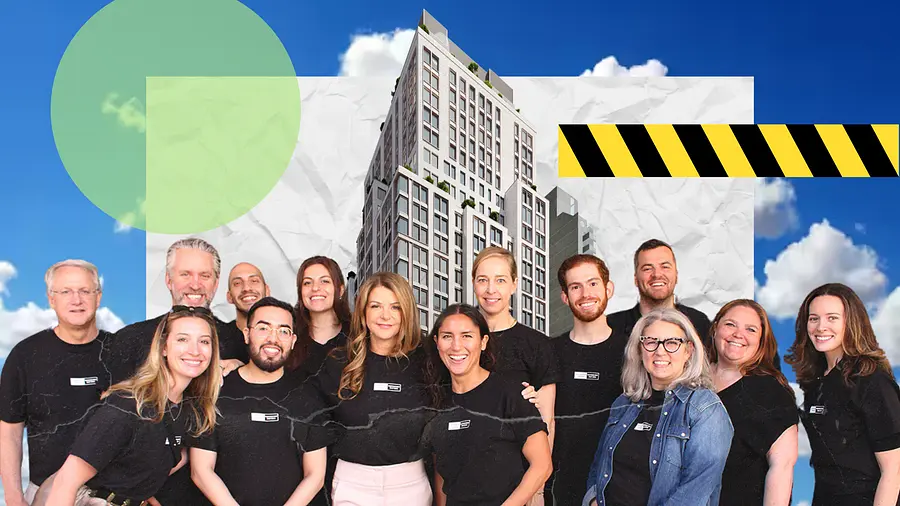
Let me start with my team, because I am nothing without them. We staffed this project with people who are competent, capable, young, and truly represent the future. When I was entering my career, the industry was dominated by older white men. And I am only mentioning that because, if I can build a company that reflects the diversity I see here, then I have made my small dent. Hopefully, others will model that behavior. What we know is that women are really good at this business. Women build things, they build babies, they build families, they build community, they build buildings, and they inherently are good at multitasking. This isn’t to say that men aren’t, but women are naturally skilled in the kinds of things that are necessary for a development company. Yes, men are welcome, we have men in our company, but we are building this company in the likeness of what this city represents, which is opportunity for all.
We’ve been doing this long enough to know that it takes more than just a good developer. It takes a developer who can attract both technical and creative talent to build a building like this. The shout-outs go to the architects at BKSK, whom we treat as a partner, not a vendor; to the marketing team at Douglas Elliman, who have been with us working hand in glove on the layouts and the units; and to our financial partner, Global Holdings, a family office that also functions as a developer. What is great about having a capital partner who knows our business is that they understand the complexities and nuances of being a developer. They also plan to hold this building for a very long time. We like that because we do not want to just build and flip, we want to keep this building in the MAG family for a long time. I can’t say enough about Global as a partner—they have been fantastic. Similarly, MetLife has been a great institutional capital partner on 8th Avenue.
Kevin Wang and I go way back to when I was marketing the New York Times Building from his building next door. They wanted people to look out at the New York Times Building, so I rented space from Kevin and built a marketing center to promote the New York Times headquarters, designed by Renzo Piano. This was in 2000—a lifetime ago. For all the young people out there, this highlights the power of relationships and connections. I always made it a point to have lunch with Kevin every year, and we would catch up and talk about the business. We developed a genuine fondness for each other, and when he thought about who he would want to partner with, I really do believe he said, I’m going to call MaryAnne.
How did you get started in commercial real estate and what advice would you give to young professionals starting their careers?
I was a public developer first, and in that sense, I was an accidental developer. I had a fellowship to work under Mayor Koch and focus on any area of the city I wanted. Someone told me to do something completely outside my nine dots, and I decided to take a look at economic development. I got a glimpse of the people who were changing the landscape of our city. Mayor Koch had a strong economic development platform—he believed in it. I worked on corporate retention, where we saved companies from moving out of the city. I did all this amazing work, like keeping Bear Stearns in New York by relocating them to Brooklyn, early in my career.
Through this, I realized that at the scale the city was working at, there was always a private partner involved. I decided to take a risk and move over to the other side, and I went to Forest City and spent 23 years there. It was a public company, but it wasn’t a real estate investment trust. I learned how to go to the public markets for money, but I also learned another lesson: the public markets are impatient. When the world changed after the global financial crisis, I knew the markets would not be patient for development. It was time to take another risk, and I realized my first love was development. Even though I ran the operating portfolio, I decided I wanted to build a company that could create projects with private money. The stock market isn’t the best place for long-term value creation, because they don’t have patience. Quarter after quarter, I did it long enough to realize it’s a great business, but it isn’t the right environment for a ground-up development company. So, I started my own company.
As challenging, rewarding, and incredible as it was to work in a public company, there’s nothing more satisfying than building not just buildings, but also building your company—person by person, project by project. I could never go back. I have a lot of respect for what they do, but what we are doing is so much more interesting. It’s hard, but it is incredibly gratifying. As I approach the last leg of my professional career, I would say my conscience is as follows: to build a workforce and a team of talent that is best-in-class and, again, reflects the city we live in, and to teach people that you can build a development company that looks very different from the way it has looked for the past 100 years, and that it can be incredibly successful. In fact, it is an imperative to realize that you can’t do business the way it was done 50 years ago, not just inside the company, but the way you interact with the communities you build.
You don’t just roll in and build what you want; you engage with the community, figure out what matters to them, and build accordingly. The model of development is changing—it’s becoming more nuanced and complicated. This is my contribution: to mentor young people, to inspire them, and to show them that this business is the most incredible job on the planet; and you can do this anywhere, but there is only one place like New York to do it. I feel incredibly privileged, humbled, and grateful to have been able to contribute to the skyline in the way that we, as a team, have. Everything in our business takes time. A single building can take anywhere from five to seven years to complete. You only learn this business by doing it. You can read a book, you can go to school and learn how to think, but you can’t be a developer unless you build things. With 35 years of building under my belt, I feel lucky.
My advice to young people is this: development is about three pillars—capital markets, leasing and marketing, and physically constructing the buildings. Master one of these areas, then get your foot in the door at a development firm where you will learn and become conversant in the other two. Then, you’re in a fascinating business where you see all the different tentacles that go into putting a building together. That is why it’s the best job in the world. You work with architects, engineers, lawyers, accountants, lobbyists, capital partners—you name it. There is never a dull day, and no day is ever the same.
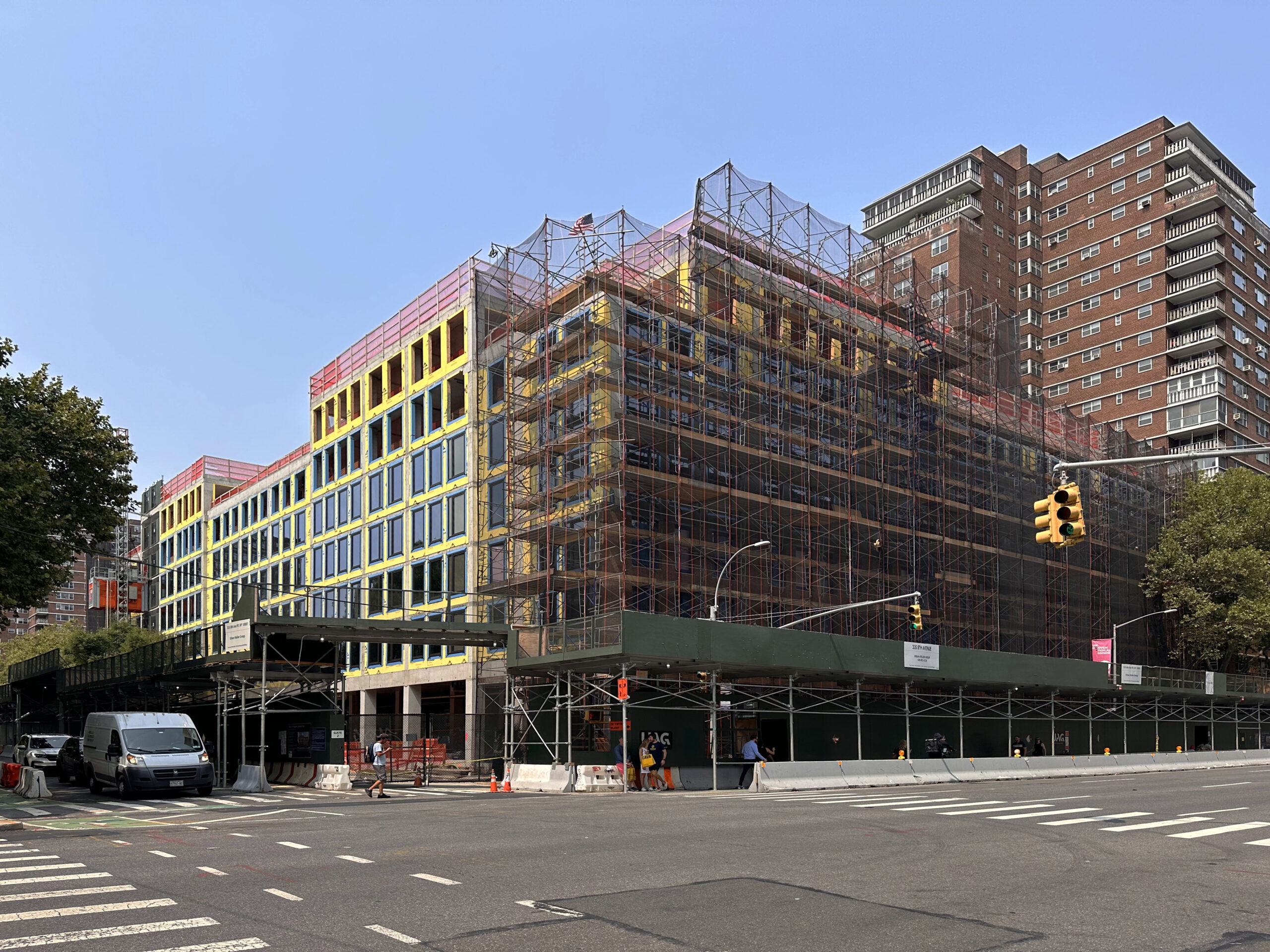
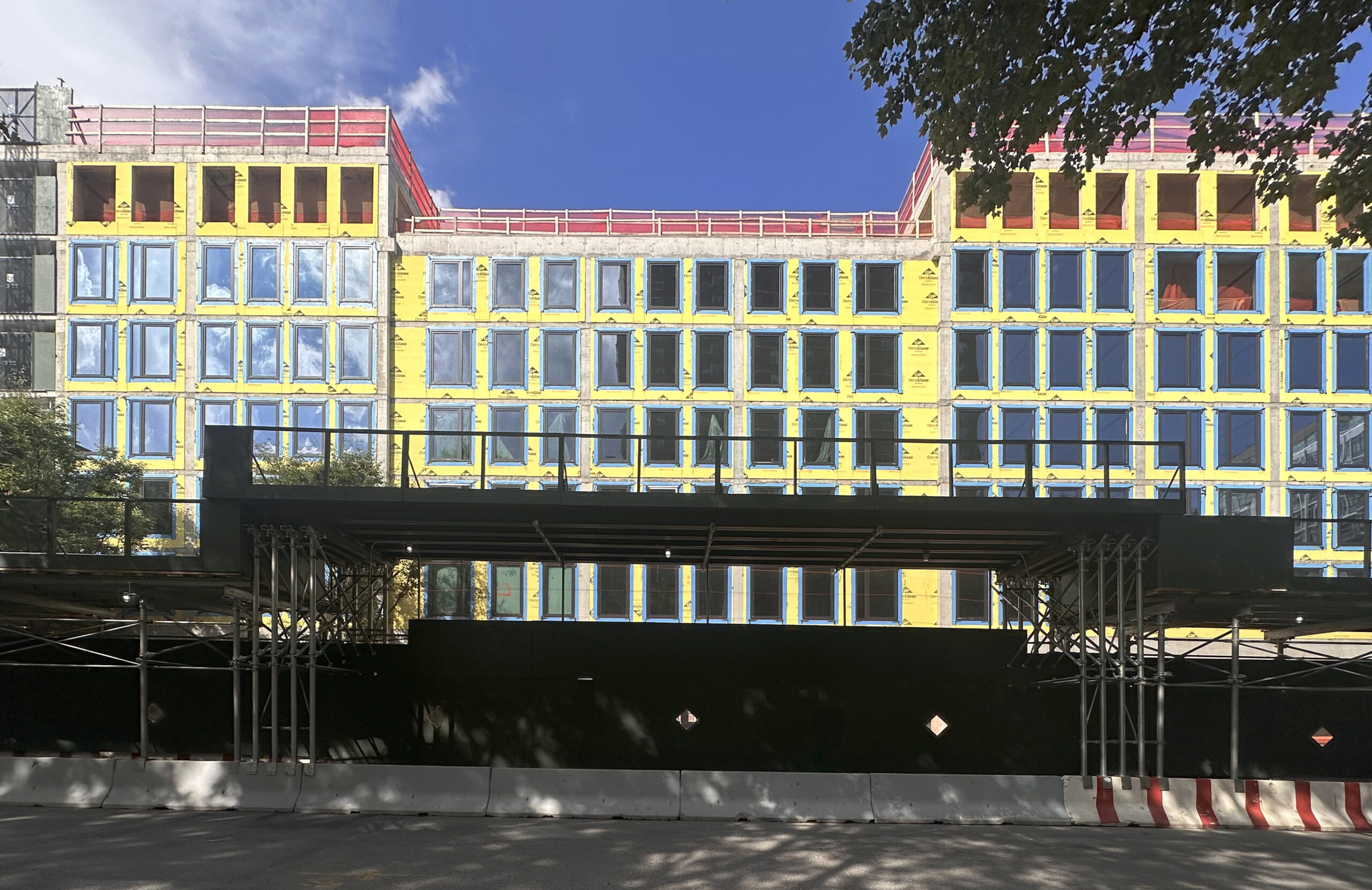
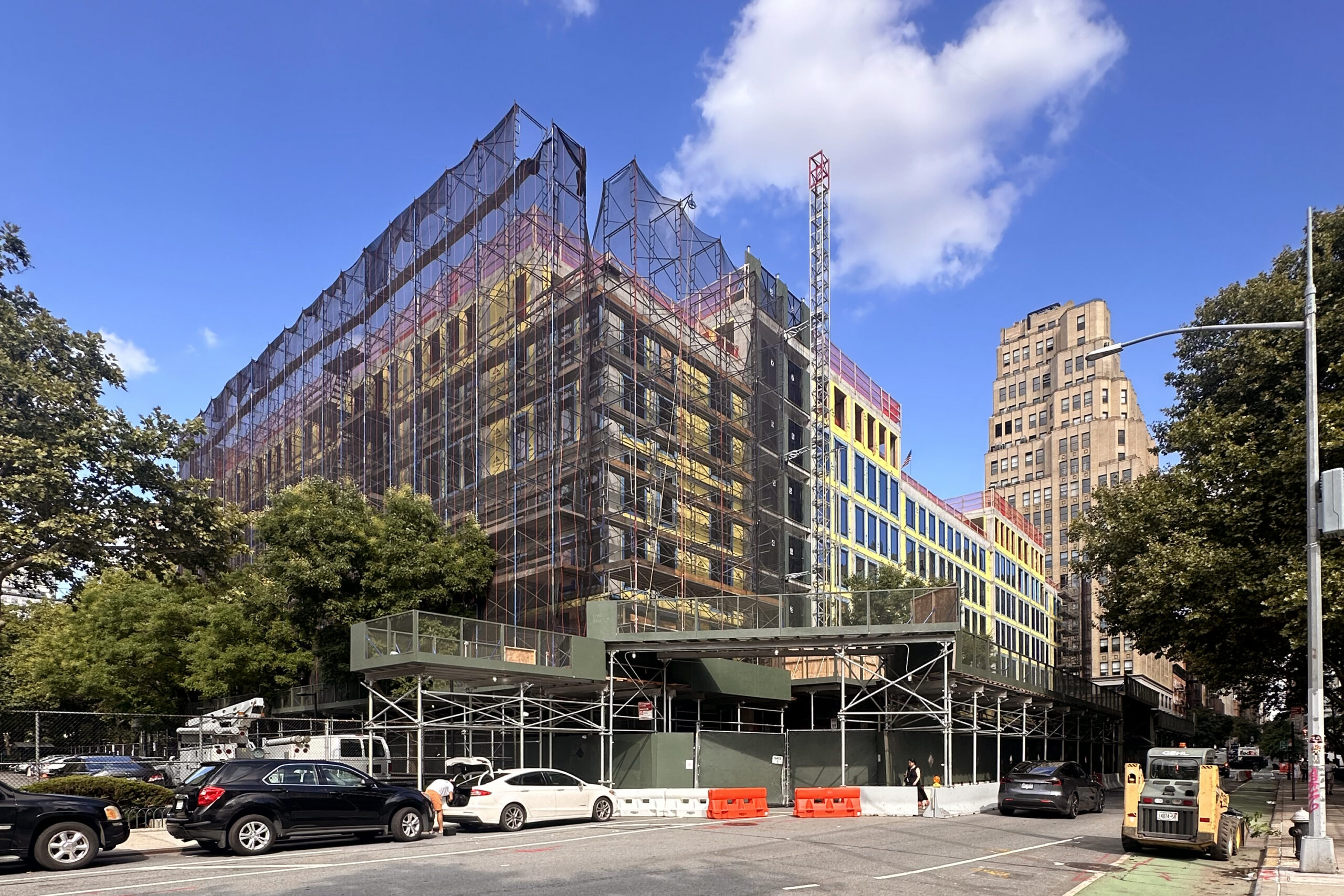
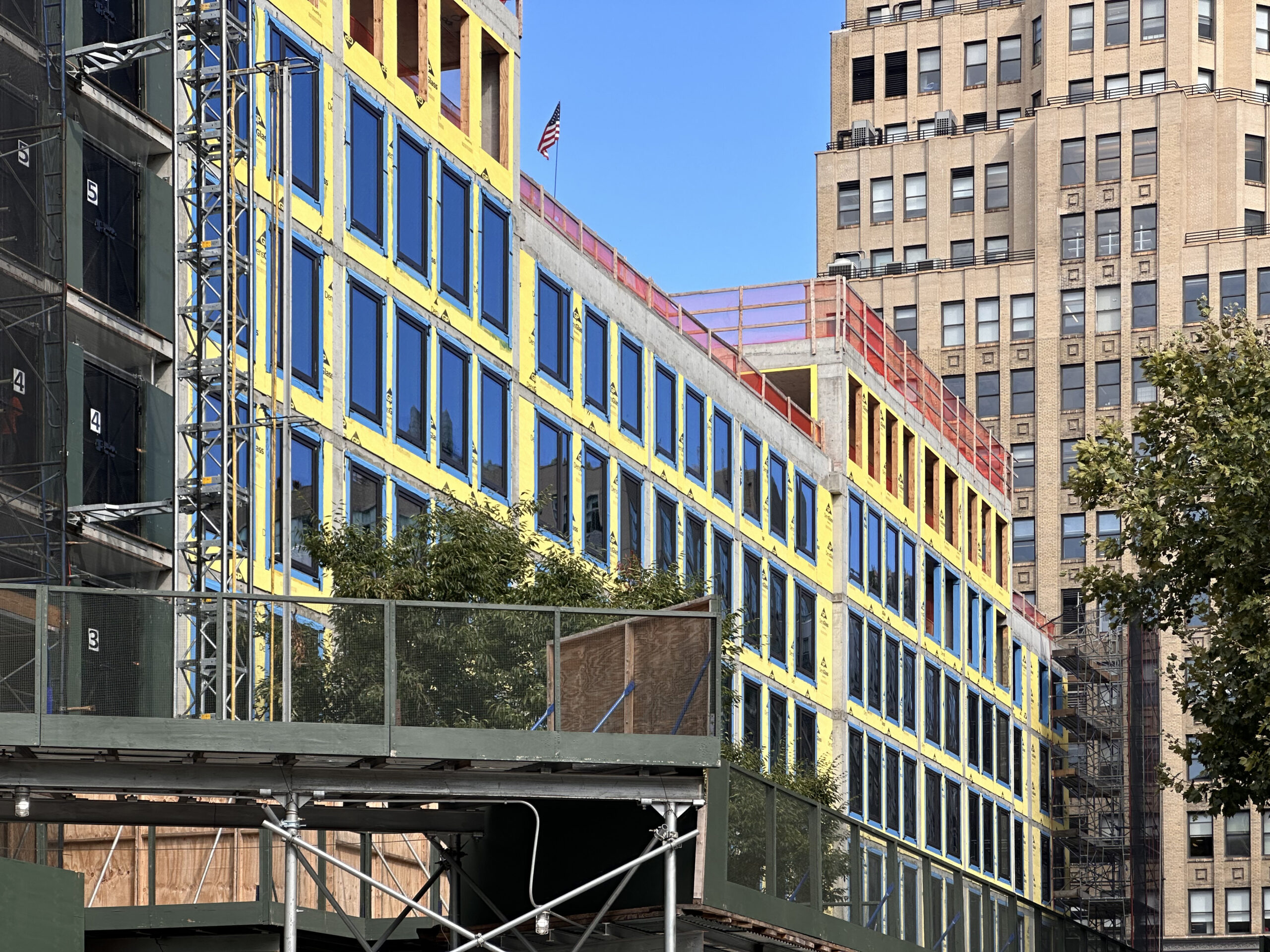
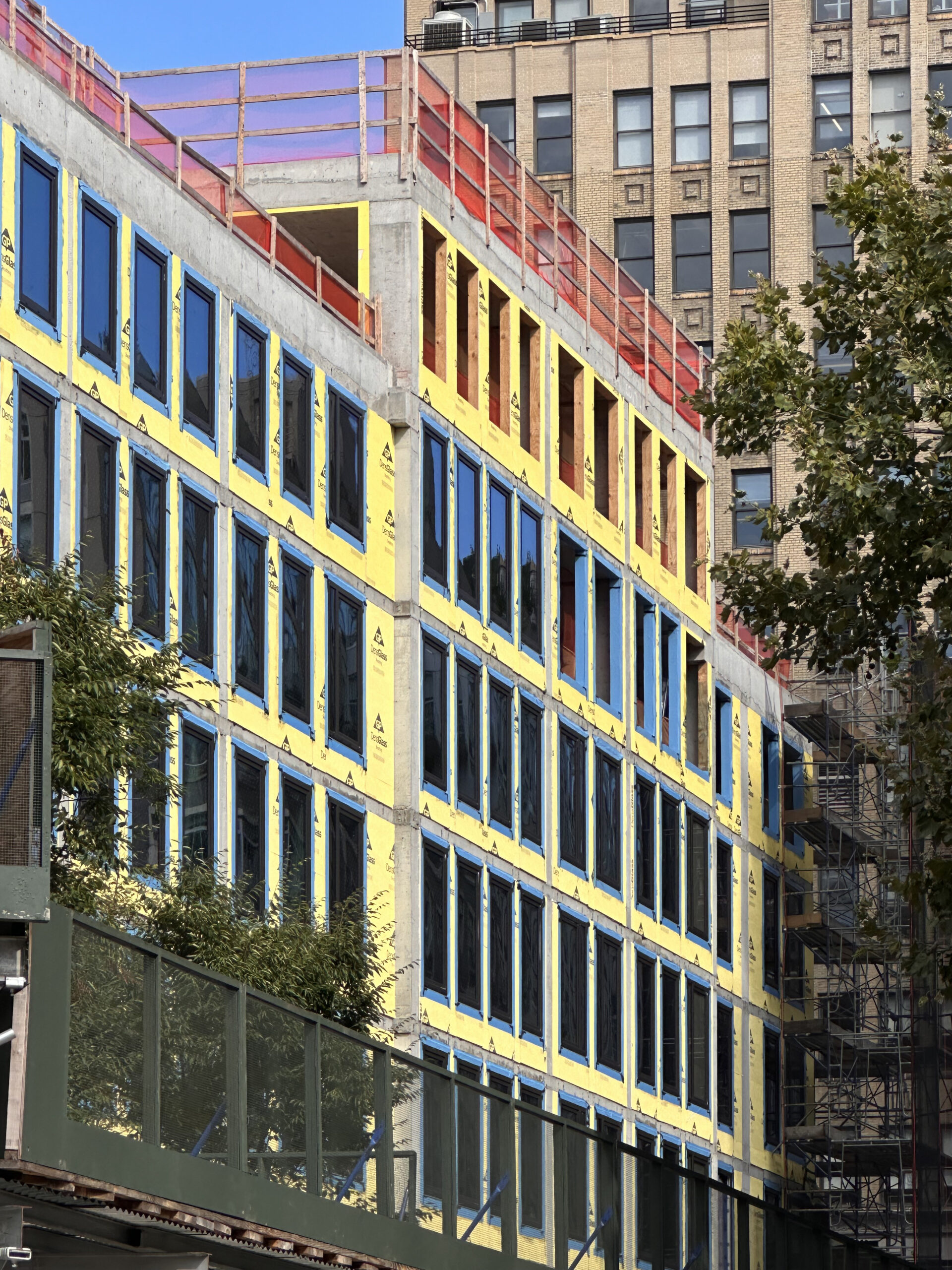
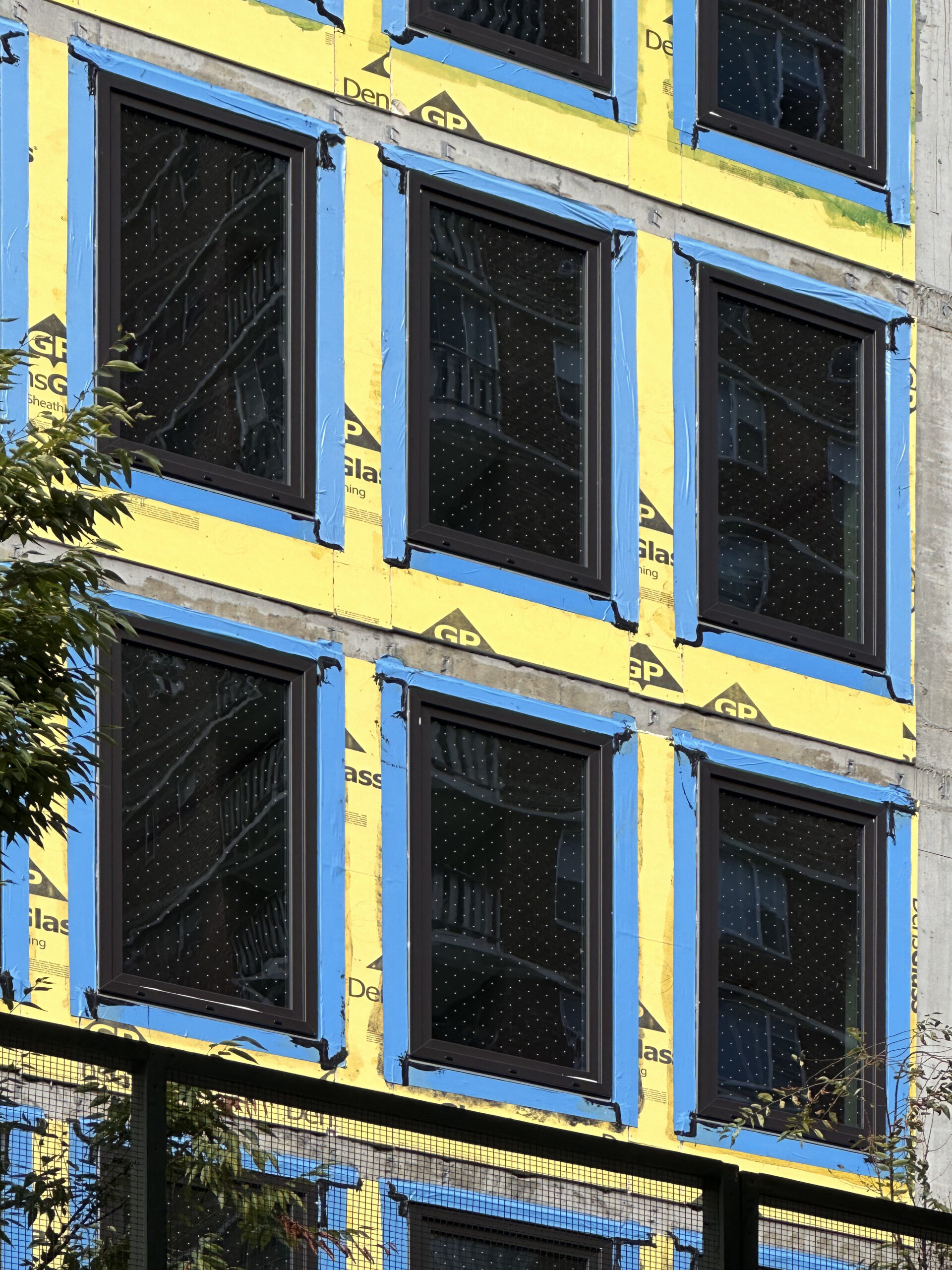
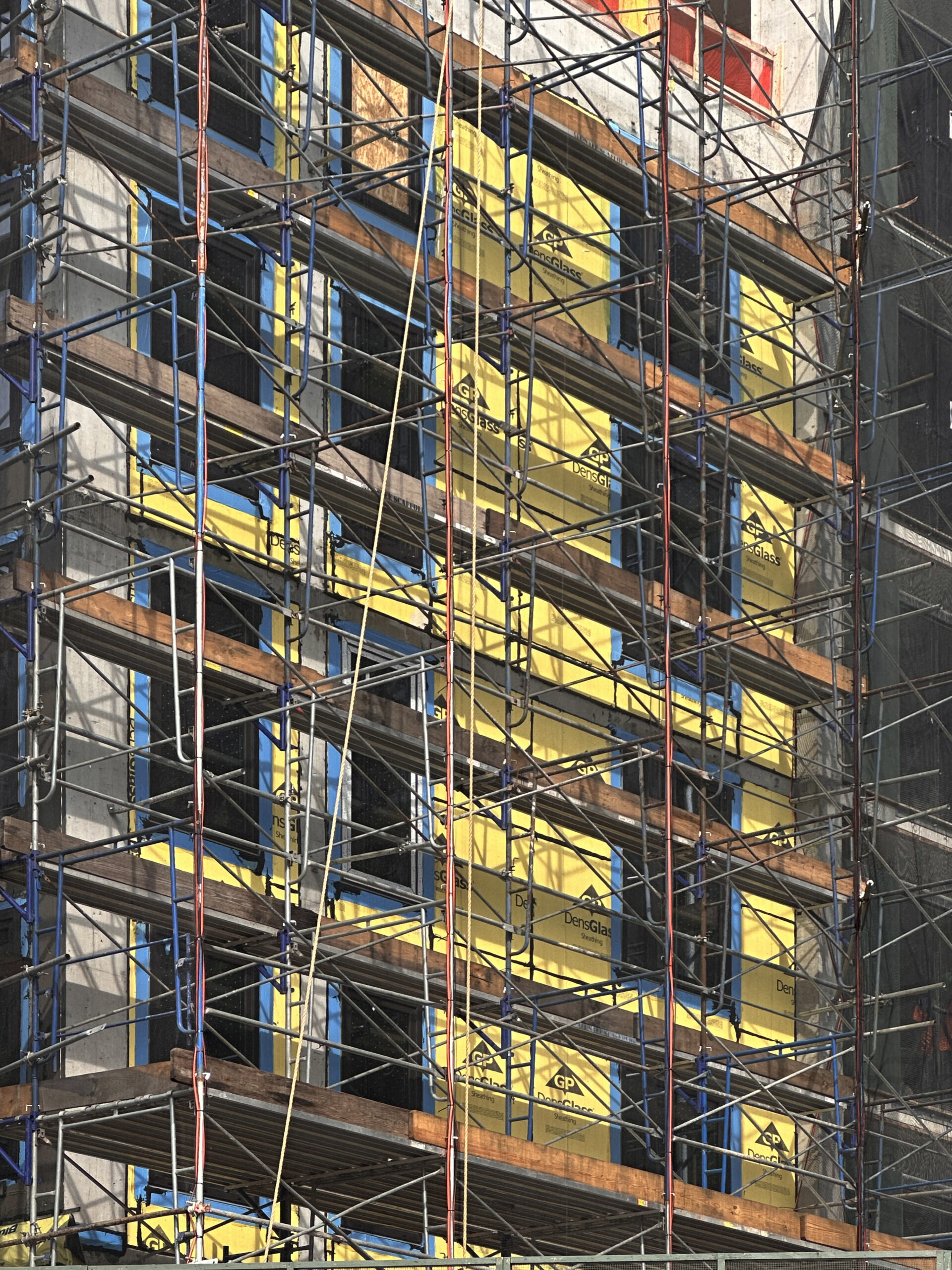
Façade installation is steadily progressing on 335 Eighth Avenue, a seven-story residential building in Chelsea, Manhattan. Designed by COOKFOX Architects and developed by MAG Partners and Mutual Redevelopment Houses, Inc., the 200,000-square-foot structure will yield 188 rental units in studio to two-bedroom layouts, a 23,000-square-foot Lidl supermarket, and additional ground-floor retail space. Thirty percent of the homes will be reserved for affordable housing. The ground-up property is located at the corner of Eighth Avenue and West 26th Street within the Penn South affordable housing cooperative, officially known as Mutual Redevelopment Houses.
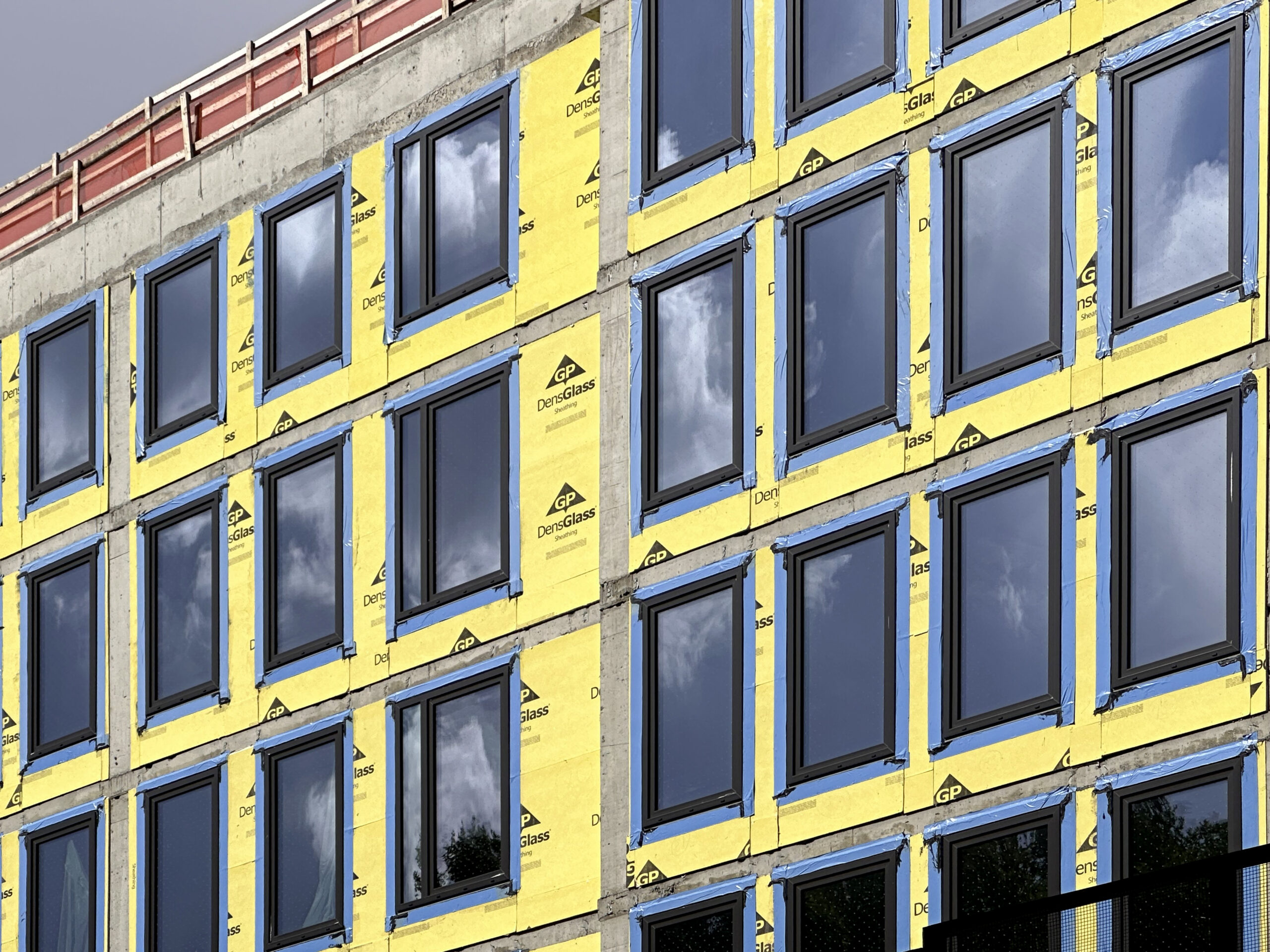
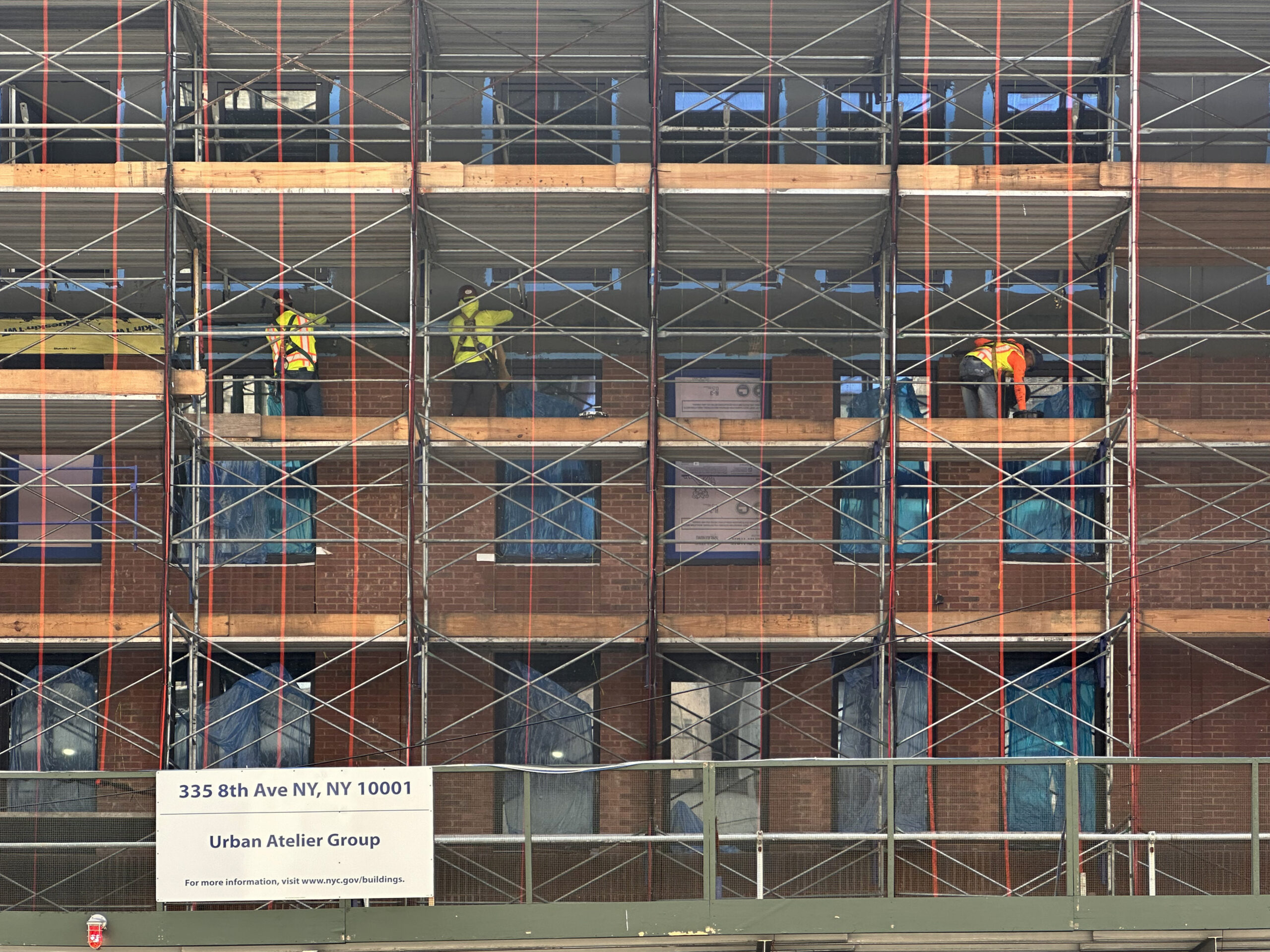
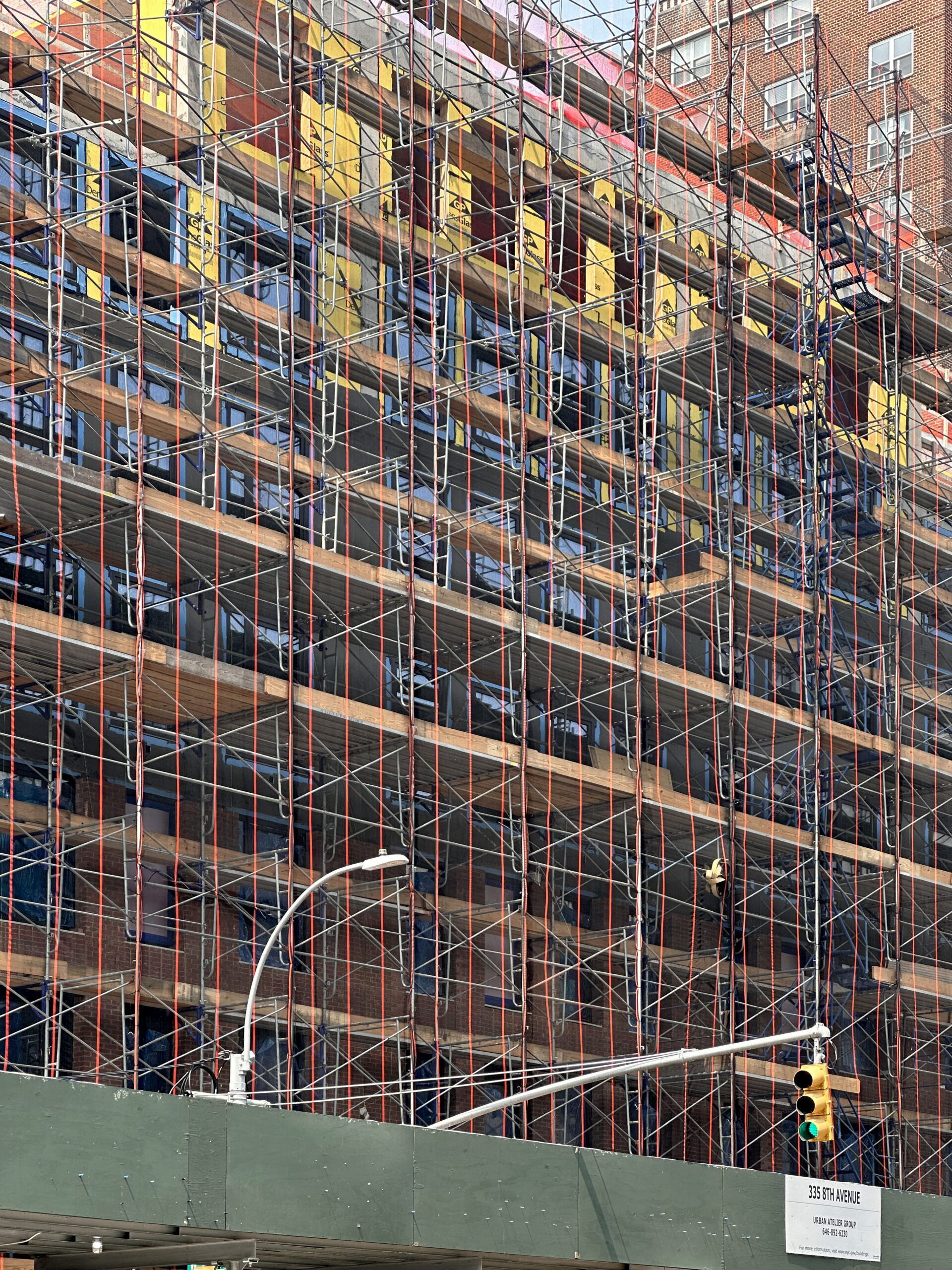
Crews have enclosed much of the reinforced concrete superstructure in metal frame studs, insulation boards, and the grid of rectangular floor-to-ceiling windows since our our last update in late May, when the building was in the process of topping out. Recent photos show the red brick façade being installed behind scaffolding and construction netting on the lower half of the western elevation along Eighth Avenue.
Photo by Michael Young
Photo by Michael Young
Photo by Michael Young
Photo by Michael Young
Photo by Michael Young
Photo by Michael Young
Photo by Michael Young
Photo by Michael Young
Photo by Michael Young
Photo by Michael Young
Ninety percent of the residential units will be studios and one-bedrooms, while the remaining 10 percent will be two-bedroom apartments. Amenities at 335 Eighth Avenue will include a fitness center, a library, a media lounge, a coworking lounge with private workspaces, a dining area with a catering kitchen, and outdoor rooftop gardens with dining areas and a grilling terrace.
Renderings of the building preview the finished look of the brick exterior, which will incorporate several different bond patterns. Setbacks at the seventh floor are shown topped with terraces, and the roof parapet features an additional terrace adorned with greenery.
The upcoming Lidl supermarket will feature a bakery, fresh produce, a floral shop, meat and seafood, and other typical everyday essentials. The Germany-based supermarket is also expected to partner with Hire NYC to offer employment to local residents and provide comprehensive benefits such as healthcare for all full- and part-time employees, regardless of hours worked per week.
JLL Capital Markets arranged a $151.4 million capitalization for the project with financing secured from Bank OZK and MetLife Investment Management.
The property is a short walk from the C and E trains at the 23rd Street station to the south.
335 Eighth Avenue’s anticipated completion date is slated for the third quarter of 2025.
Baltimore Peninsula Announces New Lease with Slurp Noodle Bar at Rye House
The new establishment is the latest of a slew of local, regional and national-loved restaurants arriving at Baltimore Peninsula
Today, the Baltimore Peninsula development team, led by MAG Partners and MacFarlane Partners, in partnership with Sagamore Ventures and the Urban Investment Group within Goldman Sachs Asset Management, announced it has signed a new lease with Slurp Noodle Bar, which has leased 1,375 square feet at Rye House and is anticipated to open in Q2 2025.
Slurp Noodle Bar will offer a delicious array of hand pulled noodle dishes such as original beef noodles (“Lanzhou Lamian”) and sour and spicy noodles – in addition to other traditional Chinese staples like the ‘Crossing the Bridge” Rice Noodle Soup with a bone broth simmered for over 12 hours. The making of hand pulled noodles requires no machinery – but rather is done completely by hand by highly-skilled chefs with extensive training and practice. The noodle bar will open at Rye House alongside Ben & Jerry’s, which is opening its first Baltimore location.
The family-owned restaurant is run by Washington metropolitan area local Jerry Chan and his father. The Chans have been in the restaurant business for three generations – beginning with Jerry’s grandfather, who took up work as a restaurant chef upon his immigration to the United States. Slurp Noodle Bar will be the second restaurant opened by Jerry, and the first in Baltimore.
“Slurp Noodle Bar is an amazing addition to our rapidly growing list of premiere food and beverage offerings at Baltimore Peninsula,” said MaryAnne Gilmartin, Founder and CEO of MAG Partners. “We’re continuing to see top establishments open their doors and strong momentum in restaurant leasing, a testament to the appeal of modern, mixed-use spaces at Baltimore Peninsula and the activity and dynamism they create.”
The announcement comes on the heels of several restaurant announcements and openings that are quickly turning Baltimore Peninsula into the newest dining hotspot in the DMV. Alongside the newly opened Rye Street Tavern by Clyde’s and Little Wing at ROOST Baltimore, the neighborhood will be welcoming several high-quality dining options, including Pinky Cole’s Slutty Vegan and Bar Vegan, Urbano Tex-Mex, Baltimore coffee shop Daily Grind, BK Lobster, and Jersey Mike’s.
“My family has been involved in the restaurant industry for three generations, so I’m incredibly excited to be opening a traditional, family-owned establishment,” said Jerry Chan, Owner of Slurp Noodle Bar. “I have been looking to bring our business to Baltimore for some time, and Baltimore Peninsula is the perfect location to do so as it becomes the city’s newest dining destination.”
Slurp Noodle Bar will open on the ground floor of Rye House, one of Baltimore Peninsula’s residential offerings. Rye House offers 254 total apartment residences, ranging from studio to three-bedroom floor plans, with 54 units designated affordable. Amenity spaces include a fitness center with a yoga studio loft, a third-floor clubroom with private meeting and dining area, a spacious bar and lounge, and a billiard room. The rooftop terrace lounge offers seating, grilling and dining areas with 360-degree views of the waterfront and Baltimore skyline.
Retail leasing at MAG Partners is led by Gayle Mandaro and Sam Spikell and Segall Group. Slurp Noodle Bar was represented by Shang Wang of Wang Enterprises.
Baltimore Peninsula Secures Two More Offices Leases Totaling 14K SF
By: Nick Trombola
The Baltimore Peninsula development team continues rounding out their office portfolio with a pair of new leases at its Rye Street Market project.
The group, led by MAG Partners and MacFarlane Partners, in partnership with Sagamore Ventures and Goldman Sachs Asset Management’s Urban Investment Group, inked leases with Longeviti Neuro Solutions and cryptocurrency mining company OBM for a total of 14,000 square feet.
The leases, at 301 Mission Boulevard, bring Baltimore Peninsula’s growing office cache to 40 percent leased. Longeviti was represented in the deal by law firm Kiernan Trebach. OBM was represented by Linn Worthington at Cushman & Wakefield, while C&W’s Courtenay Jenkins, Richard Thomas and Matt Melnick represented the landlords.
“We are continuously drawn to Baltimore Peninsula, the rich and dynamic environment cultivated here allows Longeviti to manufacture, distribute its neuro devices internationally, as well as conveniently host and train on new medical breakthroughs,” Jesse Christopher, Longeviti CEO and co-founder, said in a statement.
“Baltimore Peninsula has afforded us a new top-of-the-line office space where we can continue to expand upon our essential work,” added Daniel Lawrence, OBM CEO and founder.
Located in Baltimore’s Port Covington neighborhood, Baltimore Peninsula is a 235-acre project that, once completed, will house about 14 million square feet of mixed-use space along 2.5 miles of restored waterfront. Rye Street Market is within the greater Baltimore Peninsula project.
The new leases at the project continue a string of activity since the end of last year. Tex-Mex restaurant concept Urbano and karaoke vender Live-K signed on for a combined 12,300 square feet at Rye Street Market, just a block from the banks of the Patapsco River.
CFG Bank meanwhile moved its headquarters to 97,000 square feet at the development, joining the likes of the Baltimore Ravens, Volo Sports and Jersey Mike’s, which signed for space in December.
Pinky Cole urges young Baltimore entrepreneurs to learn ‘how to rise above the problems’
By: Lorraine Mirabella
In a South Baltimore conference room packed with young entrepreneurs, someone asked Aisha “Pinky” Cole how she recovered from setbacks on her way to founding her popular vegan burger chain — such as losing her first restaurant to a grease fire: Did she “fall down again?”
“I fell down this morning,” said Cole, the East Baltimore native and owner of Atlanta-based Slutty Vegan and Bar Vegan, during an event Wednesday aimed at fostering entrepreneurship among city teens and young adults. “I fall down every day. … In the art of entrepreneurship, it’s not that you have problems, it’s how you rise above the problems.”
Cole doled out advice and encouragement to start-up founders and youth program students and leaders along with MaryAnne Gilmartin, founder and CEO of New York-based MAG Partners, a lead developer of the Baltimore Peninsula mixed-use waterfront community in South Baltimore.
Wednesday’s event at Baltimore Peninsula kicked off a series of community discussions that Coppin State University plans to explore the findings of a newly released report by its Center for Strategic Entrepreneurship.
Coppin’s “Excellence in Entrepreneurial Learning” report follows up on 2017 research from the Annie E. Casey Foundation showing that teens and young adults in Baltimore, ages 16 to 29, “crave entrepreneurship and resources to build businesses that are free from discrimination and benefit their communities.”
Coppin’s study set out to determine how students are being prepared to become entrepreneurs, said Ronald C. Williams, an associate professor of management and founding director of the university’s entrepreneurship center. Over two years, a team of faculty and students has reviewed Baltimore training programs for youth and young adults between the ages of 16 and 29, focusing on areas such as structure, methodology, partnerships and effectiveness.
“Our focus is on learning and learning how to learn as opposed to preparing people directly for entrepreneurial success,” Williams said in an interview. “We believe that if you learn how to learn, that you’ll be ready for opportunity.”
The report found no standard structure for programs, with some running year-round and others only after-school or during summers, and that programs used multiple training methods.
It found gaps in wraparound services that various partners provided, in areas such as child care and transportation. And the effectiveness of programs was tied sometimes to the funders’ requirements rather than other metrics. In some cases, programs were not able to track their participants’ success
“This is an exploratory study because there has not been anything done like this before,” Williams said. “There is a lot of funding right now for youth entrepreneurship development, but we’re trying to get a handle on what’s actually being delivered so that we can have a better return on investment.”
During Wednesday’s discussion, Cole and Gilmartin talked about overcoming challenges growing up and how unconventional paths led to starting businesses. They said they’ve led successful businesses by tapping into mentors, building and investing in talent, and believing in their missions.
Cole grew up on Cedonia Avenue while her father served time in prison and her mother worked three jobs.
“I had to become a hustler at an early age,” she said.
After college and moving to Los Angeles, where she became a TV producer, Cole eventually opened her first restaurant. She ran it for two years before she lost everything in a fire. She returned to TV and worked as a casting director before the restaurant bug bit again.
Six years ago she started her “Slutty Vegan” concept in a shared kitchen. It has grown to 14 locations, including one coming later this year to Baltimore Peninsula, where Cole is a development partner in Rye Street Market along with Gilmartin’s firm.
“Entrepreneurship is very, very hard, but it’s so worth it,” Cole said, “especially if you got the passion to do the things that you love to do.”
Gilmartin, who grew up in New York, landed a job in economic development through a fellowship after college. Her first assignment was to convince a possibly armed squatter living in a trailer to leave a city redevelopment site. She ignored warnings not to talk with him directly, approached him outside a chain link fence and ended up working out a relocation deal that upgraded his living conditions.
“People thought I’d pulled off a major miracle,” she said. “What did I do? I had a conversation. I had human connection. I said to myself, ‘If this is what real estate development is, I’d probably be pretty good at it.’”
That started Gilmartin’s interest in real estate, though it had not been part of her plan, she told the audience Wednesday.
“Have a plan,” she said. “But be prepared for that plan to be disrupted because that’s what happens in life. … Chance does favor the prepared mind, but you also need to be open to the possibility that you haven’t quite thought of something that might grab you.”
Luxe NYC Residences with Insta-Worthy Private Gardens
By: Luxury Real Estate
In the bustling heart of the city, leading developers are creating serene escapes by incorporating expansive private gardens into luxury residential buildings. These green spaces, featuring diverse plant species, winding paths, and various seating options, provide residents with a tranquil retreat just steps from their front door. Embracing biophilic design principles, these outdoor gardens help residents forget they are in the midst of an urban environment. Here are three prime examples of residential buildings in New York City that are elevating the standard of urban living with their lush private gardens.
VIA 57 WEST: A Green Gateway to Manhattan
Anchoring The Durst Organization’s 57 WEST residential superblock, VIA 57 WEST stands as a dramatic visual gateway to Manhattan’s skyline along the Hudson River. This architectural marvel offers 709 residences, many of which feature terraces and balconies, and boasts an unparalleled selection of resident amenities. Among these is a 22,000-square-foot private garden oasis designed by landscape architects Starr Whitehouse.
The garden at VIA 57 WEST features a meandering path that guides residents through various zones, offering both sun-drenched and shaded areas. The diverse ecosystem includes native plants that thrive in the urban environment, creating a tranquil escape within the city. This thoughtfully designed space allows residents to enjoy nature, meditate, and recharge right outside their apartment doors.
Ruby: Chelsea’s Natural Gem
Rooted in Manhattan’s iconic Chelsea neighborhood, Ruby offers 480 thoughtfully designed studio, one-, two-, and three-bedroom homes. This residential development is blooming with natural green spaces and wellness-focused amenities, including the light-soaked lobby garden created by COOKFOX Architects.
The garden at Ruby is designed to facilitate health and connection with nature at every level. This unique green space is a true anomaly on West 28th Street, providing residents with a rejuvenating oasis amidst the urban landscape. The garden’s design encourages residents to engage with nature, fostering a sense of well-being and tranquility.
In Greenpoint, Brooklyn, the 22-story rental tower at 35 Commercial Street sets a new standard for modern housing with its blend of architectural beauty and ecological mindfulness. Designed by Handel Architects, the building offers 374 permanently affordable apartments and features a dramatic brick arched entryway inspired by the neighborhood’s industrial heritage.
Greenpoint native Marni Majorelle of Alive Structures designed three captivating outdoor areas as part of the building’s 11,000 square feet of amenities. The sunny garden on the northeast side of the building is ecologically beneficial, featuring native plants such as magnolia trees and swales to capture water and prevent runoff. The pathways, made of brick and sandy granite, add texture and interest to the landscape. In the interior courtyard, where light is less prevalent, ferns, native grasses, and organic rock features create a serene, shaded retreat. A long arching bench borders this lush inner courtyard, offering a perfect spot for relaxation.



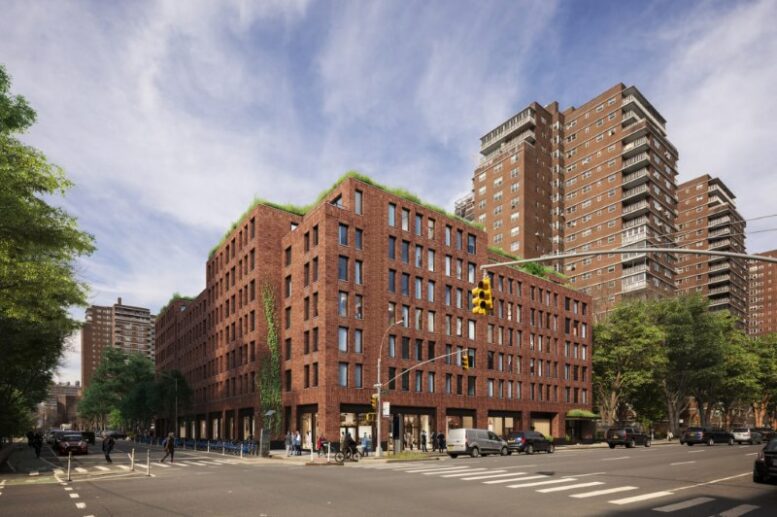 Rendering of 335 Eighth Avenue – Courtesy of MAG Partners, COOKFOX Architects